
Receding hair is a natural part of ageing and most, if not all, men will experience some form of receding hairline during their lifetime. We understand this can be difficult for a man’s self-esteem, particularly at a younger age.
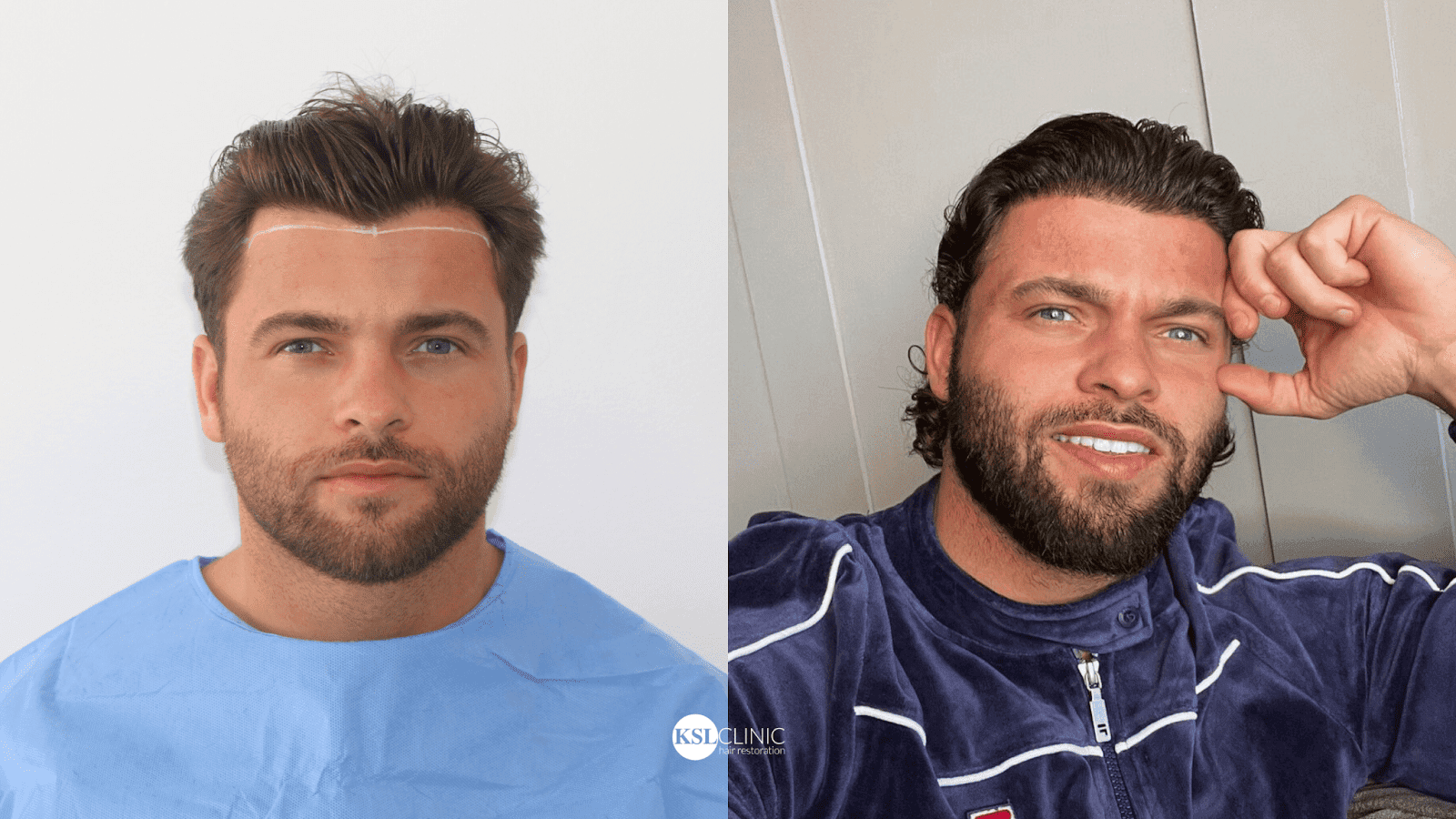
This can be particularly true for women who are experiencing receding or balding. So can a hair transplant fix your hairline? The short answer is yes. A hair transplant can fix a receding hairline by moving hair follicles (or grafts) from a donor area to the affected areas to fill in or bring forward your hairline. Just look at some of our before and after photos below. There are key considerations when deciding on your treatment, which we cover in this article.
Key Takeaways
- Yes, a hair transplant can fix a receding hairline. FUE hair transplants can effectively restore receding hairlines with a natural appearance.
- The procedure is minimally invasive, takes six to eight hours, and uses local anaesthesia. Results develop over several months and can last a lifetime when performed by a qualified surgical team.
- Choose the right clinic. A CQC-registered clinic with GMC-qualified surgeons is essential. KSL Clinic has completed thousands of successful hairline restorations and includes a full 12-month aftercare programme as standard.
How a receding hairline hair transplant works
A hairline hair transplant is one of the most common surgical options patients choose to fix a receding hairline. It is important to ensure a natural-looking result, which requires experience and precision in follicle placement.
At KSL Clinic, our surgeons work solely for us and have collectively carried out the procedure thousands of times. Many people consider travelling abroad for cheaper options, but this can mean the procedure is not carried out to the same clinical standards.
A hair transplant will not fix your receding hairline overnight. It is a permanent, long-term solution that develops over the course of a year.
How many grafts does a hairline transplant require?
The number of grafts needed depends on the extent of your hair loss. For most patients addressing a receding hairline, between 1,000 and 2,500 grafts are typically required. Earlier-stage recession may need fewer grafts than a hairline that has receded significantly across the frontal scalp.
During your free consultation, a KSL Clinic surgeon will assess your scalp and donor area and give you an accurate graft count. All KSL Clinic procedures are FUE. We do not offer the strip method (FUT).
How to recognise if your hairline is receding
The rate at which your hair recedes can differ greatly between individuals. To understand whether a hair transplant could help, we recommend arranging a free consultation where you will receive an accurate quote and a tailored treatment plan.
The following signs can help you confirm if your hairline is starting to recede:
- Thinning or uneven hair above your temples: One of the earliest signs is noticing the hair above your temples becoming thinner or more uneven compared to the rest of your scalp.
- Bald patches on or along your hairline: The appearance of bald patches along your hairline is a strong indicator of hair loss.
- A hairline that forms the shape of a V or M: If your hairline begins to take on this shape, it is a common sign of recession.
Recognising these signs early and seeking professional advice can help you take timely action.
Women can also experience hairline recession. Female pattern hair loss often presents as a widening parting or thinning at the temples rather than the M-shape pattern seen in men. Hair transplant consultations are available for women at KSL Clinic, with all treatment plans tailored to the individual.
Related reading: Can a Hair Transplant Help With Female Pattern Baldness?
Why is it important to choose a qualified professional?
Your hairline is one of the most visible parts of your appearance, so any changes will be noticed. An unnatural-looking hairline raises questions. This is why working with a GMC-registered hair transplant surgeon matters, and why it is worth reviewing before and after results carefully before choosing a clinic.
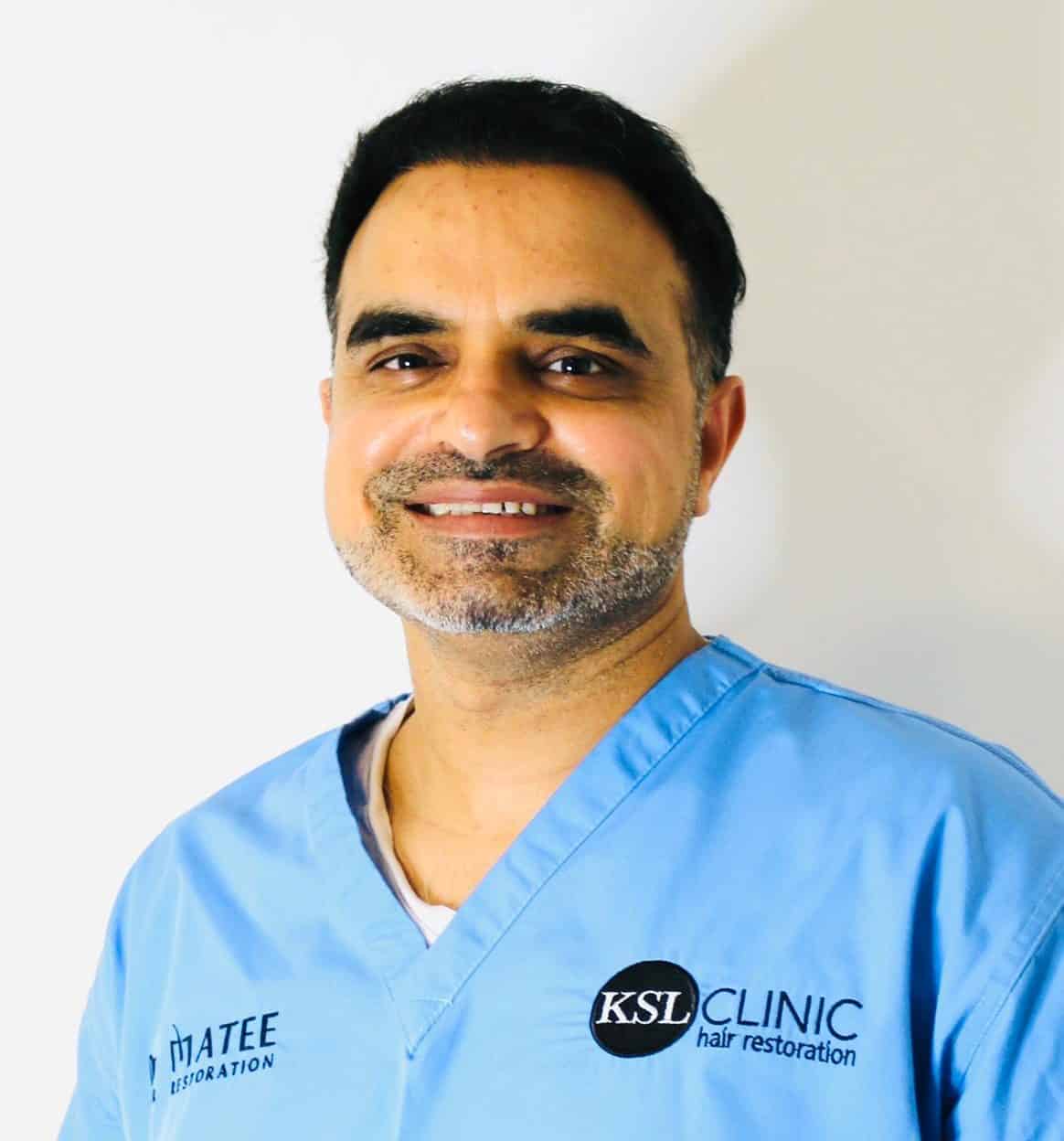
Dr Matee Rajput, Clinical Lead at KSL Clinic, explains:
“Every person is different and every story and every hair loss is different. I’ve had patients who haven’t left the house in three or four months and after their treatment they’re hugging everyone. People have sent me pictures from their holidays and weddings. That’s what makes it so rewarding.”
Dr Matee Rajput, Clinical Lead, KSL Clinic (Manchester Evening News)
At KSL Clinic, all procedures are performed by GMC-registered doctors. The clinic is CQC registered (CQC Number: 1-3653958351) and holds ISCAS membership. Our before-and-after results are published openly so you can assess quality before committing to anything.
Free consultation
Looking for a consultation? Book a free consultation with us today to see what we can do for you.
Is it safe to have a hair transplant abroad?
Some patients look at clinics in Turkey or other countries, drawn by lower headline prices. There are real risks to consider.
Clinics abroad are not subject to CQC regulation or UK healthcare standards. If complications arise after you return home, accessing follow-up care or remedial treatment can be difficult. Some overseas clinics inflate graft estimates or use technicians rather than qualified surgeons.
If your results are unsatisfactory, revision surgery in the UK costs more than a UK procedure would have done originally. A CQC-registered UK clinic gives you access to formal complaints procedures, proper aftercare and surgery by GMC-registered doctors.
Related reading: Are Hair Transplants Safe?
Free consultation
Book a free consultation with us today. All KSL Clinic consultations are free, with no obligation to proceed. You will leave with a clear treatment plan, a transparent cost estimate and a quote valid for 12 months. KSL Clinic is CQC registered and all procedures are performed by GMC-registered doctors. We guarantee 80% regrowth of transplanted hairs.
Frequently Asked Questions
What are the types of hair transplants?
There are two main methods: Follicular Unit Transplantation (FUT) and Follicular Unit Extraction (FUE).
FUT, also known as the strip method, involves removing a strip of tissue from the back of the scalp and dissecting it into individual follicular units for implantation.
FUE is a minimally invasive technique. Each follicle is extracted and implanted individually, in the direction of your natural hair growth, producing a natural-looking new hairline.
KSL Clinic performs FUE only. We do not offer the FUT strip method. FUE leaves no linear scar and typically has a shorter recovery period.
How long will my transplant last?
A hair transplant is not a temporary measure. A well-implemented hair transplant, by an experienced team could last forever.
How much will it cost to fix my receding hairline?
The cost depends on a number of factors. A consultation with KSL Clinic is always free, with no obligation to proceed. Our team will discuss your needs in detail and provide a transparent pricing plan tailored to your hair and scalp.
We offer a 12-month hair transplant finance payment plan. You will receive your quote on the day of your consultation.
Will my results look natural?
With an FUE hair transplant, each follicle is implanted in the direction of your natural hair growth. This produces a cohesive, natural-looking hairline rather than anything that looks placed or artificial.
Where can I receive my hair transplant?
Our hair transplant experts cover the United Kingdom. Consultation locations include Kent, Manchester, Birmingham, Bristol, and video consultations are also available.
Does a hair transplant fix a hairline straight away?
No. You will not leave the clinic with an immediately transformed hairline. New hair growth typically begins after a few months. Between three and five months, very little visible growth is expected.
Between four and six weeks after your transplant, you may notice some shedding of the newly transplanted hairs. This is called shock loss and is a normal phase of the hair growth cycle. It does not mean the procedure has failed. Growth resumes from around month three onward.
How long does a hair transplant take?
Your FUE hair transplant will typically take between six and eight hours, depending on the size of the case. It uses local anaesthesia, so you can leave immediately after and drive yourself home.
Is the procedure painful?
The process is minimally invasive, which keeps discomfort to a minimum. We inject anaesthetic directly into the scalp using small needles. Our surgical team is experienced in delivering results without causing unnecessary discomfort.
Painkillers are included in your aftercare pack to manage any discomfort in the days following the procedure.
Will I lose my transplanted hair after surgery?
Yes, some shedding is normal. This phase, known as shock loss, typically occurs around four to six weeks after surgery. It is a normal physiological response and does not indicate the transplant has not worked. Regrowth begins from around month three, with most patients seeing strong results between nine and twelve months. KSL Clinic guarantees 80% regrowth of transplanted hairs. Our hair transplant aftercare guide covers what to expect at each stage.
How do I choose the right clinic for my hair transplant?
KSL Clinic is the busiest hair transplant clinic in the UK, with thousands of patients treated. Celebrities including Gaz Beadle, Jack Fincham and Jake Quickenden have chosen KSL Clinic for their procedures.
When choosing a clinic, look for CQC registration, GMC-qualified surgeons, and published before and after results. KSL Clinic is CQC registered (1-3653958351), all procedures are by GMC-registered doctors, and full 12-month aftercare is included as standard.
How do I begin?
Start with a free consultation. One of our consultants will review your hair and scalp and provide a clear recommendation and treatment plan.
Call us on 01622 686101 (Kent) or 0161 503 0537 (Manchester), or complete our callback form and we will be in touch to arrange a time that suits you.
What are the types of hair transplants?
There are two main methods: Follicular Unit Transplantation (FUT) and Follicular Unit Extraction (FUE).
FUT, also known as the strip method, involves removing a strip of tissue from the back of the scalp and dissecting it into individual follicular units for implantation.
FUE is a minimally invasive technique. Each follicle is extracted and implanted individually, in the direction of your natural hair growth, producing a natural-looking new hairline.
KSL Clinic performs FUE only. We do not offer the FUT strip method. FUE leaves no linear scar and typically has a shorter recovery period.
Does a hair transplant fix a hairline straight away?
No. You will not leave the clinic with an immediately transformed hairline. New hair growth typically begins after a few months. Between three and five months, very little visible growth is expected.
Between four and six weeks after your transplant, you may notice some shedding of the newly transplanted hairs. This is called shock loss and is a normal phase of the hair growth cycle. It does not mean the procedure has failed. Growth resumes from around month three onward.
How long will my transplant last?
A hair transplant is not a temporary measure. A well-implemented hair transplant, by an experienced team could last forever.
How long does a hair transplant take?
Your FUE hair transplant will typically take between six and eight hours, depending on the size of the case. It uses local anaesthesia, so you can leave immediately after and drive yourself home.
How much will it cost to fix my receding hairline?
The cost depends on a number of factors. A consultation with KSL Clinic is always free, with no obligation to proceed. Our team will discuss your needs in detail and provide a transparent pricing plan tailored to your hair and scalp.
We offer a 12-month hair transplant finance payment plan. You will receive your quote on the day of your consultation.
Is the procedure painful?
The process is minimally invasive, which keeps discomfort to a minimum. We inject anaesthetic directly into the scalp using small needles. Our surgical team is experienced in delivering results without causing unnecessary discomfort.
Painkillers are included in your aftercare pack to manage any discomfort in the days following the procedure.
Will I lose my transplanted hair after surgery?
Yes, some shedding is normal. This phase, known as shock loss, typically occurs around four to six weeks after surgery. It is a normal physiological response and does not indicate the transplant has not worked. Regrowth begins from around month three, with most patients seeing strong results between nine and twelve months. KSL Clinic guarantees 80% regrowth of transplanted hairs. Our hair transplant aftercare guide covers what to expect at each stage.
Will my results look natural?
With an FUE hair transplant, each follicle is implanted in the direction of your natural hair growth. This produces a cohesive, natural-looking hairline rather than anything that looks placed or artificial.
How do I choose the right clinic for my hair transplant?
KSL Clinic is the busiest hair transplant clinic in the UK, with thousands of patients treated. Celebrities including Gaz Beadle, Jack Fincham and Jake Quickenden have chosen KSL Clinic for their procedures.
When choosing a clinic, look for CQC registration, GMC-qualified surgeons, and published before and after results. KSL Clinic is CQC registered (1-3653958351), all procedures are by GMC-registered doctors, and full 12-month aftercare is included as standard.
Where can I receive my hair transplant?
Our hair transplant experts are available across the United Kingdom. Our consultation branches are located in:
- Kent
- Manchester
- Birmingham
- Bristol
- & Video Consultations Available
How do I begin?
Start with a free consultation. One of our consultants will review your hair and scalp and provide a clear recommendation and treatment plan.
Call us on 01622 686101 (Kent) or 0161 503 0537 (Manchester), or complete our callback form and we will be in touch to arrange a time that suits you.
References and Sources
- https://www.cqc.org.uk/location/1-3653958351/inspection-summary
- https://www.nhs.uk/conditions/cosmetic-procedures/cosmetic-surgery/hair-transplant/
- Shapiro R, Shapiro P. Hairline Design and Frontal Hairline Restoration. Facial Plastic Surgery Clinics of North America. 2013;21(3):351-362. https://doi.org/10.1016/j.fsc.2013.06.001