

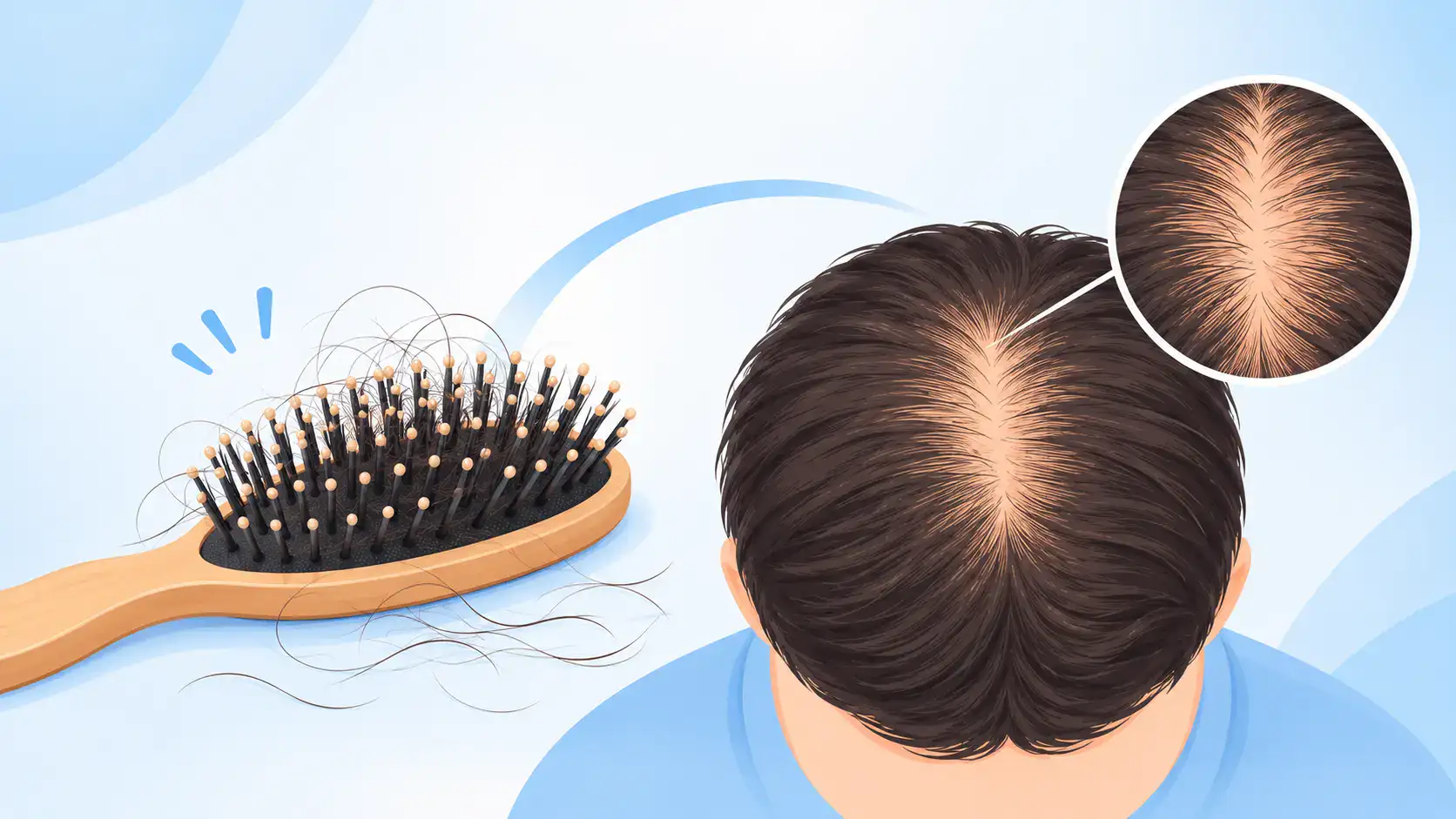
Whether your hair loss is temporary or permanent depends on whether your hair follicles are still alive and capable of regrowing hair. If you’re wondering, ‘is your hair loss temporary or permanent?’, the answer likely depends on what’s causing it. Temporary hair loss often means increased shedding that may settle down once the trigger is removed, while permanent hair loss can mean hair becomes thinner or bald patches develop.
Understanding the hair growth cycle and what changes in your hairline, parting, or overall thickness might indicate hair loss can help if you’re unsure whether to seek advice, and this guide explains the differences and what to look for.
Key Takeaways
- Temporary hair loss might be linked to stress, illness or changes to hormones and may improve when the hair growth cycle starts to return to normal.
- Permanent hair loss typically develops more gradually and could cause changes to specific areas, like the temples or crown, or cause overall changes to hair density.
- Persistent shedding, visible thinning or sudden patches of hair loss are worth discussing with a healthcare professional, especially if these symptoms are causing concern.
- A clinical assessment of a person’s scalp, hair and medical history can help identify the potential cause and establish which treatments may be appropriate.
What Causes Temporary Hair Loss?
Temporary hair loss usually occurs when the normal hair growth cycle is disrupted, leading to more shedding than usual. The NHS explains common causes of hair loss, including stress, illness, and rapid weight loss.
Hair grows in repeating cycles: a growth phase when follicles produce hair, followed by a transition and a resting phase, after which the hair sheds and new hair starts to grow.
When a physical or emotional event disrupts this cycle, more hairs might enter the resting phase, which can be a condition called telogen effluvium, leading to shedding across the scalp.
The British Association of Dermatologists (BAD) also identifies illness, stress and major changes in the body as possible triggers.
Read more about our guide to the common causes of hair loss and explain other factors that may affect your hair.
What Causes Permanent Hair Loss?
Permanent hair loss can occur when hair follicles gradually become less able to produce hair. Pattern hair loss is a common example and is influenced by hormones and genetics.
In male pattern hair loss, thinning usually starts around the temples, hairline, or crown, while female pattern hair loss commonly involves lower density across the scalp or a wider parting.
However, there are differences between a mature and a receding hairline, which we explore in our content about how to tell a receding hairline from a mature hairline.
Permanent hair loss also doesn’t mean every follicle has stopped producing hair, and although you might be interested in whether a hair transplant gives permanent results, the options might depend on the extent of the hair loss and the cause.
Free consultation
Looking for a consultation regarding your hair transplant fall out? Book a free consultation with us today to see what we can do for you.
Signs Your Hair Loss May Be Progressing
Looking at how your hair might have changed over time can be more relevant than counting shed hairs, although the signs that could be worth paying attention to include:
- A widening parting, with your scalp becoming more visible.
- Thinning around the crown or persistent thinning.
- A changing hairline, such as receding hair around your temples.
- Diffuse shedding where hair appears thinner over a wide area.
Diffuse thinning can be caused by different things, and isn’t automatically permanent pattern hair loss. You may want to learn whether supplements can help with thinning hair, but keep in mind supplements aren’t suitable for every cause.
When Should You See a Doctor or Have a Hair Loss Consultation?
It’s worth speaking to your GP or another clinical professional if hair loss is causing concern, especially if shedding happens suddenly, your scalp is uncomfortable, or you have any other symptoms.
A healthcare professional might ask when the changes started, whether you’ve been under stress or have been unwell lately, and whether you take any medication. They might also examine your scalp and recommend tests or investigations if they think this is necessary.
If you’d like to speak with a hair restoration professional, please book a free consultation with KSL Clinic to discuss your concerns and help you understand the options available.
So, Is Your Hair Loss Temporary or Permanent?
If you’re still asking, ‘is your hair loss temporary or permanent?’, the next step is to try to establish the cause.
Temporary shedding tends to settle down as the hair growth cycle returns to normal, while other types of hair loss, such as pattern hair loss, can cause gradual changes in hair density.
It’s sometimes difficult to understand the difference without professional advice, and if you’re concerned, we’d suggest booking an assessment or exploring our earlier guide to whether balding can be cured to learn more about longer-term hair loss.
Frequently Asked Questions
Can Temporary Hair Loss Become Permanent?
Temporary shedding doesn’t necessarily or always lead to permanent hair loss. However, if the cause of the shedding remains, it might continue, and if your hair doesn’t seem to be recovering, you may wish to seek advice.
How Long Does Telogen Effluvium Last?
The shedding phase of telogen effluvium normally lasts about three to six months, according to the BAD, although hair may take longer to return to its previous fullness and thickness.
This varies, and continued shedding could potentially indicate that there is still an underlying trigger or that something else is causing the hair loss.
Does Stress-Related Hair Loss Grow Back?
Stress is one of the triggers for telogen effluvium, and although the BAD explains that shedding usually improves, it can take several months for hair to grow back.
Can Temporary Hair Loss Become Permanent?
Temporary shedding doesn’t necessarily or always lead to permanent hair loss. However, if the cause of the shedding remains, it might continue, and if your hair doesn’t seem to be recovering, you may wish to seek advice.
Does Stress-Related Hair Loss Grow Back?
Stress is one of the triggers for telogen effluvium, and although the BAD explains that shedding usually improves, it can take several months for hair to grow back.
How Long Does Telogen Effluvium Last?
The shedding phase of telogen effluvium normally lasts about three to six months, according to the BAD, although hair may take longer to return to its previous fullness and thickness.
This varies, and continued shedding could potentially indicate that there is still an underlying trigger or that something else is causing the hair loss.