

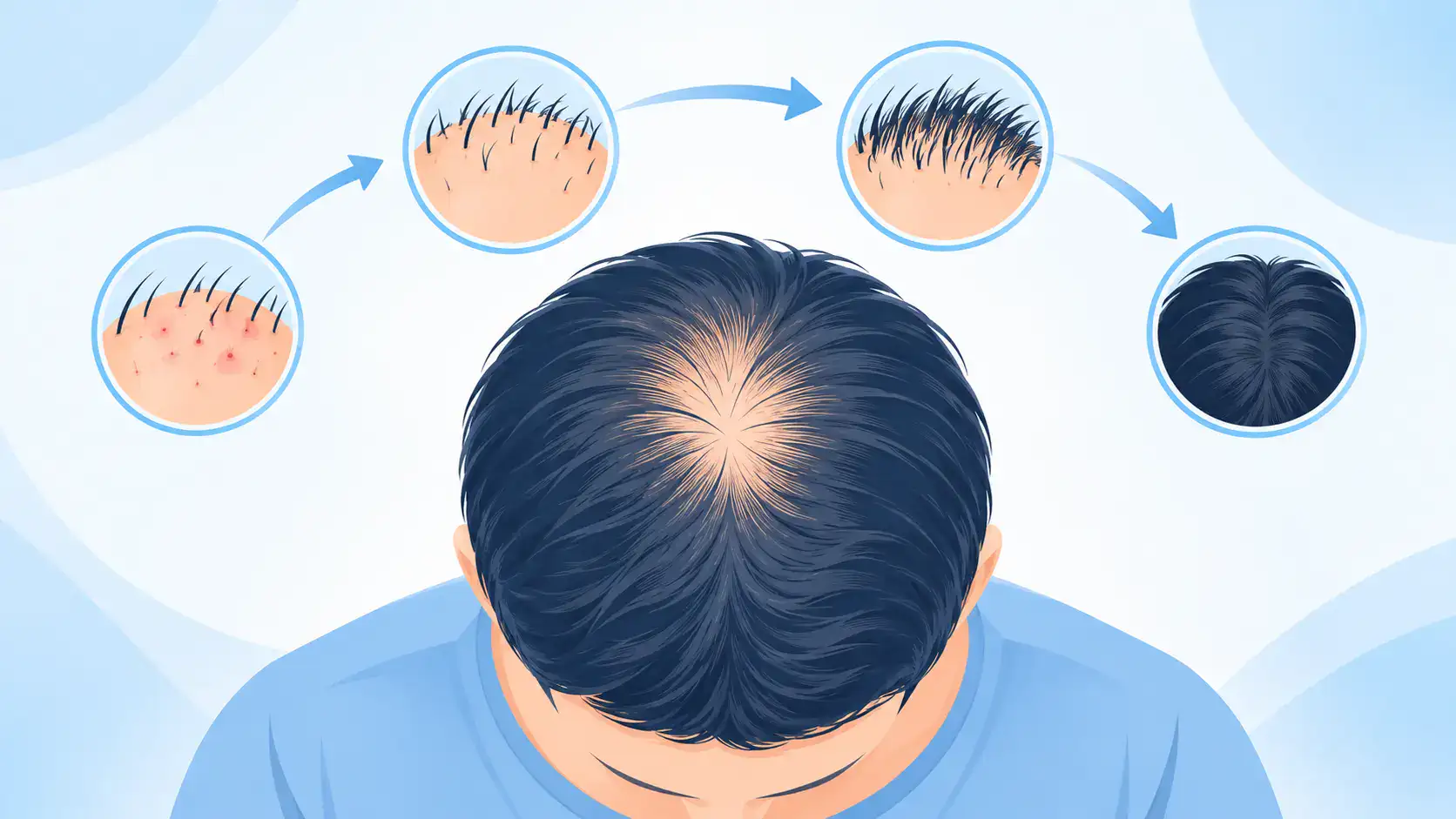
A crown hair transplant might be a way forward if you are concerned about hair loss around the top of your head. This surgical procedure can restore density by moving healthy donor follicles into the affected area, with full results usually visible within around 12 months.
Following the surgery, the scalp heals relatively quickly, in just a couple of weeks, although transplanted follicles take longer to produce new growth, which is why a crown transplant isn’t immediate.
If you’re thinking about a transplant to restore hair growth on your crown, unsure why you’re losing hair in this particular spot, or wondering how long the procedure might take, we’ve run through what you might anticipate to help with your decision-making.
Crown Hair Transplant Timeline: Key Takeaways
- A crown hair transplant is a type of surgical procedure during which healthy donor follicles are removed from other areas and transplanted to improve hair density or replenish balding areas around the crown.
- FUE transplantation involves individual grafts, which may help to reduce recovery time, as healing may be faster compared to conventional hair transplant techniques.
- Consulting with a hair restoration professional is essential, as they can assess the cause of hair loss and provide recommendations about whether a transplant, or another treatment plan, will be appropriate for you.
Crown Hair Transplant Recovery Timeline
If you’re concerned about downtime post-transplant, it’s important to understand what this is likely to involve, and we’ve summarised the average milestones along the way.
| Post-Transplant Timings | What To Expect |
| Days 1-3 | Initial redness, swelling, tenderness and small scabs |
| Days 4-7 | Scabs begin to loosen, and the scalp starts to settle |
| Days 8-14 | Most visible healing takes place |
| Weeks 2-8 | Transplanted hairs might shed |
| Months 3-4 | Early new growth becomes visible |
| Around 6 months | Noticeable improvement in density |
| Months 9-12 | Hair becomes thicker as follicles mature |
| Around 12 months | Results become fully established |
KSL Clinic explains, ‘Restoring the crown isn’t about filling an area of thinning with as many grafts as possible, but about detailed planning to create an area of growth density that looks natural and replicates your existing hair growth.
The recovery process is essential to achieving a satisfactory result, so following the aftercare guidance provided is key.’
Why Am I Seeing Hair Loss on My Crown?
Crown thinning is most often associated with male pattern hair loss, which affects up to 50% of all men by the age of 50. However, hair loss can also be caused by other factors, and it’s important to learn the underlying reason before deciding on a treatment plan.
For some patients, crown thinning develops alongside a receding hairline along the temples, while others notice thinning at the crown before they see any significant change elsewhere.
This is why a hair restoration surgeon will assess your scalp and hair before recommending a treatment plan, looking at how hair loss might develop over time, alongside the areas causing concern now.
Hair transplants aren’t automatically the right option for everyone, and a practitioner will need to examine available donor follicles and the health of your scalp. Generally, you might be a good candidate if you have:
- Permanent or established crown hair loss
- Sufficient healthy donor follicles
- A healthy scalp
- Realistic expectations
It’s important that patients recognise that non-transplanted hair might continue to thin, and that, in some cases, non-surgical treatments might be advisable, especially if hair loss is in an early stage and might be better controlled for the time being.
You’ll find more information about the criteria for a crown hair transplant in our earlier guide.
Get a cost for your hair transplant
Looking for a consultation regarding the hair transplant cost? Book a free consultation with us today to see what we can do for you.
How Many Grafts Are Needed for a Crown Hair Transplant?
Graft numbers vary between patients because if you have a small area with some remaining hair, you might need fewer grafts than someone with a considerable area of thinning.
However, they’re relevant because this might impact the amount of time you need to recover, the duration of the procedure itself, and how soon you start to see noticeable new growth.
As a rough indication, crown transplant average requirements are as follows:
| Crown Hair Loss | Potential Graft Requirement |
| Small area of thinning | 1,000 – 1,500 grafts |
| Moderate crown thinning | 1,500 – 2,500 grafts |
| Larger area of hair loss | 2,500 – 3,000+ grafts |
The actual number needed will depend on your existing hair density, how much of the crown is affected and the results you’d like to see. You can learn more through our article: How Many Grafts Do I Need for a Hair Transplant?
What Happens During a Crown Hair Transplant?
Once you have agreed on a treatment plan, the transplant itself is carried out within one day, using the FUE procedure as we’ve explained. This involves:
- Preparing the donor area and applying local anaesthetic to ensure you remain comfortable throughout the procedure
- Extracting individual follicles with care, using specialist microscopic equipment
- Preparing the grafts, matching their characteristics to existing hair
- Creating tiny recipient sites around the crown according to the transplant design
- Implanting the grafts that match the natural growth of your hair
- Starting recovery, with personalised aftercare instructions to ensure you know how to protect your scalp and newly transplanted follicles
The procedure typically takes four to eight hours, depending on the grafts needed, but there is no need to stay in the clinic overnight.
Frequently Asked Questions
How Long Does it Take to See Results After a Crown Hair Transplant?
Hair transplants don’t produce immediate results, and although you’ll start to see new hairs growing within a few weeks, it may be between 12-18 months before the final outcome of your hair transplant is visible.
What Does Recovery After a Crown Hair Transplant Involve?
Resting and recovering for around two weeks after your procedure is key. During this time, small scabs will form around the grafts before healing and falling away, redness and swelling will subside, and the delicate transplanted follicles will start to embed.
You’ll need to avoid stressors like direct sunlight, excessive heat and sweat or cosmetic shampoos and chemicals, all of which we’ll set out in your aftercare instructions.
How Complex Is a Crown Hair Transplant?
It’s essential that patients consult an experienced, CQC-regulated clinic with GMC-registered surgeons for any hair transplant procedure. Crown transplants need to be planned and carried out with skill and care, especially for patients with natural swirls and patterns around the crown that need to be correctly replicated.
How Long Does it Take to See Results After a Crown Hair Transplant?
Hair transplants don’t produce immediate results, and although you’ll start to see new hairs growing within a few weeks, it may be between 12-18 months before the final outcome of your hair transplant is visible.
How Complex Is a Crown Hair Transplant?
It’s essential that patients consult an experienced, CQC-regulated clinic with GMC-registered surgeons for any hair transplant procedure. Crown transplants need to be planned and carried out with skill and care, especially for patients with natural swirls and patterns around the crown that need to be correctly replicated.
What Does Recovery After a Crown Hair Transplant Involve?
Resting and recovering for around two weeks after your procedure is key. During this time, small scabs will form around the grafts before healing and falling away, redness and swelling will subside, and the delicate transplanted follicles will start to embed.
You’ll need to avoid stressors like direct sunlight, excessive heat and sweat or cosmetic shampoos and chemicals, all of which we’ll set out in your aftercare instructions.