

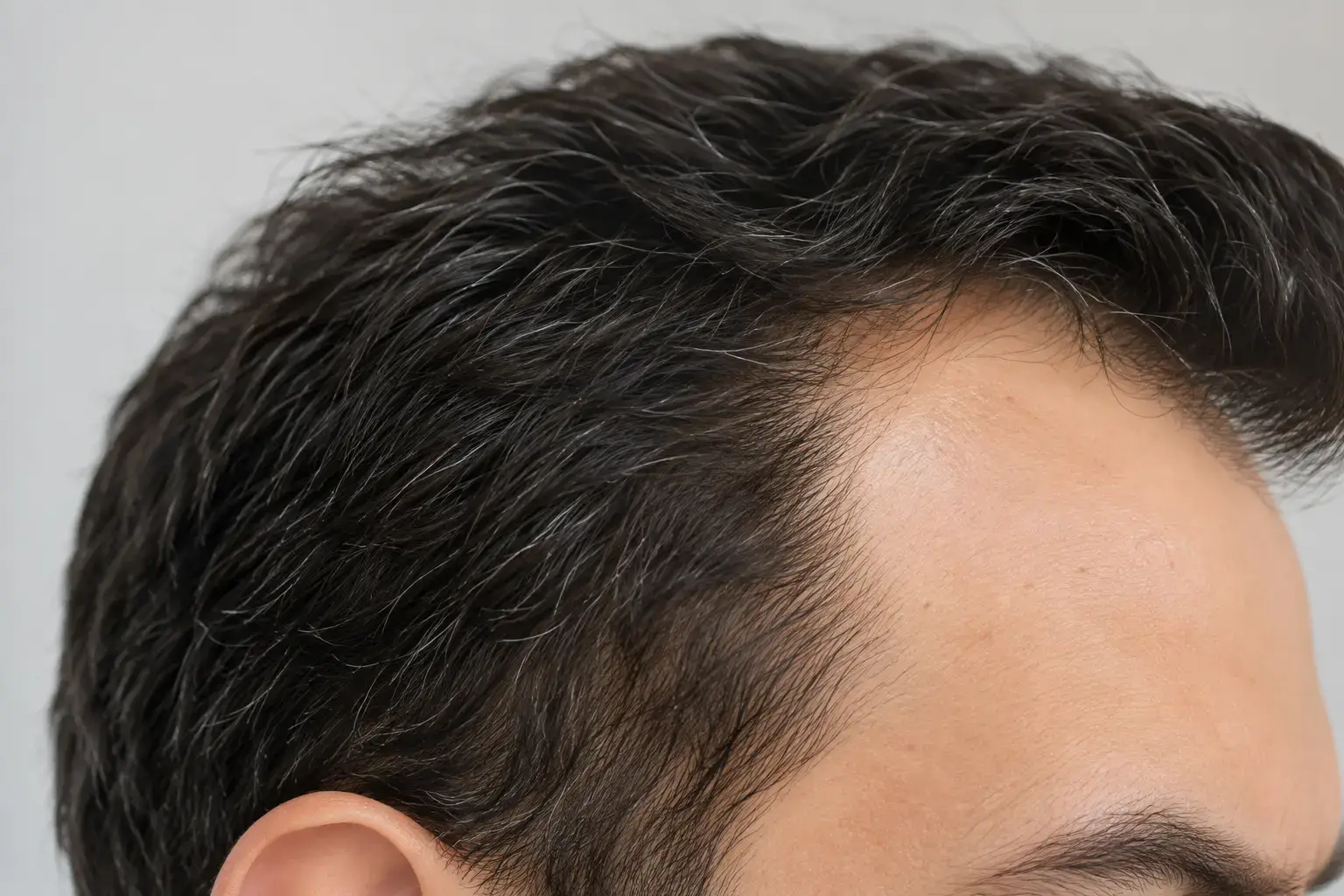
The first signs of a receding hairline might vary, but they’re often subtle and can be difficult to spot. You may have seen your hairline very gradually move backwards at your temples, have experienced more shedding while washing or styling, or seen thinning around the front of your scalp.
While some of these changes are a natural part of ageing, ongoing recession or visible thinning could potentially indicate pattern hair loss, and there are several potential treatment options you might want to explore.
Earlier interventions may be able to slow or stop hair recession, but in every case it’s worth speaking with an experienced hair restoration consultant if you have any concerns, or feel your hairline is impacting your self-esteem.
Early Signs of a Receding Hairline: Key Takeaways
- Hair recession usually starts, for most men, around the temples and develops gradually. For women, this is more likely to be visible around their parting.
- More shedding when styling or washing hair doesn’t necessarily mean you are experiencing permanent hair loss, but if you have ongoing thinning, it may be useful to have this assessed.
- Recognising indications of receding hair sooner is beneficial because there are more treatment options available the less advanced the hair recession is, with the potential to help improve long-term outcomes.
How Can You Tell if Your Hairline is Starting to Recede?
Hair recession affects everyone differently, and although a changing hairline might materialise in many ways, some of the common indications that your hairline is starting to pull back might include:
- Noticing that your temples seem to be more pronounced
- Seeing an M-shaped hairline when this isn’t the norm for you
- Feeling that your forehead is starting to look larger
- Finding it harder to style your hair in the way you like it
A great tip is to take photographs if you’re unsure whether your hairline is actually receding. You can use these to compare your hairline from one week or month to the next, and either confirm that your hairline is changing or settle any unfounded concerns.
Related reading: How to tell if your hairline is receding.
What Are the First Signs of Male Pattern Hair Loss?
The first sign of pattern hair loss in men is a gradual thinning or creeping backwards of the hairline around the temples.
Male pattern hair loss is the everyday term for male androgenetic alopecia, a genetic and hereditary condition that progresses slowly, rather than sudden bald patches that are likely related to something else.
This is, though, the most common cause of receding hair in men. Female pattern hair loss also occurs but is usually characterised by a widening parting or diffuse thinning, so this doesn’t normally cause a receding hairline.
A hair restoration consultant can offer further insight after an examination of your scalp and hair, but here are some of the potential signs you might have seen and what they could point to:
| Change to Hair | Potential Cause | Recommended Action |
| Receding hairline at the temples | Early male pattern hair loss | Speak to a consultant if you wish to address this. |
| Increased shedding | Stress, hormonal changes, pattern hair loss or temporary causes like telogen effluvium | Manage the underlying cause or consult a professional if you are concerned. |
| Thinning at the crown | Female or male pattern hair loss | Consider topical or non-surgical treatments or a hair transplant if more advanced. |
| Widening parting | Female pattern hair loss | Review appropriate hair restoration treatments to slow or restore the follicles. |
| Breakage | Hair damage, often caused by chemicals or heat | Improve hair care and nourish the scalp and follicles. |
Related reading: The seven stages of balding
Get a cost for your hair transplant
Looking for a consultation regarding the hair transplant cost? Book a free consultation with us today to see what we can do for you.
What Is the Difference Between a Mature and a Receding Hairline?
Most men see some change in their hairlines as they get older. This can look different between individuals, but usually means that:
- The hairline will become around one or two cm higher over time
- Hair recession will stabilise rather than progressing further
- Growth is typically symmetrical across the temples
In contrast, a receding hairline doesn’t stop but keeps moving backwards, followed by thinning at the crown. The temples normally deepen, with the hairline in an M or W shape.
Related reading: Mature hairline vs receding
When Should I Seek Professional Advice About Receding Hair?
We advise speaking to the KSL Clinic consultants if you are concerned about your hairline, or if it is affecting your self-esteem. There are potential treatments at all stages, from preventative medications and topical shampoos to slow the speed of hair loss, through to a receding hairline hair transplant.
If any of the following sound familiar, booking a free consultation may be the best way forward:
- Your hairline has changed significantly over six to 12 months
- Your hair loss is patchy
- You’ve seen a big increase in shedding
- You have scalp irritation or inflammation alongside hair loss
Treatment recommendations will depend on the reason for hair loss, whether there are any lifestyle factors involved, and the stage of hair loss.
For early-stage hair recession, medications and non-surgical interventions may be sufficient to restore dormant follicles and prevent the hairline from changing further.
In other cases, we might suggest a hair transplant, using donor follicles to replenish the hairline, but assessing your scalp and hair is the first step to creating a treatment plan.
KSL Clinic says, ‘It’s a myth that hair restoration treatments are only available once hair loss has progressed to a more advanced stage. Evaluating hair loss early often means we can provide a wider range of treatment options, and ensure patients can decide how they’d like to move forward.’
Frequently Asked Questions
Can a Receding Hairline Grow Back?
Potentially, yes. Some types of hair loss are temporary, and with good hair care, topical treatments, and non-surgical therapies like PRP and laser treatments, dormant follicles can be reactivated and start producing healthy hair.
However, if hair loss is due to pattern hair loss, it is unlikely follicles will enter into a new growth phase without targeted treatment.
Does Stress Cause Hair to Recede?
Yes, stress is one of many things that can affect hair growth, with the NHS noting that stress, illness, hormonal changes, and nutritional deficiencies can all prompt hair loss that will usually self-correct.
At What Age Do Men Start Having a Receding Hairline?
Around 50% of men will see some form of pattern hair loss by the age of 50, so this is far from rare, although early-stage hair loss can occur at any age.
Androgenetic alopecia also impacts women, although the early signs may be different, with around 40% of women having hair loss by the same age.
Can a Receding Hairline Grow Back?
Potentially, yes. Some types of hair loss are temporary, and with good hair care, topical treatments, and non-surgical therapies like PRP and laser treatments, dormant follicles can be reactivated and start producing healthy hair.
However, if hair loss is due to pattern hair loss, it is unlikely follicles will enter into a new growth phase without targeted treatment.
At What Age Do Men Start Having a Receding Hairline?
Around 50% of men will see some form of pattern hair loss by the age of 50, so this is far from rare, although early-stage hair loss can occur at any age.
Androgenetic alopecia also impacts women, although the early signs may be different, with around 40% of women having hair loss by the same age.
Does Stress Cause Hair to Recede?
Yes, stress is one of many things that can affect hair growth, with the NHS noting that stress, illness, hormonal changes, and nutritional deficiencies can all prompt hair loss that will usually self-correct.