

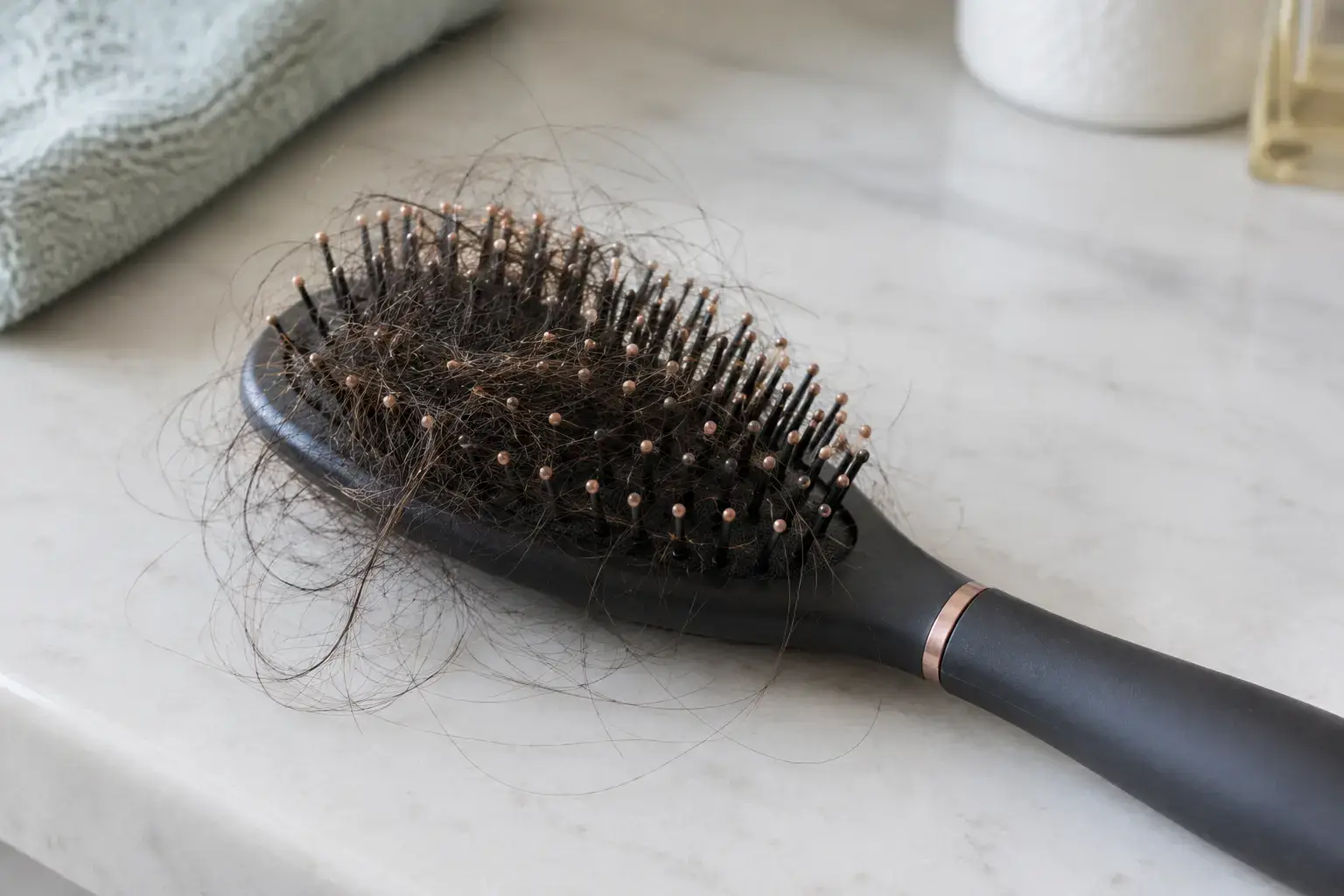
Noticing that your hair is suddenly becoming thinner can be a shock, potentially with more hair in the shower or on your brush, being able to see your scalp through your hair, having a widening parting or a thinner ponytail.
The first advice is to try to avoid panicking and to seek professional advice, because there are lots of causes of shedding, many of which aren’t permanent, and because stress and anxiety can potentially exacerbate some types of hair loss.
We’ve looked at some possible causes of why your hair is thinning all of a sudden, and what you should do to ensure you’re protecting your hair from further thinning or addressing the underlying reason for sudden hair loss.
Sudden Hair Thinning: Key Takeaways
- Seeing sudden changes to your hair can be alarming, but sudden shedding doesn’t necessarily mean permanent hair loss, and it could, for instance, be telogen effluvium, which can be prompted by stress, surgery, weight loss and hormonal changes.
- Hair progresses through stages, including active growth and resting phases, and anything that disrupts that cycle can mean your follicles don’t produce new hairs as quickly, or that you see more shedding over the short term.
- It is advisable to speak to a practitioner or clinician before doing anything, as the right treatments or interventions will depend on the reason for the hair loss.
Why Might My Hair Suddenly Have Started Thinning?
Thinning or shedding means you’ve noticed lots more hair coming out over a relatively short period, which can make your hair overall look thinner on your scalp. This shouldn’t be confused with gradual pattern hair loss, where there is a slow, progressive reduction in hair density.
A potential explanation might be telogen effluvium, which is a temporary issue that disrupts the normal, healthy hair growth cycle where follicles produce new hair and rest and shed periodically.
The British Association of Dermatologists indicates that normal shedding is around 30 to 150 hairs a day, while conditions like telogen effluvium and other causes of hair loss might mean a much larger number of follicles enter the shedding phase all at once.
Possible causes of sudden hair thinning might include:
| Hair Shedding Cause | Examples |
| Stress, illness or surgery | Significant physical or psychological stress, illnesses, high fevers or surgical procedures. |
| Weight loss or restrictive dieting | Rapid and extreme weight loss and diets. |
| Nutritional deficiencies | Lack of specific vitamins and minerals, often iron. |
| Hormonal changes | Changes to hormones such as post-partum, perimenopause, menopause and natural ageing. |
| Some medications | Side effects of some prescription medicines. |
| Thyroid disorders | Over- or underactive thyroid problems can be associated with hair loss. |
In some cases, though, the trigger isn’t obvious, and in around one in three cases a clinician can’t identify a specific cause.
Could Sudden Hair Thinning Be Male or Female Pattern Hair Loss?
Androgenetic hair loss, which is more commonly known as male or female pattern hair loss, isn’t typically expected to result in dramatic thinning over the whole head. More often, this type of hair loss is gradual.
However, there can be situations where hair loss has been progressing for some time, but simply hasn’t been noticed by the patient, making it feel as though thinning has occurred rapidly.
If pattern hair loss is the cause, there remain solutions, such as a hair transplant procedure. It is, though, important to investigate the cause of thinning before proceeding with this type of procedure to ensure there isn’t an underlying clinical issue that needs to be treated.
Free consultation
Looking for a consultation for thinning hair? Book a free consultation with us today to see what we can do for you.
What Should I Do if My Hair Has Started Thinning All of a Sudden?
We’d suggest working through these steps, especially if you’re waiting for an appointment with a GP or hair restoration practitioner, since having your medical history and tracking symptoms can be helpful during these discussions.
-
Think About Anything That’s Changed Recently
If you’ve been ill, under stress, lost weight, changed medication or altered your diet, these might all be factors in managing your hair loss.
-
Don’t Assume You’ll Need a Permanent Hair Restoration Procedure
Some types of hair loss are temporary, and others aren’t, but panicking about needing a quick and dramatic solution could put you under unnecessary stress.
-
Speak With a GP or Medical Professional as Soon as Possible
While some services have longer waiting times than others, it’s important to discuss your hair loss concerns, especially if there isn’t an obvious cause or the shedding is significant.
-
Look After Your Hair
Avoid heat, dyes, harsh chemicals, aggressive brushing and tight hairstyles, all of which can assist in self-care and prevent further breakage or damage to your hair.
When Might a Hair Transplant Be Appropriate for Sudden Thinning?
Sudden hair shedding doesn’t often mean a hair transplant becomes a necessity, because hair restoration is more likely to be suitable when patients have established hair loss, sufficient healthy donor follicles, and a realistic idea of what this surgery can achieve.
KSL Clinic comments that, ‘If you’d like to speak to any of our GMC-registered hair restoration surgeons, or to get independent advice about treatments like laser hair therapy, PRP or medications that can help manage hair loss, you’re very welcome to schedule a free consultation at any of our practices.
While we may not always recommend a hair transplant, we can examine your scalp and hair, chat through your concerns and devise a customised treatment plan suited to you.’
Frequently Asked Questions
Can Stress Cause Sudden Hair Thinning?
Yes. Significant psychological or physical stress can disrupt the normal hair growth cycle and contribute to telogen effluvium, which can cause increased shedding. The shedding may become noticeable sometime after the stressful event rather than immediately.
Will Sudden Hair Thinning Grow Back?
It depends on the underlying cause. Some forms of sudden shedding, including telogen effluvium, usually improve naturally once the hair cycle returns to normal, although it can take several months for hair volume to recover.
If you’re worried about sudden shedding and unsure whether it’s likely to be a short-term or permanent issue, we’d suggest speaking with your GP or scheduling a consultation with your nearest KSL Clinic.
Can Stress Cause Sudden Hair Thinning?
Yes. Significant psychological or physical stress can disrupt the normal hair growth cycle and contribute to telogen effluvium, which can cause increased shedding. The shedding may become noticeable sometime after the stressful event rather than immediately.
Will Sudden Hair Thinning Grow Back?
It depends on the underlying cause. Some forms of sudden shedding, including telogen effluvium, usually improve naturally once the hair cycle returns to normal, although it can take several months for hair volume to recover.
If you’re worried about sudden shedding and unsure whether it’s likely to be a short-term or permanent issue, we’d suggest speaking with your GP or scheduling a consultation with your nearest KSL Clinic.