

Clinical studies and trials show that platelet-rich plasma therapy (PRP) can improve post-transplant follicle survival rates, increase hair growth density, and accelerate healing, making it an evidence-based approach to achieving the best possible outcomes.
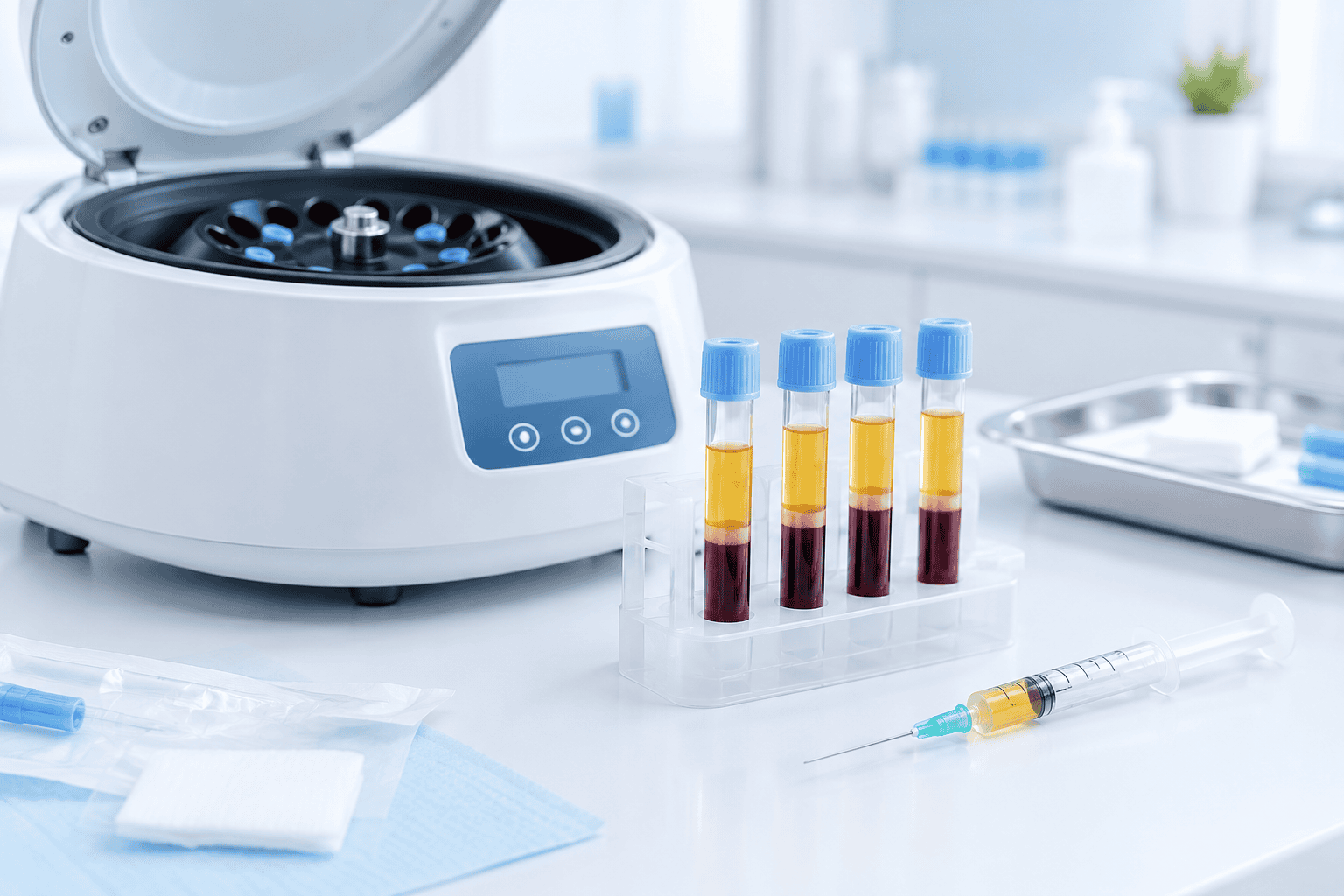
Each treatment involves the extraction of a small blood sample, which is concentrated to create an injectable growth factor compound containing between two and six times the normal number of platelets, as an optimal way to activate tissue regeneration.
PRP can stimulate healing, promote angiogenesis (the formation of blood vessels), and support cell regeneration, all of which are linked to improved survival rates for hair transplant grafts.
PRP and Hair Transplant Graft Survival: Key Takeaways
- Research has consistently shown that PRP can improve the survival rate of transplanted hair follicles and growth density when used alongside a hair transplant.
- The benefit of PRP is that it works at a cellular level to reduce damage, promote a healthy blood supply to the scalp, and extend hair growth phases – which means more hair and greater thickness.
- PRP is safe and low-risk, with minimal side effects, due to its use of the patient’s own blood, and has strong clinical evidence of its effectiveness, resulting in its use in multiple medical fields, including those outside of hair restoration.
What Research Is Available About the Effectiveness of PRP?
Numerous studies demonstrate the efficacy of PRP in post-hair transplant recovery, including those summarised below.
-
Systematic Review of PRP Connected to Hair Transplantation
A 2025 study analysed 217 patients [1], examining graft survival after a hair transplant and whether PRP could improve those survival rates. It found that participants receiving PRP:
- Had increased hair density
- Experienced improvements in follicle survival rates
- Saw hair growth begin earlier post-transplant
While this project noted that factors like the variations in how PRP treatments are prepared can skew real-world results, and the need for standardisation in the administration of PRP, it has clear, demonstrable benefits.
-
Placebo-Controlled Trial of PRP in Hair Regrowth
A separate study involved 20 male participants, with some given a placebo and others PRP. [2] The research determined that:
- Men saw significant levels of hair regrowth after three PRP treatments
- Those receiving PRP had improved follicular health, as checked through dermoscopic assessment
- Ki-67 markers were higher, indicating an increase in cellular activity
Importantly, this trial found that the effects of PRP were sustained over time and that only a small proportion of the men who received the treatment required follow-up therapies.
-
Clinical Study Analysing PRP for Pattern Hair Loss Patients
This third research analysed how well PRP works for patients with androgenetic alopecia, or pattern hair loss, and how it compares with other strategies, such as topical treatments and medications. [3]
Over three years, from 2019 to 2022, outcomes included standard results for participants receiving post-hair transplant medication, as well as higher follicle survival rates, stronger hair, and faster growth for those receiving PRP alongside post-transplant medications.
Therefore, PRP has been shown as a powerful way to enhance hair transplant results, rather than a replacement for hair restoration medications.
Get a cost for your hair transplant
Looking for a consultation regarding the hair transplant cost? Book a free consultation with us today to see what we can do for you.
How Does PRP Compare to Other Hair Restoration Treatments?
| Objective | Effect on Follicle Survival Rates | |
| Minoxidil | Stimulate blood flow to the scalp | Moderate |
| Finasteride | Reduce DHT – the hormone responsible for male pattern hair loss | Indirect |
| PRP | Reactive cellular activity and tissue healing | Direct and significant |
| Hair transplant | Relocate donor follicles to areas of hair loss | Dependent on aftercare |
What Types of Hair Loss Is PRP Used to Treat?
While usually combined with a hair transplant to improve recovery times and follicle survival rates, PRP can also be used in conjunction with a surgical procedure or as a standalone treatment approach to address a wide range of hair loss concerns.
Reports indicate that:
- PRP can increase the density of hair growth per square centimetre on the scalp for people with androgenetic alopecia or pattern hair loss and boost the thickness of each follicle.
- Treatments for female pattern hair loss are as effective, with thicker hair shafts and benefits for women with thinning or diffuse shedding.
- Autoimmune hair loss conditions like alopecia areata may respond to PRP, which can also be an alternative treatment for patients with intolerance or resistance to conventional steroid treatments.
- Scarring or cicatricial alopecia can be treated to some extent with PRP, and although regrowth may be limited, the therapy can help reduce inflammation and improve overall scalp health.
The success of PRP depends equally on how well the treatment is administered, the platelet concentration in the sample, and how often patients attend PRP sessions. However, it can also be affected by lifestyle factors like poor hydration, nutrition, smoking and high levels of stress.
Is PRP Safe for All Hair Transplant Patients?
Typically, yes, there are very rare comments about negative side effects following PRP therapies in clinical literature, and in most trials and studies, no adverse symptoms have been recorded whatsoever. This is because:
- PRP uses the patient’s own blood, without anything synthetic
- There is no risk of rejection
- Temporary side effects are very mild, including redness and swelling
This makes PRP a low-risk, widely suitable procedure that can be performed without anaesthetic in a clinical setting.
KSL Clinic says, ‘PRP is one of the many advanced regenerative tools practitioners have to treat hair loss, and we’ve seen consistent results over many years, making the treatment a highly advantageous therapy for patients following a hair transplant.’
Frequently Asked Questions
Does PRP Therapy Guarantee Better Post-Transplant Follicle Survival Rates?
No, it’s impossible to offer guarantees because outcomes depend on several factors, such as the patient’s lifestyle, how well they follow post-transplant aftercare guidance, and the condition of their hair and scalp.
However, PRP has been shown to contribute to better graft survival rates than those recorded for patients not having PRP or relying only on medications.
Is PRP Better for Post-Transplant Recovery Than Minoxidil or Finasteride?
Potentially, yes, and although these medications work differently from PRP, one of the referenced studies shows that PRP combined with medications yields better graft survival than medications alone.
How Many PRP Sessions Do Patients Need After a Hair Transplant?
This depends on the location and extent of the hair transplant, but the norm is to have around three or four sessions to begin with, followed by maintenance treatments every six to 12 months.
Why Have Researchers Commented on the Standardisation of PRP?
Research teams have reported strong results but have found that the different methods used by some practitioners, along with variations in protocols and PRP concentrations injected, can mean outcomes aren’t identical across clinics.
Does PRP Therapy Guarantee Better Post-Transplant Follicle Survival Rates?
No, it’s impossible to offer guarantees because outcomes depend on several factors, such as the patient’s lifestyle, how well they follow post-transplant aftercare guidance, and the condition of their hair and scalp.
However, PRP has been shown to contribute to better graft survival rates than those recorded for patients not having PRP or relying only on medications.
How Many PRP Sessions Do Patients Need After a Hair Transplant?
This depends on the location and extent of the hair transplant, but the norm is to have around three or four sessions to begin with, followed by maintenance treatments every six to 12 months.
Is PRP Better for Post-Transplant Recovery Than Minoxidil or Finasteride?
Potentially, yes, and although these medications work differently from PRP, one of the referenced studies shows that PRP combined with medications yields better graft survival than medications alone.
Why Have Researchers Commented on the Standardisation of PRP?
Research teams have reported strong results but have found that the different methods used by some practitioners, along with variations in protocols and PRP concentrations injected, can mean outcomes aren’t identical across clinics.
References:
- National Library of Medicine: Efficacy of Platelet-Rich Plasma as an Adjunct to Hair Transplantation
- National Library of Medicine: The Effect of Platelet-Rich Plasma in Hair Regrowth
- Wiley Online Library: A Prospective and Comparative Study to Explore the Effects of Platelet-Rich Plasma in Hair Transplantation