

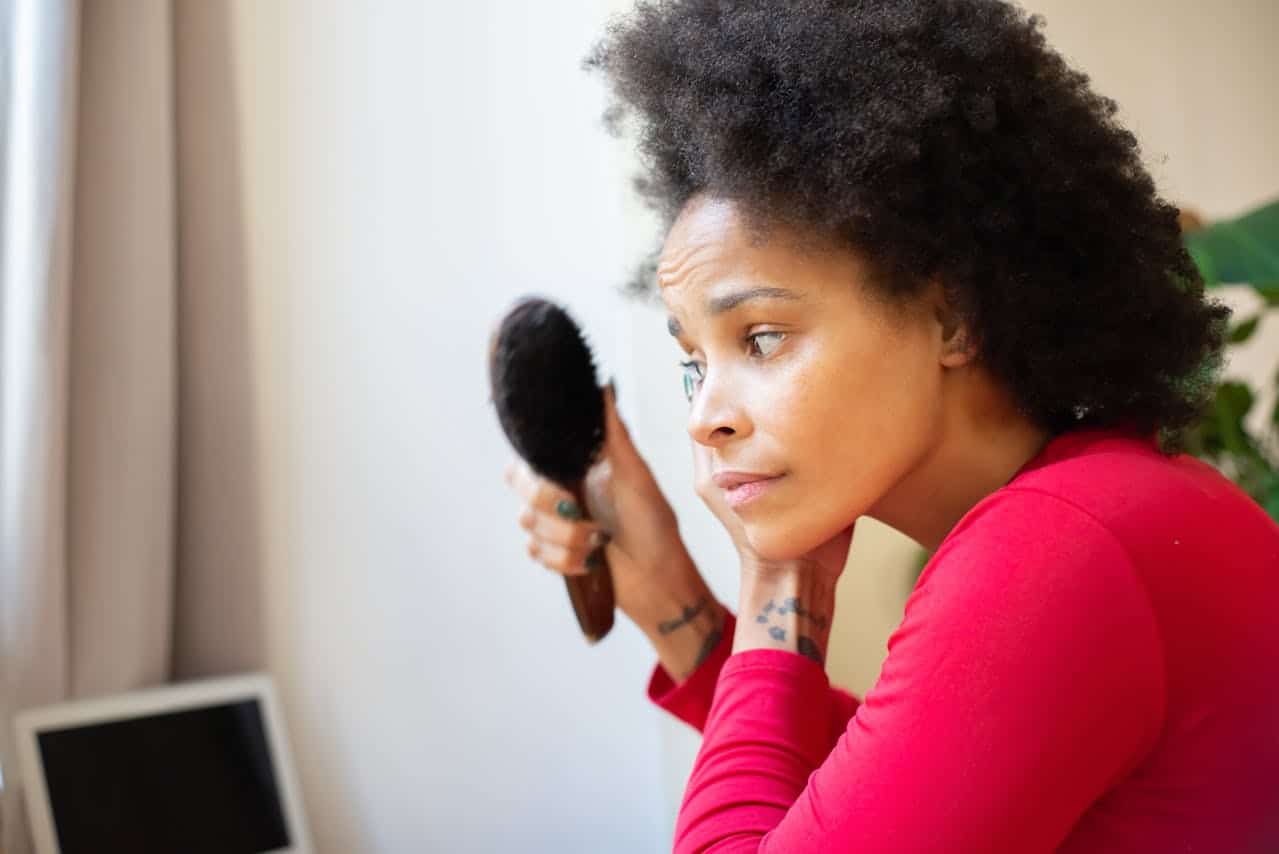
Brushing your hair is a normal part of everyone’s routine, and if you’re using a good-quality brush and untangling your hair carefully and gently, there’s little chance that over-brushing is causing hair loss or making genetic hair loss worse.
Aggressive brushing can lead to hair loss. Brittle or damaged hair can be more susceptible to shedding if brushed vigorously, or if you follow brushing with the use of high-heat tools when your scalp is vulnerable to damage and abrasion.
This guide covers everything you need to know about hair loss and brushing, as well as how to minimise pulling or tugging at your follicles, especially if you’re already experiencing thinning and want to preserve the density and health of your hair as much as possible.
Need to speak to an expert about your hair loss? KSL Clinic offers a free initial hair loss consulation to assess your hair loss and discuss an appropriate treatment.
Brushing and Links With Hair Loss
- It’s essential to brush your hair to remove tangles and knots. Using smoothing brushes can improve the gloss and appearance of your hair, which is why refraining from brushing is never advisable.
- Those who see hair loss after brushing that is above the norm are probably seeing the results of genetic hair loss, but brittle, poorly-conditioned and damaged hair can be more prone to shedding, which could mean you’re more likely to lose some strands when you brush.
- Using stiff, harsh bristles that rip the hair away from the scalp, brushing aggressively when hair is wet, and applying heat immediately after brushing can all be issues, while not being a direct cause of hair loss itself.
What Is Brushing Hair Loss?
Brushing hair loss isn’t a clinical term, but it occurs when you use excessive force to brush your hair, causing strands to be removed in the process. On average, we lose about 50 to 100 hairs every day, and a few strands in your brush aren’t a cause for concern.
The most common cause of hair loss is pattern hair loss, which is genetic and cannot be stopped or reversed, but correcting lifestyle factors and being gentle with your hair and scalp can certainly be beneficial.
Reasons Aggressive or Over-Brushing Can Affect Your Hair
Here are some of the aspects of brushing that could mean you’re aggravating your scalp or pulling strands out of the follicle without realising it:
- Always brushing your hair when it is wet, at a point when the hair shaft is weaker, and using stiff bristles to remove tangles as quickly as possible. A gentle, smoothing conditioner or detangler spray could be useful.
- Brushing too much or too often. The amount of time you spend brushing your hair will, of course, depend on how coarse the strands are and how thick your hair is, but brushing gently till tangles have gone is sufficient – if you keep brushing for extended periods, you could be causing damage.
- Using heated styling tools. Most people now realise that a heat protector spray is essential when using a hair dryer or straighteners. However, we also advise against heated brushes, which provide a blow-dry effect while brushing. It’s better to brush carefully, then use a protective spray and a styling tool at the lowest heat setting.
It’s essential to brush your hair after washing, but it’s preferable to do so after towel drying and applying detanglers or leave-in conditioners.
Trying to brush out stiff, brittle hair that has been styled with gel, mousse, or spray is more likely to damage the follicles and tear hairs out at the root. That’s because these products can dry out your hair and scalp.
To prevent this, use a high-quality shampoo and conditioner to thoroughly remove all of the product before brushing.
How to Ensure You Brush Your Hair Carefully and Gently to Avoid Exacerbating Hair Loss
There are various tips we can offer, depending on the reasons and extent of hair loss and thinning, as well as whether you’re experiencing early-stage genetic hair loss or have experienced a decline in hair density due to issues like traction alopecia.
For most patients, the following will help them take the best care of their hair:
- Avoid applying harsh relaxants, perms, colours and other chemical-based treatments too often. We appreciate that many people love to colour their hair or use a certain style, but spacing these appointments out to ensure the hair can recover and the scalp isn’t continually being stripped of natural oils is good advice.
- Try wearing your hair loose or in comfortable styles more often. Tight buns and ponytails pull on the scalp, as can wearing restrictive headgear that doesn’t allow the scalp to breathe.
- Use the best quality conditioner you can. Even if you have naturally thin hair without many tangles, you should still apply conditioner to ensure your hair is moisturised, supple, and less likely to snag on bristles during brushing.
You may also want to consider investing in a premium hairbrush that gently removes tangles without irritating a sensitive scalp, especially if you have skin prone to discomfort due to eczema or other conditions. Flexible bristles, cushioned ends, and soft silicone brushes are all widely available options.
Addressing Hair Loss and Managing Your Hair Care Routine
As we’ve explained, in almost all cases, brushing alone isn’t the sole cause of hair loss. However, anything that strains your scalp, irritates your follicles, tugs at your hair strands, or abrades against the hair won’t help control the speed of shedding and could even make it worse.
However, even if you’ve always taken amazing care of your hair, that doesn’t guarantee you won’t experience hair loss if this runs in your family, which is why the next step is to arrange a consultation with our experienced hair restoration consultants.
It’s never worth agonising over the products you use, as these usually have little impact on hair loss. Instead, focus on protecting the health of your hair and practising good scalp hygiene.
Hair transplants may be just one of the suitable options, and we can offer independent advice, including suggestions for alternative therapies to help restore the health of your hair and scalp. Women in particular are concerned with hair loss with brushing. If you suffered with hair loss, see more information about hair restoration on our Women’s hair transplant page.
Get a cost for your hair transplant
Looking for a consultation regarding the hair transplant cost? Book a free consultation with us today to see what we can do for you.