

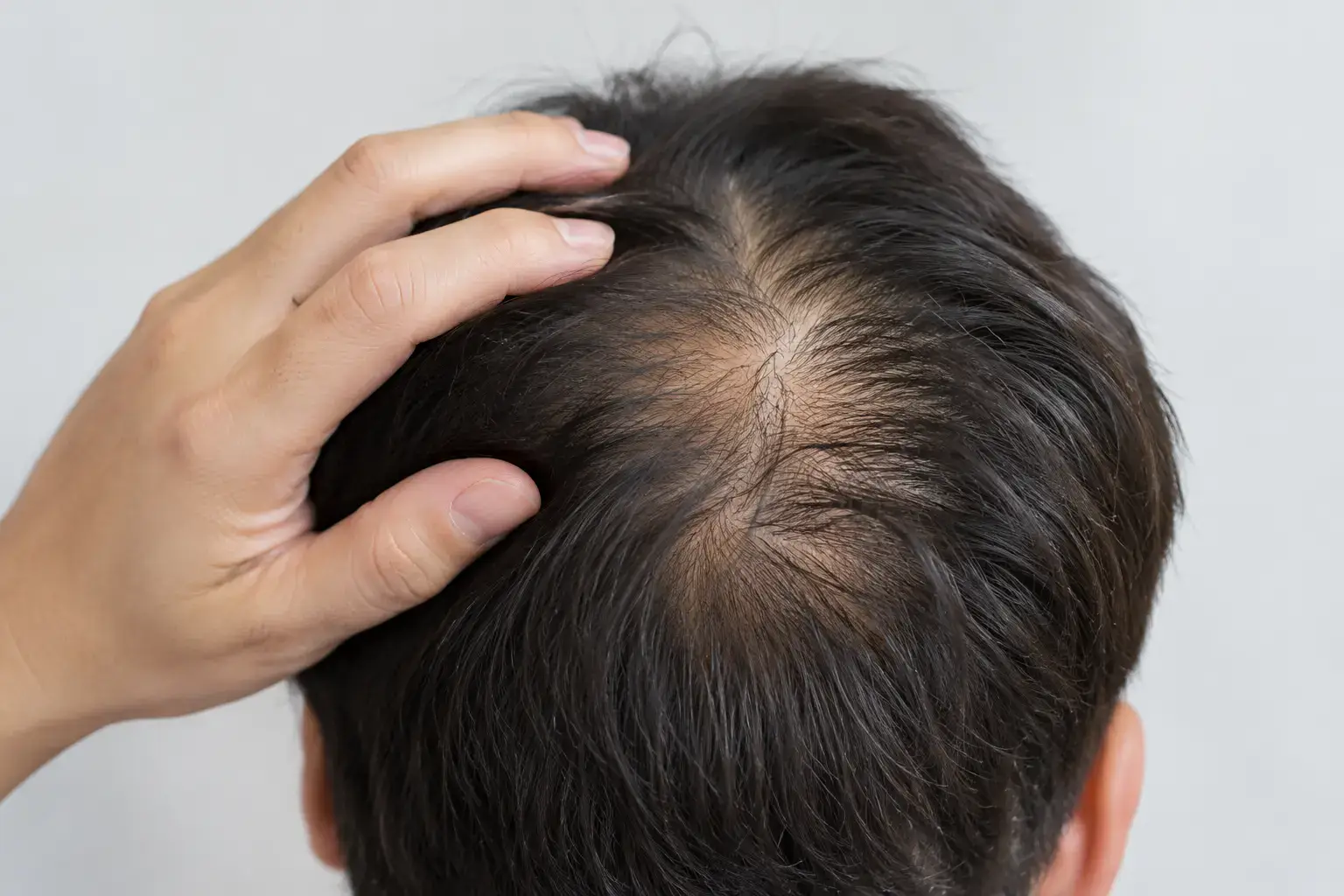
Tender spots on the scalp can develop for many reasons, including skin irritation, infections, inflammation, tight hairstyles, headaches, injuries and underlying conditions that affect the hair follicles.
While most cases aren’t serious and will settle on their own, any persistent tenderness may require assessment by a healthcare professional. This is particularly important if soreness is accompanied by redness, swelling or hair loss.
We’ve shared insights into the potential causes and solutions for a tender scalp to help you identify the most appropriate approach or treatment plan.
Tenderness on the Scalp: Key Takeaways
- Tender spots on your scalp can be caused by a wide array of things, from temporary irritation, sunburn, and insect bites to underlying skin conditions.
- A small, mildly tender area isn’t often a cause for immediate concern, but tenderness and swelling, ongoing pain, hair loss, or signs of infection require medical attention.
- Discovering the cause of the tender spot is the best way to relieve discomfort and prevent further issues affecting your scalp and hair.
Why Does My Scalp Feel Tender in One Spot?
Tenderness is a symptom that can relate to a whole host of underlying causes. That could be down to:
- Irritation or infection to the skin
- Damage to the hair follicles in the area
- Nerve damage or inflammation
- Muscle pain or bruising
In most cases, a tender spot won’t be anything serious, but if the area is very sore or becomes painful, is hot or severely irritated, or doesn’t subside, the best advice is to speak with a medical professional.
What Are the Potential Reasons for a Tender Spot on the Scalp?
Anything that affects the skin, hair follicles, or nerves on your scalp could cause tenderness, and we’ve shared some of the many possible reasons, noting that this isn’t an exhaustive list or intended to replace a professional diagnosis.
Folliculitis
This is a relatively common skin condition in which the hair follicles become infected or inflamed. You might have red bumps in the tender area, and sometimes pimples, depending on whether the folliculitis is caused by irritation, bacterial infections, or friction.
Gently cleaning the skin, avoiding scratching or shaving, and consulting a GP if the condition doesn’t clear up is the best way forward.
Tight Hairstyles
Wearing very heavy or tight hairstyles can cause a condition called traction alopecia, where ponytails, braids, extensions, or dreadlocks pull on the hair follicles, causing them to weaken and become damaged.
The good news is that changing your hairstyle and avoiding restrictive hats or headbands can relieve the condition and may solve the problem.
That said, if follicles have become damaged, or you’ve seen a receding hairline caused by traction, professional guidance may be necessary to restore your hairline.
Scalp Psoriasis or Eczema
Skin conditions like eczema, which affects about 10% of UK adults, and psoriasis, which is rarer, impacting 2% to 3% of people worldwide, can contribute to itchiness, scaling which might look like dandruff, and inflammation.
There are several treatments for either condition, including soothing creams and topical medications, vitamin supplements, corticosteroids and non-surgical therapies.
Minor Injuries
Bumps, scratches, sunburn and even insect bites can create an isolated tender spot. These should heal naturally, but if you have a large bump or have hit your head hard, or have tenderness that doesn’t subside, it’s advisable to have this evaluated by a clinician.
Headaches and Nerve Pain
Many people don’t realise that headaches can materialise as scalp tenderness. This can be caused by tension headaches, often related to stress or jaw clenching, or occipital neuralgia, a headache triggered by inflammation, nerve compression or injuries, and migraines.
Treating the headache itself should resolve the tenderness, although as always this may need to be revised by a medical practitioner if the headache is ongoing.
Alopecia-Related Inflammation
There are several types of alopecia, including alopecia areata, an immune system condition, androgenetic alopecia or pattern hair loss, frontal fibrosing alopecia, and scarring alopecia, all of which could be affecting your scalp.
However, while pattern hair loss is very common, it usually doesn’t cause tenderness. With only 2% of the global population experiencing alopecia areata, this isn’t among the common causes of a sore patch.
Get a cost for your hair transplant
Looking for a consultation regarding the hair transplant cost? Book a free consultation with us today to see what we can do for you.
A Summary of Common Causes of Scalp Tenderness
| Potential Cause | Symptoms | Duration | Need for Medical Advice |
| Traction alopecia | Tenderness when touching your hair | Usually, temporary | Yes, if the condition persists |
| Folliculitis | Painful bumps and redness | Normally short-term | Yes |
| Psoriasis | Flaking and itching | Chronic condition | Yes |
| Minor injuries | Localised soreness | Temporary | Yes, if the injury isn’t healing or pain worsens |
| Inflammation linked to alopecia | Tenderness alongside hair loss | Varies depending on the type of alopecia | Yes |
How Can You Relieve a Tender Scalp?
There are lots of things you can do to improve tenderness or soreness, starting by reviewing the causes we’ve discussed to see if any seem very likely, or speaking with a GP or a hair restoration specialist to determine the reason.
From there, you can:
- Avoid scratching or rubbing your head, which could make the problem worse
- Loosen your hairstyle and avoid harsh dyes, chemicals and shampoos
- Consider supplements or lifestyle changes to support skin and hair health
- Speak to a medical professional if symptoms persist or get worse
‘A tender scalp and hair loss aren’t necessarily always linked. However, if you have scalp discomfort and have noticed thinning hair or patches of hair loss, it’s important to speak with a consultant or practitioner.
Dr Matee KSL Clinic
Assessing your scalp may help determine what is causing those symptoms, while also identifying the best treatments before the scalp or follicles become permanently damaged.’
Frequently Asked Questions
Can Stress Cause Scalp Tenderness?
Yes, stress is responsible for a huge range of symptoms and issues, and if you’re going through a period of stress or experience tension headaches, this can be characterised as a tender spot on your scalp.
Can a Hair Transplant Cause Scalp Tenderness?
Yes, for the first 10 to 14 days after a hair transplant, the areas around the donor follicles and transplant area may be sore and sensitive. However, with the right aftercare, this shouldn’t be prolonged, and any ongoing soreness or new pain should be investigated immediately to rule out an infection.
We only recommend FUE transplantation, which uses microscopic techniques to minimise tissue damage, but recognise that more invasive procedures may also have extended recovery times with a greater chance of soreness.
Does Shampoo Cause Scalp Pain?
Not normally, but there is the potential that a tender spot is being caused by a chemical or ingredient in a new shampoo or styling product that you might be sensitive to, or that has triggered an allergic reaction.
Can Stress Cause Scalp Tenderness?
Yes, stress is responsible for a huge range of symptoms and issues, and if you’re going through a period of stress or experience tension headaches, this can be characterised as a tender spot on your scalp.
Does Shampoo Cause Scalp Pain?
Not normally, but there is the potential that a tender spot is being caused by a chemical or ingredient in a new shampoo or styling product that you might be sensitive to, or that has triggered an allergic reaction.
Can a Hair Transplant Cause Scalp Tenderness?
Yes, for the first 10 to 14 days after a hair transplant, the areas around the donor follicles and transplant area may be sore and sensitive. However, with the right aftercare, this shouldn’t be prolonged, and any ongoing soreness or new pain should be investigated immediately to rule out an infection.
We only recommend FUE transplantation, which uses microscopic techniques to minimise tissue damage, but recognise that more invasive procedures may also have extended recovery times with a greater chance of soreness.