
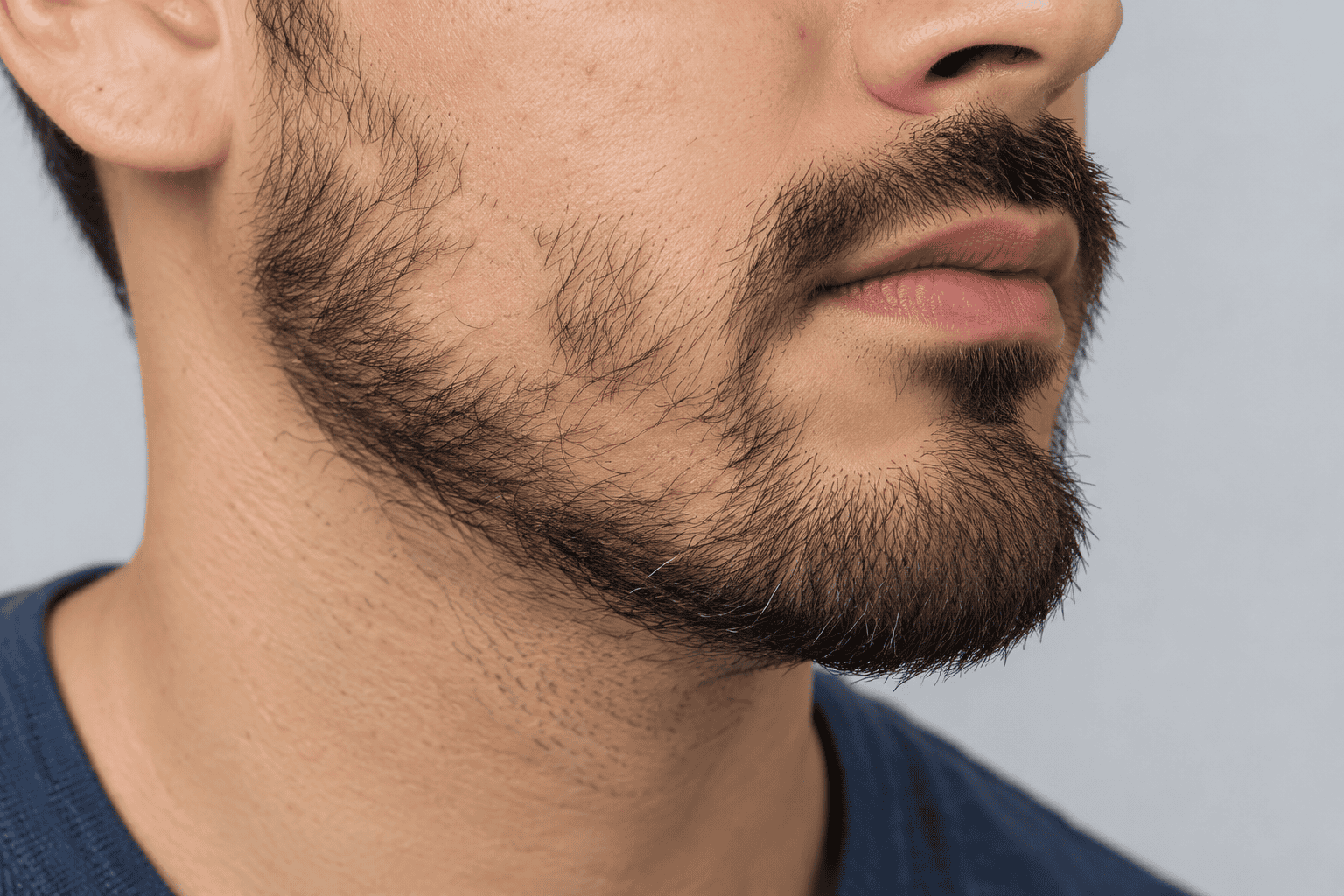
Bald patches in your beard or facial hair can appear for lots of reasons, from genetics to naturally patchy growth. Although some bald spots may resolve themselves over time, others require treatment to reactivate dormant follicles.
The best starting point is to find the underlying cause, because the interventions hair restoration specialists will recommend may differ, for instance, if you’re affected by alopecia areata or are experiencing hair loss linked to high stress.
If you’ve noticed a small patch in your beard or have seen gradual thinning becoming more noticeable, the good news is that there are potential solutions, including lifestyle changes, medications and beard restoration surgeries.
Facial Hair Bald Spots: Key Takeaways
- Patches can appear in facial hair for many reasons, including alopecia, hormonal changes, stress, scarring, skin conditions or genetics, some of which can be resolved by addressing your lifestyle or using topical treatments.
- When facial hair loss isn’t likely to self-resolve, the treatments that might help range from medications to PRP therapy or beard transplantation.
- Patients with concerns about facial hair loss are advised to have their bald spot assessed by a qualified consultant who can determine the cause and recommend a treatment plan tailored to the individual.
Why Do Bald Spots Develop in Facial Hair?
The hair on our faces, including our eyebrows, beards, moustaches and sideburns, grows just like that on our heads, with follicles that pass through a cycle of growth and rest. If the hair growth cycle is interrupted or stops, thinning and balding can occur.
Some types of facial hair loss are temporary, but others won’t self-correct, with possible causes as follows:
- Alopecia areata
- Naturally patchy growth patterns
- Hormonal changes
- Stress
- Skin infections
- Scarring
- Nutritional deficiencies
- Medications
In some instances, a patchy beard isn’t necessarily a bald spot. Men often have uneven growth during their late teens and twenties, which tends to improve as their follicles mature. An actual bald spot is more clearly defined.
How Does Alopecia Areata Affect Beard Growth?
Alopecia areata is one of the more likely causes of a bald patch if it has appeared suddenly. The condition occurs when the immune system attacks healthy hair follicles and can affect scalp, facial, and body hair.
These bald patches are usually smooth and circular, develop quickly, and have normal skin underneath without irritation or flaking.
While this type of alopecia most often affects scalp hair, it can also affect facial hair, including beards, eyebrows, and eyelashes.
How Can Stress Cause Bald Patches in a Board?
Stress causes no end of symptoms and issues, and hair shedding is just one of them. Although stress doesn’t always directly cause a bald patch, significant stress, including emotional trauma, physical injuries and surgeries, can interrupt the normal hair growth cycle.
Other experiences, such as major illnesses and rapid weight loss, can also affect hair growth patterns, but reducing stress levels, eating a balanced diet, and getting enough sleep can help support healthy regrowth.
Get a cost for your hair transplant
Looking for a consultation regarding the hair transplant cost? Book a free consultation with us today to see what we can do for you.
What Other Causes Could Be Responsible for a Bald Spot in Facial Hair?
Additional factors, such as hormonal changes, can influence facial hair density, and skin conditions like fungal infections, eczema, psoriasis, and dermatitis can prompt hair loss, with treatment needed to manage the skin condition before hair can grow back.
We’ve summarised these more common causes of bald patches below:
| Cause | Appearance | Possibility of Regrowth | Common Treatment |
| Alopecia areata | Smooth circular patches | Usually, yes | Corticosteroids and monitoring |
| Genetics | Uneven hair density | Normally improves with age | Varied, as will usually even out with time |
| Stress | General thinning | Yes | Managing underlying stress |
| Skin infections | Irritated bald spots | Yes | Medical skin treatments |
| Scarring | No hair growth over scars | Limited | Beard transplantation |
How Can I Regrow Facial Hair Over a Bald Spot?
Because there are so many causes, the treatments will depend on the reason for the bald spot. Clinicians can recommend:
- PRP therapy, where a blood sample is taken from the patient and the concentrated growth factors are extracted. This is injected into the bald spot and can help to stimulate dormant follicles.
- Beard transplantation is a long-term solution for permanent bald patches or naturally uneven facial hair. Healthy follicles are taken from the scalp and implanted into the affected area, where they regrow once the graft becomes established.
- Laser hair therapy using medical-grade lasers to direct red light onto the bald spot to stimulate hair follicles and increase blood flow to the affected area.
KSL Clinic advises that ‘It’s a common misconception that a bald patch in a beard automatically means a beard transplant is the only option.
Our focus is on identifying why hair loss has occurred first, which enables us to recommend the right treatment, whether a patient needs to let their hair mature, requires medical treatment, or is, in fact, a great candidate for beard restoration.’
When Should I Get Advice About a Bald Spot on My Facial Hair?
It’s worth arranging a cost-free consultation if a bald patch has appeared suddenly, you’ve had multiple areas of facial hair loss, or you’ve seen hair loss alongside thinning on your scalp.
Other symptoms, such as redness, itching and inflammation, or hair loss that seems to keep worsening, may also require treatment.
Consulting a hair restoration consultant is advisable because, although hair may regrow naturally if the follicles are still healthy, this isn’t always the case. However, if bald spots are due to temporary stress, mild nutritional deficiencies or skin infections, they’re more likely to self-correct in time.
Frequently Asked Questions
Can a Bald Spot in Facial Hair Grow Back?
Potentially, yes, many bald patches are caused by things like stress and hormones, which means that the hair will grow back when hormonal changes settle down, or you bring your stress levels under control.
However, if the follicles are damaged, you have permanent scarring, or you have genetic hair growth patterns that cause bald patches, you may need a hair restoration treatment.
Does Shaving Make Beard Hair Grow Back Thicker?
No, this is a myth, because shaving can’t change the number of follicles you have, or increase the density of your beard and other facial hair. Some patients do, though, prefer to shave their facial hair or wear a beard very short, as this can make a bald spot less noticeable.
Can a Bald Spot in Facial Hair Grow Back?
Potentially, yes, many bald patches are caused by things like stress and hormones, which means that the hair will grow back when hormonal changes settle down, or you bring your stress levels under control.
However, if the follicles are damaged, you have permanent scarring, or you have genetic hair growth patterns that cause bald patches, you may need a hair restoration treatment.
Does Shaving Make Beard Hair Grow Back Thicker?
No, this is a myth, because shaving can’t change the number of follicles you have, or increase the density of your beard and other facial hair. Some patients do, though, prefer to shave their facial hair or wear a beard very short, as this can make a bald spot less noticeable.