

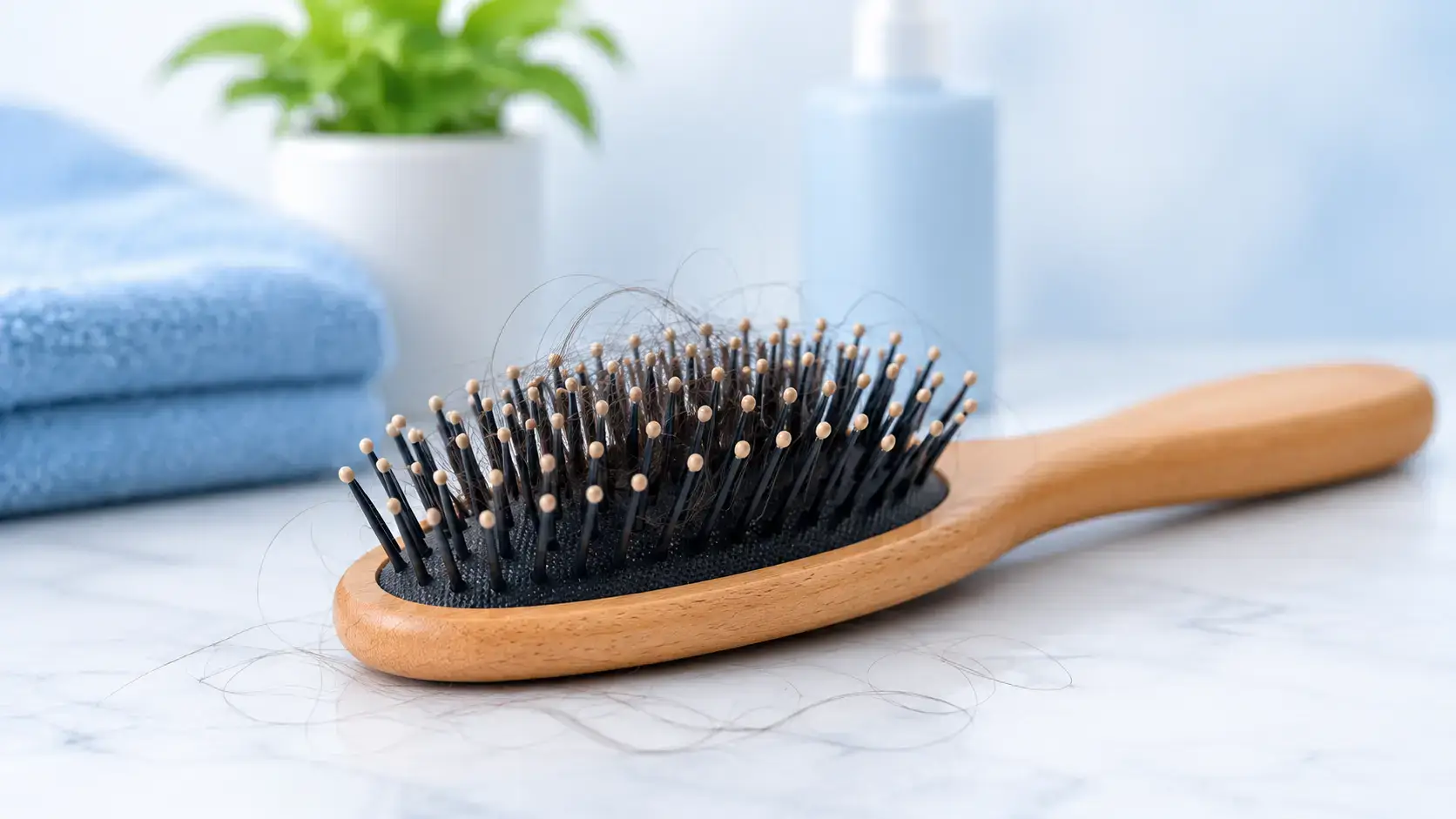
Finding more hair in your hairbrush can be worrying, but some daily shedding is completely normal. It may also be caused by strands accumulating between washes or by a temporary response to stress, although it can sometimes indicate an underlying hair loss condition. Most adults lose somewhere between 50 and 100 hairs a day as part of their normal growth cycle, although the amount can vary. If you’ve noticed a persistent increase, visible thinning or changes to your hairline, it may be worth investigating the cause.
This guide explains why you might notice more hair in hairbrush bristles, what can cause increased shedding and when to seek advice.
Key Takeaways
- Losing around 50 to 100 hairs a day is typical, although this can vary between people based on their individual hair cycles and washing and brushing habits.
- Seasonal changes, stress and illness can temporarily increase shedding, while pattern hair loss usually causes more gradual, persistent thinning.
- When assessing how much hair loss is normal, people can look for changes in their overall hair density as well as the number of hairs that come out when they brush, or compare shedding after brushing with how much hair is normal to lose in the shower.
Is Finding More Hair in Your Hairbrush Normal?
Yes, finding loose hairs in your hairbrush is usually normal because hair follicles go through repeating growth, resting and shedding phases. When a hair reaches the end of its cycle, it falls out and can then be replaced.
The NHS states that it’s normal to lose between 50 and 100 hairs a day. The British Association of Dermatologists (BAD) gives a broader range of 30 to 150 hairs per day, but somewhere within these estimates is generally considered normal.
Aspects like your hair length, brushing habits and washing routines can all influence how much loose hair you might notice, because you might see more hair if you’ve left your hair unwashed for several days and then wash and detangle it.
Alongside looking at the number of hairs after brushing, you can see whether your hair looks thinner, or whether there are changes to your parting or hairline before considering how much hair loss is normal.
What Causes More Hair in Your Hairbrush?
Several factors can increase the amount of hair you notice when brushing, some of which are temporary and others that could point towards more persistent hair loss. People often ask, ‘does brushing cause hair loss? Brushing itself is usually not the cause if you’re gentle when detangling.
Seasonal Shedding
Research has shown that hair shedding can vary between seasons, with a study that examined 823 women and found a higher proportion of participants had follicles in the resting phase in the summer, meaning that they might notice increased shedding later in the year.
Stress, Illness and Other Changes
Physical or emotional stress can disrupt the hair growth cycle and is also known as telogen effluvium.
According to the BAD, possible triggers include:
- A significant illness or high fever
- A stressful or major life event
- Surgery or childbirth
- Considerable weight loss or extreme dieting
- Certain medications or changes to hormone treatment
If you’ve noticed increased shedding after one of these triggers, a healthcare professional may be able to assess whether telogen effluvium or another cause is involved. If you’re also experiencing hair thinning and want to try to speed up the regrowth process, it’s worth understanding whether biotin helps with thinning hair before trying this or any other supplement.
Pattern Hair Loss
Pattern hair loss is linked to genetic and hormonal factors that can cause gradual thinning over time. In men, the usual signs can include thinning at the crown and a receding hairline, but in women, it can involve a widening parting or reduced hair density across the top of the scalp.
You might notice more loose hairs while brushing, but the more important sign is a gradual change in the thickness or coverage of your hair, and our earlier article runs through some of the causes of male pattern hair loss.
Changes in hair density can help show whether shedding is affecting the overall thickness of your hair. Read more about what hair density means and how it changes to understand this distinction.
Free consultation
Looking for a consultation regarding your hair transplant fall out? Book a free consultation with us today to see what we can do for you.
When Hairbrush Shedding Is Worth Getting Checked
Finding loose hairs when brushing doesn’t always mean you’re losing hair permanently, but you may benefit from advice if shedding continues, your hair appears thinner, or you notice changes such as a widening parting, a receding hairline or a distinct bald patch.
If you are experiencing pattern hair loss, you can learn about what hair regrowth looks like over time. In the meantime, if you’re concerned about hair in hairbrush bristles and/or have noticed changes to your hair, please contact KSL Clinic to book a free consultation.
Frequently Asked Questions
Is It Normal to Lose 30 Strands of Hair When Brushing?
Losing 30 hairs in one brushing session doesn’t automatically indicate a problem, as loose hairs could have accumulated since your last brush or wash, and normal daily shedding varies.
What’s more relevant is if you’re consistently seeing higher shedding and also have visible thinning or changes to your hairline, and you can compare this with how much hair is normal to lose in the shower.
When Should I Throw Out My Hairbrush?
It’s best to replace a brush when the bristles become damaged, bent or missing, or when the brush can no longer be cleaned properly.
Why Is There Grey Fuzz in My Hairbrush?
Grey fuzz is usually a mixture of dust, dead skin cells, lint and hair product residue caught between the bristles and isn’t, by itself, a sign of hair loss. Cleaning your brush regularly can help prevent this buildup.
Is It Normal to Lose 30 Strands of Hair When Brushing?
Losing 30 hairs in one brushing session doesn’t automatically indicate a problem, as loose hairs could have accumulated since your last brush or wash, and normal daily shedding varies.
What’s more relevant is if you’re consistently seeing higher shedding and also have visible thinning or changes to your hairline, and you can compare this with how much hair is normal to lose in the shower.
Why Is There Grey Fuzz in My Hairbrush?
Grey fuzz is usually a mixture of dust, dead skin cells, lint and hair product residue caught between the bristles and isn’t, by itself, a sign of hair loss. Cleaning your brush regularly can help prevent this buildup.
When Should I Throw Out My Hairbrush?
It’s best to replace a brush when the bristles become damaged, bent or missing, or when the brush can no longer be cleaned properly.
References:
- NHS, Hair Loss
- British Association of Dermatologists, Telogen Effluvium
- British Association of Dermatologists, Hair Loss: Male Pattern
- British Association of Dermatologists, Hair Loss: Female Pattern
- National Library of Medicine, Seasonality of Hair Shedding in Healthy Women Complaining of Hair Loss