
Hair density and thickness are often confused, but density means the number of strands that grow within each square centimetre or inch of your scalp. While lower hair density can certainly mean your hair appears thinner, it isn’t the same as thickness, which is about the dimensions of each strand.
If you want to improve your hair density, there are several options, including growth-boosting shampoos and topical treatments, laser and platelet-rich plasma therapy, and a hair transplant if you’d like a permanent, natural-looking solution.
Let’s explain how to quantify hair density, the average strands of hair a person might find within each area of their scalp, and some potential treatments you may wish to consider if you’re dissatisfied with your hair density.
Hair Density: Key Facts
- Hair density refers to the quantity of strands of hair that grow in each portion of the scalp. Density varies depending on your ethnicity, hair type, and genetics and can also differ between zones of the scalp, with better density in some areas than others.
- The average hair density means that most people have anywhere from 80,000 to 120,000 individual hairs growing at any one time. The norm is to have the greatest density at the vertex or crown on the top and rear of the head.
- Professional hair restoration clinicians can provide a more accurate picture, but if you want to check your hair density at home, the easiest option is to look in the mirror and see if you can spot your scalp through your hair without parting it—this usually means low hair density.
“When we talk about hair density, we’re really talking about volume at the root level—how many strands grow from each square centimetre of your scalp. While products can improve the appearance of density, only treatments like hair transplants can actually increase the number of active follicles. The right solution depends on your goals and the cause of the thinning.”
— Dr Matee, KSL Clinic
What Is the Normal Hair Density for a Healthy Adult?
As we’ve touched on, hair density is a characteristic that is affected by many factors, from genetics and hair type to ethnicity. A study completed in 2017 looked at participants from varied backgrounds and found that the average hair densities are:
- 1,458 hairs per square inch for Caucasian people
- 1,148 hairs over the same area for Hispanic participants
- 961 hairs for each square inch for African contributors
That doesn’t mean you’re guaranteed to have lower hair density if you’re of African ethnicity; it’s just one of the many aspects that can influence how many hairs you grow naturally.
Another key element is your age because most people will gradually see a decline in hair density as they get older. The speed and visibility of drops in hair density might depend on whether you have pattern hair loss, but the averages across the age groups are as follows.
| Age Group | Average Hairs Per Square Inch |
| 20 to 29 | 1,064 |
| 30 to 39 | 1,057 |
| 40 to 49 | 1,047 |
| 50 to 59 | 1,020 |
| 60 to 69 | 1,004 |
These averages mean that you could see a 4% reduction in hair density between age 25 and 55, although, as always, that isn’t guaranteed and could vary significantly in either direction.
How Can I Calculate My Hair Density?
It wouldn’t be practical to count individual follicles and hairs across a square inch of your scalp, but there are more advanced techniques if you want an exact picture of your hair density.
A method called trichoscopy is sometimes used in hair growth studies, where researchers and scientists use imaging to measure the specific shafts within a defined square inch.
As we mentioned earlier, if you’re at home, the easiest option is to look in the mirror to see if you can notice your scalp without making any effort to move the hair.
- If you can’t see your scalp at all, you probably have high hair density
- If you can see your scalp when you move your hair a little, your density is likely moderate
- If you can see your scalp straight away, you may have low hair density
Those with longer hair might also put it into a ponytail style to see how thick it is. This isn’t an exact science, and only works if your hair is long enough to wear this way, but a ponytail of less than two inches in circumference can indicate low hair density.
Get a cost for your hair transplant
Looking for a consultation regarding the hair transplant cost? Book a free consultation with us today to see what we can do for you.
What Can I Do to Boost the Density of My Hair?
Density is just one of the traits of your hair that might influence your decisions, the products you use, or the treatments and therapies you schedule. Some people with fairly low hair density might also have longer or shorter, textured or fine, and coarser or smoother strands, all of which contribute to their hair’s appearance.
For low-density hair, if this isn’t a significant concern or something that’s affecting your confidence, you can steer clear of heavier products containing oils since these can weigh your hair down and make the scalp more visible.
There are all sorts of shampoos, conditioners, masks, and leave-in products with volumising properties. Some people also use mousses and dry shampoo to lift the roots and give the appearance of denser hair.
The opposite might apply if you have high-density hair, which needs heavier creams, butters, and oils to keep the hair under control, minimise frizz, and avoid adding extra bulk that can make hair seem blocky and thicker to the ends.
Are There Any Permanent Ways to Augment Hair Density?
If you’ve seen changes to your hair density with age or are unhappy with how your hair looks, we, as accomplished hair restoration professionals, can suggest certain treatments.
Hair products cannot make any difference to the number of hair follicles you have. However, they can sometimes improve the aesthetic look of your hair.
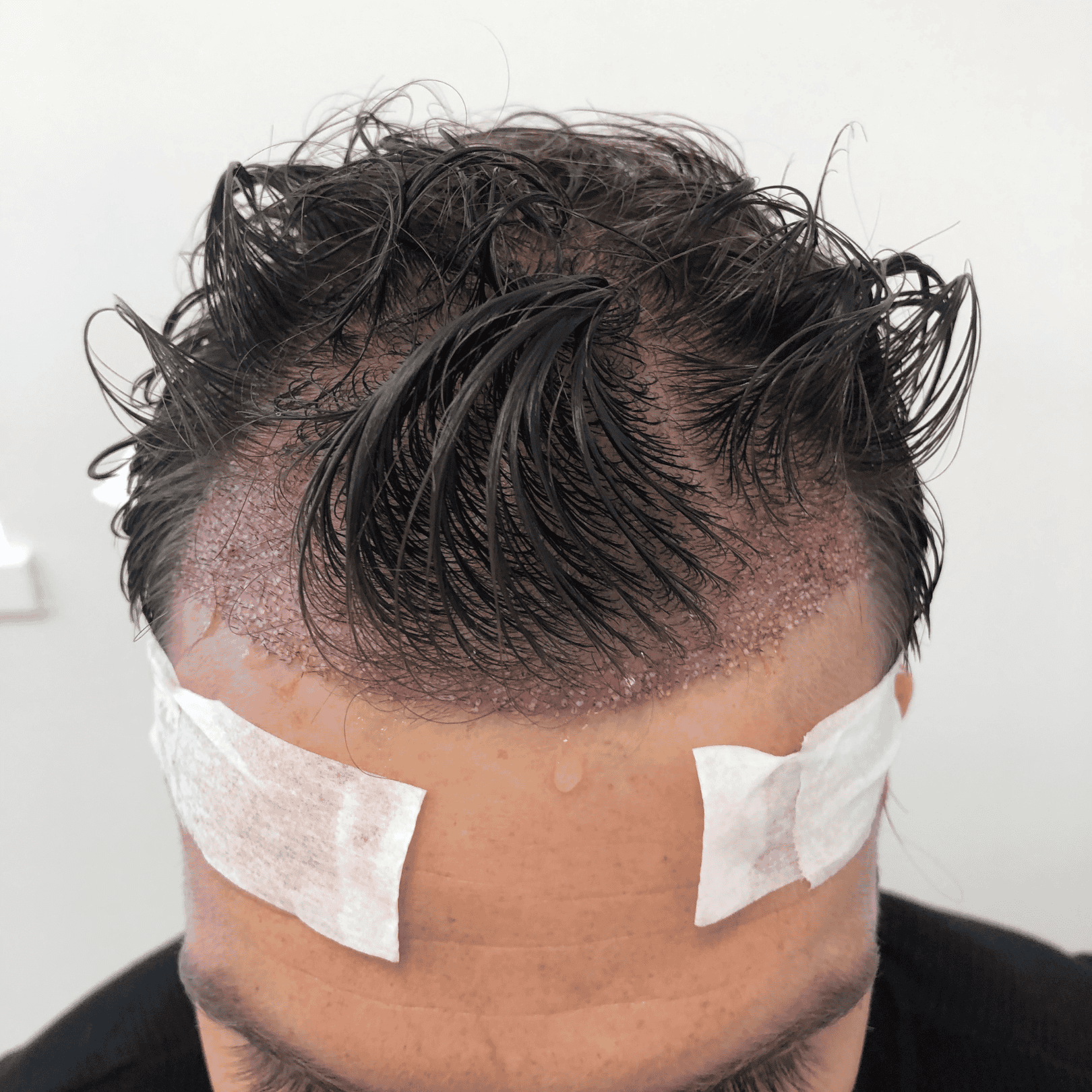
Other options, like a minimally invasive FUE hair transplant, could be more suitable if you want to transform the appearance of patchy growth with low hair density.
A lot might depend on your age, any hair loss you’ve experienced, the health of your scalp and follicles, and the availability of donor hairs. We’ll be happy to discuss all of this at a no-obligation, cost-free consultation at any of the KSL Clinic practices.