

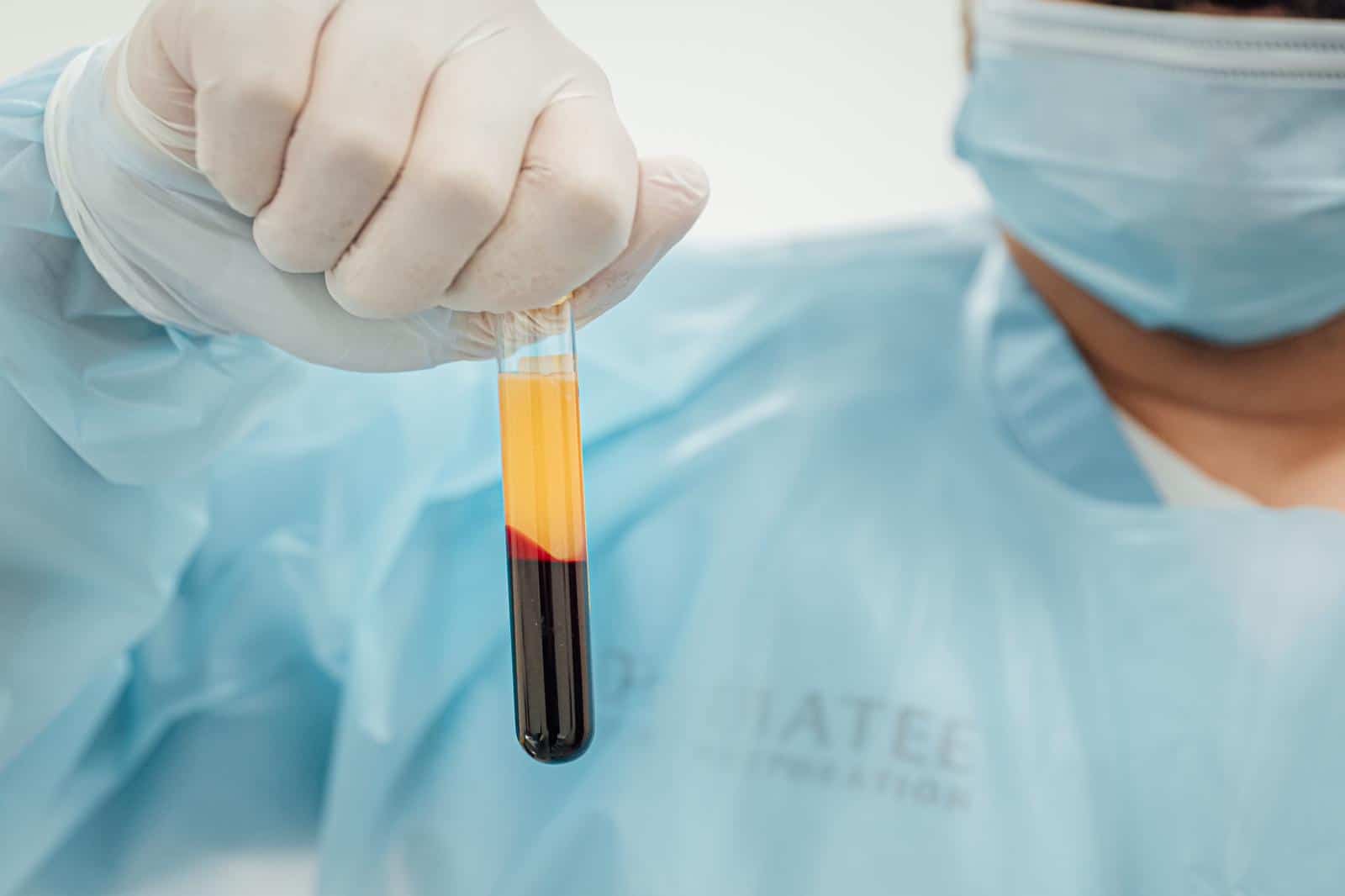
Is PRP worth it? With thousands of products, treatments and therapies marketed for hair loss—ranging from the clinically proven to the purely cosmetic—it can be hard to separate what genuinely works from what simply promises results. PRP (Platelet-Rich Plasma) therapy sits firmly in the first category: a well-researched, medically established, non-surgical approach to hair restoration.
Originally developed for trauma care and sports injury rehabilitation, PRP uses concentrated plasma from your own blood to stimulate tissue repair and support healthier hair growth. But is it worth it for your particular type of hair loss? In this article, we’ll explore how PRP works, what results you can realistically expect, and whether it’s the right choice for your hair restoration journey.
Is PRP worth it?
- PRP is worth it if you’re looking for a safe, natural, non-surgical option to improve early to moderate hair thinning, are prepared to commit to a course of treatments, and have realistic expectations about gradual, natural-looking results rather than instant regrowth.
- PRP is backed by medical research and is widely used in dermatology and hair restoration. It promotes hair regrowth by stimulating follicles and improving scalp health, with natural results and minimal downtime.
- KSL Clinic often recommends PRP as a valuable aspect of post-transplant recovery, given how well it expedites tissue healing and hair growth. However, the therapy can also be ideal for patients wanting a non-surgical treatment plan or for whom a hair transplant isn’t suitable.
Evaluating The Value of PRP in Hair Restoration
As we’ve noted, PRP isn’t a new therapy and has been used for many years to treat mainly sports-related conditions such as injuries to tendons and arthritis, but its use in hair regeneration is more recent.
That means there isn’t such a large body of clinical research specifically around the use of PRP to help reactivate dormant hair follicles, slow the pace of pattern hair loss, improve the thickness of existing follicles, and augment the health of the scalp.
However, this doesn’t mean PRP isn’t worth it or isn’t known to be effective. Over the last ten years or so, several analysts and researchers have conducted trials and tests to quantify the outcomes of PRP in hair regrowth and evaluate whether it works as well as in other applications.
Clinical Trials and Research Measuring PRP’s Effectiveness as a Non-Surgical Treatment for Hair Loss
We’ve collated just a few examples of readily available research in the public domain, all of which validate the use of PRP in various hair loss scenarios.
In the first study, researchers analysed the results when administering PRP injections to the scalps of a small sample of 11 people once every two weeks over a period of three months, using these exacting dimensions to evaluate the exact changes in terms of follicle growth in the target area.
The findings showed that, on average, the number of individual follicles in the injectable site increased from 71 to 93, which shows how PRP can effectively boost the quantity of follicles in areas treated with PRP injections.
Our next research project sought to assess the efficacy of PRP in treating androgenic alopecia, or pattern hair loss. Similarly, it used a compact sample of ten participants, each receiving PRP therapy every two or three weeks over three months.
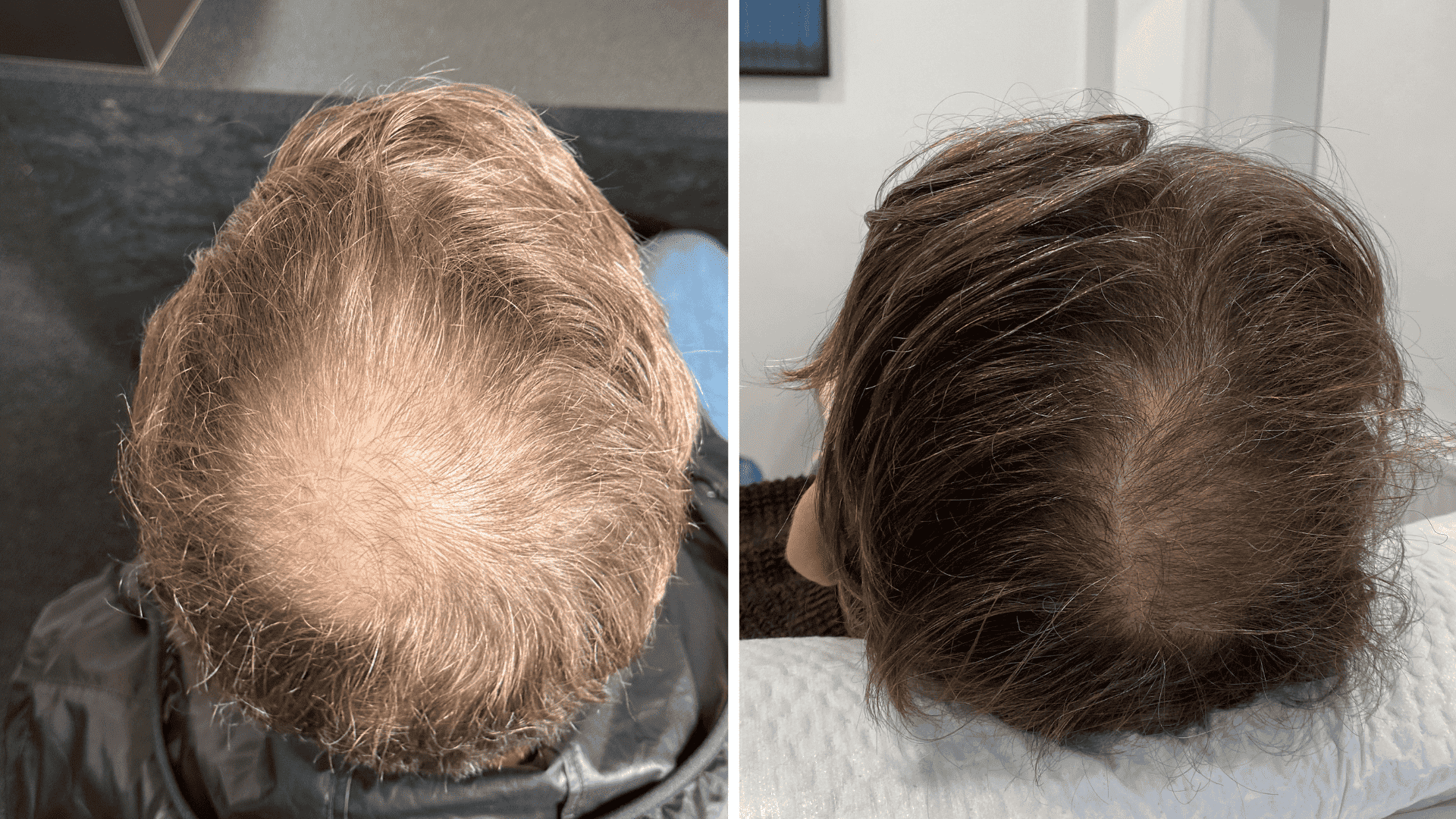
Although a limited-size study isn’t definitive, this research also found that those treated with PRP showed benefits in terms of the volume of hair growing, the thickness of each strand, and the stability of the roots of their hair.
Finally, a more recent analysis compared two groups of 20. One group used minoxidil, a product marketed in the UK under the Regain brand, to treat androgenetic alopecia, while the other used PRP injections.
Of the 40 original participants, 30 continued to the end of the study with results that showed considerably better outcomes for the group using PRP for hair loss, while also discovering that the platelet levels within each individual’s blood affected how well the PRP injections performed.
Get a cost for your hair transplant
Looking for a consultation regarding the hair transplant cost? Book a free consultation with us today to see what we can do for you.
Possible Side Effects or Reactions to PRP Injections
PRP uses your own blood and platelets, meaning it is considered extremely safe. It does not use drugs or synthetic substances to which some people can have adverse reactions or sensitivities.
There are some potential side effects related to the procedure, such as:
- Injuries to blood vessels or nerves due to poorly administered injections
- Infections in the areas where injections have been given
- Reactions to local anaesthetics, for patients having PRP in clinics that recommend this
This means that it is always vital that you work with an accomplished, regulated, and experienced team of hair restoration specialists. Our fine-grade needles and clinical facilities avoid any potential for injury, coupled with the skill of injections administered by our GMC-registered surgeons.
Provided PRP injections are administered with care and precision, there is no need for any form of local anaesthetic. We take every precaution to protect against even unforeseen adverse reactions through our detailed, one-to-one pre-treatment consultation process.
Deciding Whether PRP Should Comprise Part of Your Hair Restoration Plan
The research is limited for now, although plenty of clinical studies and case reviews prove PRP is hugely effective in other applications. All have a similar focus on restoring tissue health, prompting the production of elastin and collagen, and activating cellular activity.
As a therapy, PRP works by extracting proteins from the blood which are known to play a role in the cycles of growth our hair naturally goes through, with uses in:
- Helping blood to clot and tissue to heal
- Encouraging new cells to grow
If you are unsure, our advice is always to book a no-obligation consultation with your nearest KSL Clinic. We’re happy to discuss the treatment options, both surgical and non-surgical, advise whether PRP is likely to be a good option for you, and answer any questions you might have.
It’s also well worth reviewing our patient testimonials and results galleries, as you’ll find numerous examples of patients who have used PRP within post-transplant recovery with remarkable results.