

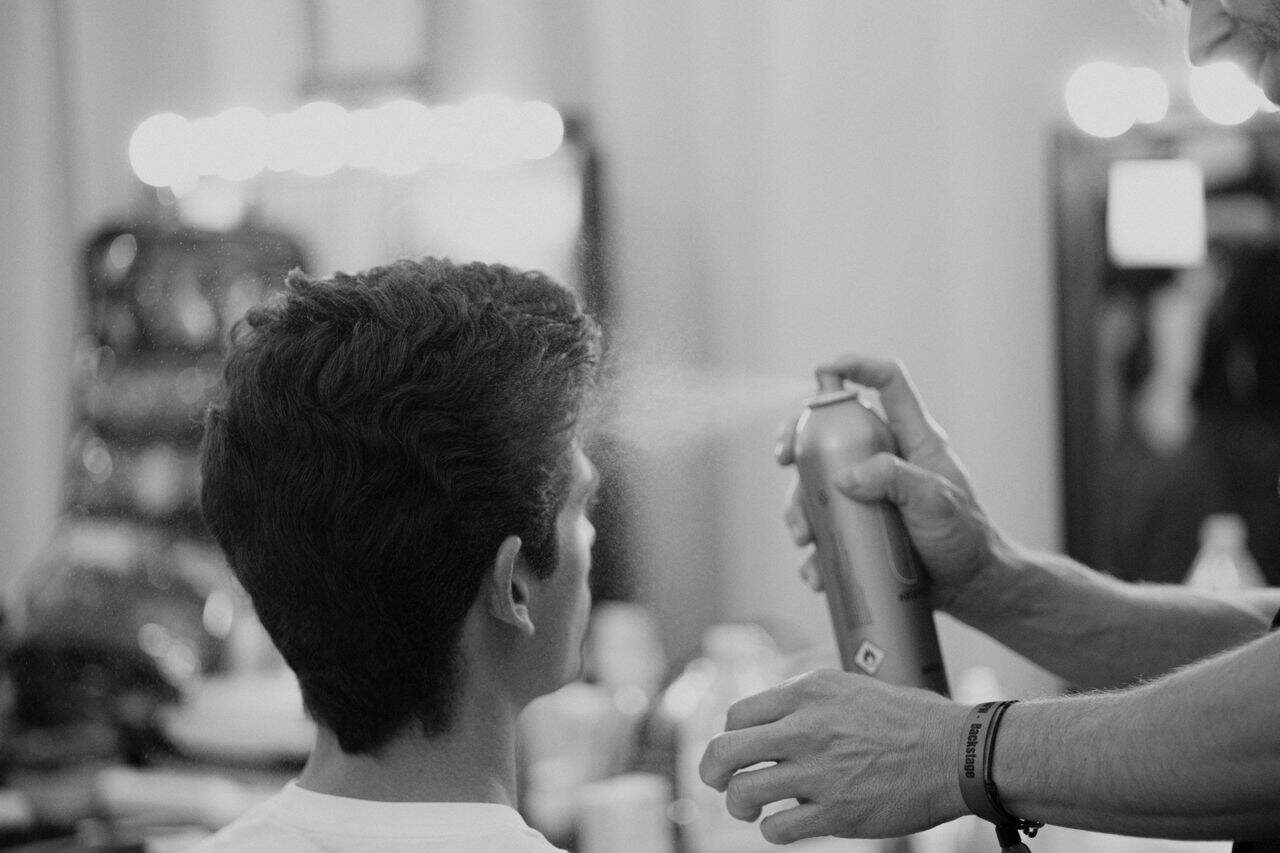
Thousands of people use hair spray to style their hair, keep fly-aways under control and ensure hair stays out of their face when working in catering or manufacturing – and today, modern hair sprays are highly unlikely to contain anything that will have an impact on hair loss.
Over recent decades, the cosmetics and beauty industries in the UK and EU have undergone considerable improvements in regulation and enforcement, with strict rules that ban and tightly control harmful chemicals and ingredients, making hair sprays bought from trusted retailers very safe.
However, the exception applies when people have sensitive scalps and use intense, aggressive styling alongside daily applications of hair sprays and gels, which can cause product buildup and scalp irritation.
Hair Spray and Hair Loss: Key Takeaways
- Hair spray is a safe cosmetic product with ingredients that comply with strict regulations and isn’t thought to be associated with hair loss or thinning, or to accelerate the progression of pattern hair loss.
- Provided you buy hair spray from a credible retailer and stick to brands you know and trust, it is completely safe. If in doubt, look for the CE symbol or the UKCA mark, which stands for UK Conformity Assessed.
- Although hair spray won’t cause hair loss, it can irritate sensitive scalps if used excessively or daily for prolonged periods, or increase brittleness, which can make hair look thinner, even though this isn’t actually hair loss.
Examining the Ingredients in Hair Sprays and Their Potential to Cause Hair Loss
Hair sprays contain a variety of ingredients designed to hold your hairstyle, including polymers that dry quickly and provide hold, solvents such as water or alcohol, fragrances, propellants, and sometimes extra conditioning or UV-protective ingredients.
These products are safe and don’t contain any potentially harmful chemicals that could be detrimental to your hair health.
Issues can, however, occur if you apply too much hair spray and don’t wash it out properly each day. The polymers that dry and hold your style can also build up on the scalp, dulling the shine of your hair and causing flaking that can impact your follicles.
Commonly, people who believe their hair spray is damaging their hair actually have a buildup on their scalp or are experiencing dry, brittle hair, which is worsened when exposed to alcohol, making a gentler spray or a moisturising shampoo a good solution.
If your hair is very dry and brittle, the strands can snap and break easily, which can appear like hair loss. In reality, this is damage to the hair shaft itself, not your follicles, and it is normally easy to rectify by improving your haircare routine and choosing nourishing products.
Does Using Hair Spray Every Day Contribute to Hair Loss?
Hair spray isn’t dangerous, but it’s not ideal to use drying, holding products daily if you can avoid it, because if you use a spray that contains ingredients like alcohol, you’re likely to see progressive damage in the form of split ends.
However, as we mentioned above, using a gentle shampoo, thoroughly cleaning your hair and scalp at the end of each day, opting for no-alcohol hair sprays, and using moisturising conditioners and leave-in balms could all counteract this.
It’s important to wash hair spray out of your hair because if you leave it in overnight, you’ll increase the chance of residues building up on your scalp and of dry hair that can snap when washed.
Essentially, never try brushing hair spray out of your hair without first washing it. The product on your scalp can make it far easier to pull hairs out by the root or snap them mid-shaft.
Alternatives to Hair Spray to Consider if You’ve Seen Damage to Your Hair
We appreciate that some people need to keep their hair out of their face, especially when working in catering or in machine-processed environments where loose hair poses a safety risk. You could try wearing a hairnet or headband to control your hair, or use alternate products instead of spray every day.
Mousses, gels, and pomades can all provide a similar level of hold, and you can pick waxes made from natural beeswax that are gentler and kinder, and potentially more pleasant to use if you’ve experienced scalp sensitivity.
There are also other haircare products you might be using that can contribute to hair damage, worsening shedding and splitting. If you’re concerned about your hair condition, you might want to avoid them.
Ammonia is a good example, something you’ll find in most hair dyes, alongside hydrogen peroxide in bleaches and lightening treatments. Leaving longer intervals between colouring sessions or using gentler dyes can help improve the quality of your scalp and hair over time and reduce the impact of hair spray-induced dryness.
Alcohol, a common hair spray ingredient, is also best avoided if you have a dry, itchy, sensitive scalp or have flaking similar to dandruff, because while it’s not causing actual hair loss, the irritation can be an underlying factor.
What to Do If You Are Unhappy With Your Hair Density
Regardless of the reasons, it’s common to feel dissatisfied if you perceive your hair as thin and unhealthy, notice patches where your scalp is visible beneath your hair, or have seen its thickness and coverage decline over time.
While we often share advice on using natural, skin-kind products, it’s also worth booking a free consultation with one of the KSL Clinic teams across the UK if you’d like to discuss treatments and therapies that can restore your hair and address areas of hair loss.
All consultations include a clinical assessment of your scalp and hair, as this helps us determine whether you are experiencing true hair loss and would benefit from a treatment strategy, or whether you have seen changes in hair quality owing to product buildup, tension on the follicles, or continued hair breakage.
Our hair restoration clinicians are experienced, regulated professionals and are always happy to offer independent advice to help you achieve the hair health and appearance you want.
Get a cost for your hair transplant
Looking for a consultation regarding the hair transplant cost? Book a free consultation with us today to see what we can do for you.