
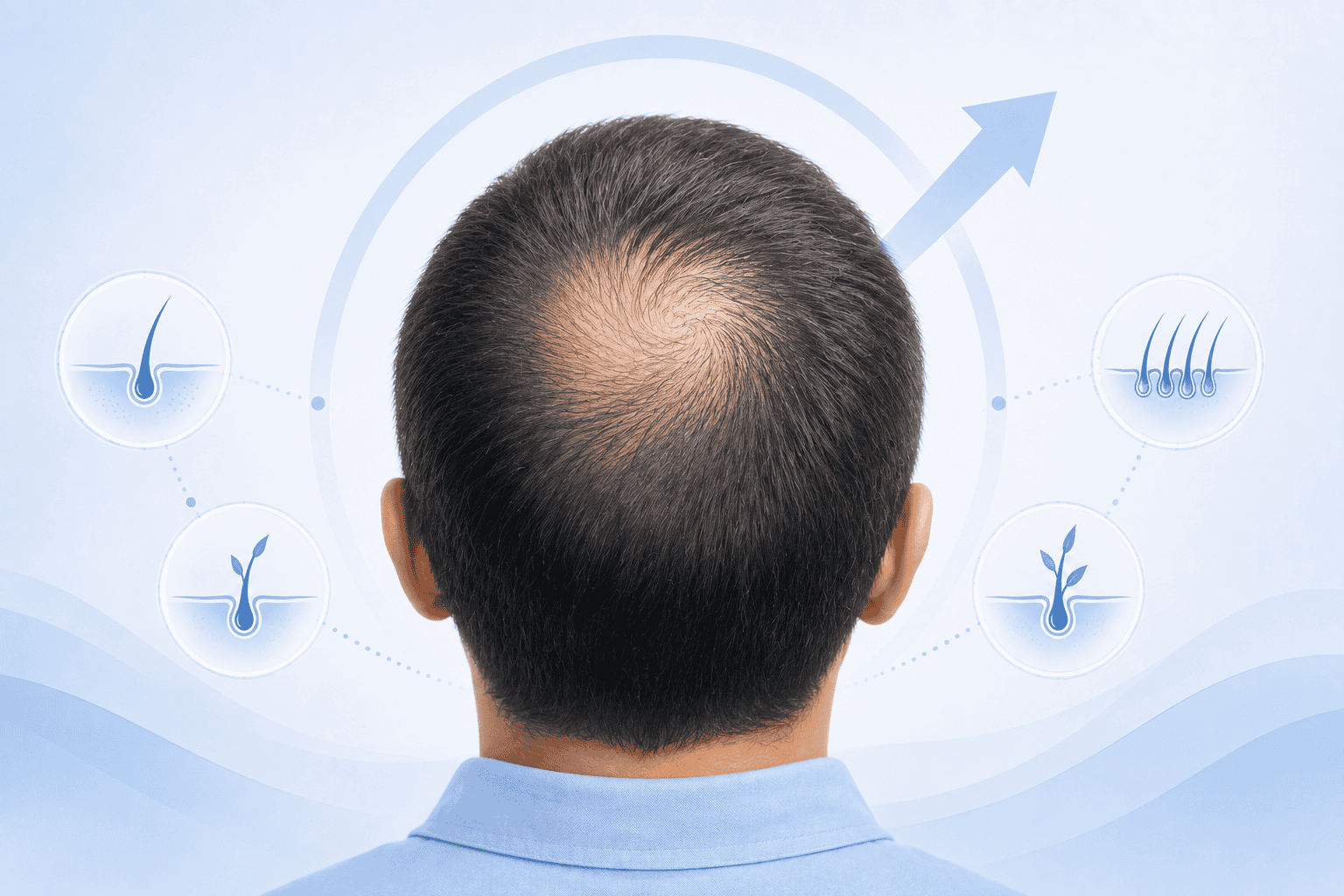
Regrowing hair on an established bald spot may not be possible immediately, but there are plenty of options to try, from natural remedies like rosemary oil to over-the-counter medications such as minoxidil and clinical interventions such as transplants or PRP therapy.
The caveat is that restoring hair doesn’t have a magic fix, and a lot will depend on the cause of the bald spot. If the follicles are dormant but still there, they will be much easier to restore over time than a bald patch with no follicular activity whatsoever.
If you’re struggling with a bald spot and want to act, you can either contact your GP or another primary care provider to see if they can offer any referrals or book a free consultation with the KSL Clinic teams around the UK.
Growing Hair on a Bald Spot: Key Takeaways
- Bald spots can appear for numerous reasons, and identifying the underlying cause of hair loss is usually the first step in deciding which treatments or medications would be appropriate and safe for you.
- Remedies can range from prescription medicines and natural treatments to non-surgical therapies and permanent FUE hair transplant surgeries. However, not all of these options will suit every person with a bald spot.
- Speaking with a practitioner with expertise in hair loss is strongly advisable to avoid spending significant amounts on treatments that are unlikely to work or risky interventions that are not clinically recommended.
Why Do I Have a Bald Spot?
There isn’t one cause of all types of hair loss, and this might be down to your hormones and genetics, a reaction to a medication or treatment you’re receiving, temporary shock loss which may self-correct or a whole host of other reasons.
For most people with a bald spot, this is due to pattern hair loss, which is most common and affects about 50% of all men aged 50+ and the same proportion of women aged 65 and over.
However, it’s important to know the causes of balding because some treatments simply won’t work if they don’t target the root cause, and others could worsen hair loss.
Common Reasons for Developing a Bald Patch
| Type of Balding | General Causes |
| Alopecia Areata | An autoimmune condition which impacts hair follicles and can cause loss of hair on the head, face and body. |
| Androgenetic Alopecia | Generic or hereditary hair loss, which usually starts around the temples for men, and as diffuse all-over thinning for women. |
| Telogen Effluvium | Shock loss, often caused by trauma, stress, illness, hormonal changes, side effects of medications and nutritional deficiencies. |
What Is the Quickest Way to Grow Hair Over a Bald Spot?
Unfortunately, and despite any marketing claims you may have seen, there isn’t a way to restore hair growth immediately.
Treatments take time to repair the follicles or transplant donor follicles, rebalance hormones, improve blood circulation to your scalp, and replenish vitamins and minerals you may be deficient in.
KSL Clinic advises that ‘Hair loss is often a cause of distress, but it’s vital to work with an accomplished practitioner, and not to spend hundreds of pounds on online treatments which rarely have any credible outcomes.
There are many hair restoration techniques we might recommend, but expecting an instant fix isn’t realistic, and you may need to make some lifestyle changes to restore your hairline for good.’
Get a cost for your hair transplant
Looking for a consultation regarding the hair transplant cost? Book a free consultation with us today to see what we can do for you.
Natural Remedies for Bald Patches
While natural treatments might vary in their effectiveness, some aim to improve circulation to follicles, which could help lessen the visibility of a bald patch:
- Rosemary oil is an anti-inflammatory which is sold in shampoos and oils
- Peppermint oil is thought to be safe in small amounts and is also used as a scalp massage oil
- Aloe vera is commonly used in healing treatments and creams, and could be another alternative
The reality with most of these products is that while natural ingredients may have some benefits, the massage application is likely to help most. There isn’t medical research to evidence this, but some people believe that natural remedies work to some extent.
Medical Treatments for Balding
Practitioners can prescribe medications or recommend over-the-counter treatments, which may prove more successful. They include:
- Minoxidil, a topical cream or shampoo such as Regaine. This is a well-established treatment to slow or prevent further hair loss, but it takes time to restore hair and must be used regularly over the long term.
- Finasteride, a male-only prescription medication that can treat male pattern hair loss by reducing the levels of the DHT hormone, which contributes to genetic and age-related hair loss.
- Corticosteroids may be prescribed for some types of hair loss, including alopecia areata, depending on the circumstances. This can be either a liquid or an injection administered by a medical professional. Some alopecia areata patients are also prescribed a topical treatment called anthralin.
Hair restoration practitioners also offer advanced, non-surgical treatments that can be used as standalone options to stimulate new growth, work alongside medications, or support hair growth before or after a hair transplant.
Platelet-rich plasma therapy uses a concentrated sample of your own blood, which is reinjected into the bald spot to stimulate follicular activity; several sessions are typically required to achieve the best results.
Another option is laser light therapy, using clinical-grade lasers to target areas affected by hair loss and achieve similar results, with top-up sessions also required.
Surgical Solutions for Bald Spots
If you have a bald spot and haven’t been able to correct it, or have balding that is spreading and causing concern, you may wish to consider a hair transplant.
This surgical procedure involves extracting individual follicles, which are then grafted onto the bald spot.
There is a lot more information about the transplant process, galleries of before-and-afters, and details on what to expect regarding grafts and hair transplant costs on the KSL Clinic website. You can also schedule a cost-free consultation to discuss the best options for you.
Frequently Asked Questions
Can a Bald Spot Regrow Hair?
It depends. If there are still follicles but they have become inactive, they can potentially be stimulated into producing new hair. However, if the follicles are dead, a hair transplant may be the only viable solution.
How Long Does It Take to Regrow Hair in a Bald Spot?
This also depends on the treatment options you use, but typically you’ll need to wait at least six months before new follicles start to grow, and some interventions take a year for the full results to become visible.
Can a Bald Spot Regrow Hair?
It depends. If there are still follicles but they have become inactive, they can potentially be stimulated into producing new hair. However, if the follicles are dead, a hair transplant may be the only viable solution.
How Long Does It Take to Regrow Hair in a Bald Spot?
This also depends on the treatment options you use, but typically you’ll need to wait at least six months before new follicles start to grow, and some interventions take a year for the full results to become visible.