

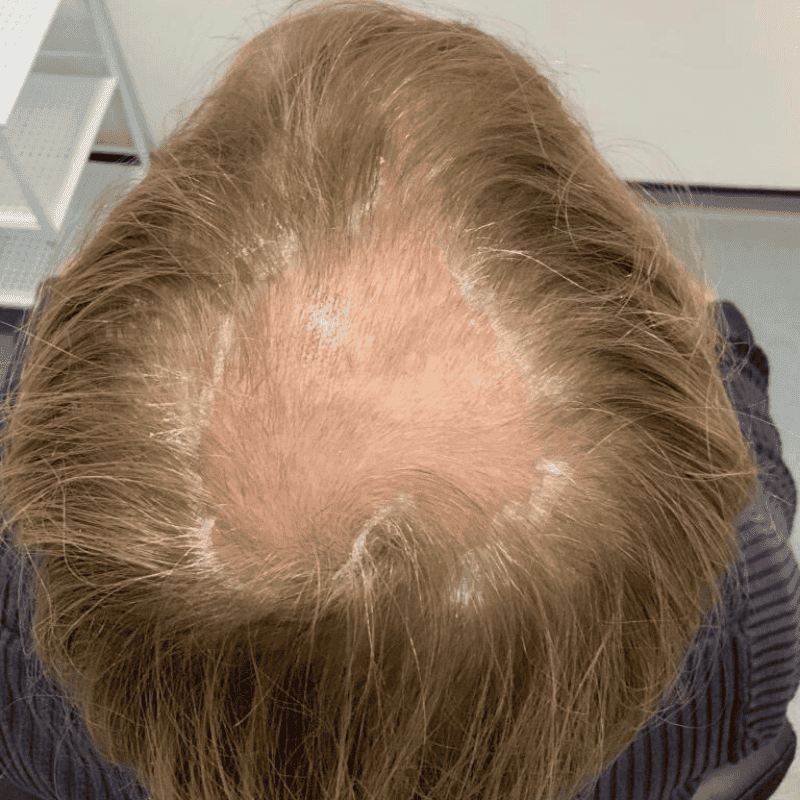
Hair loss occurs when the natural hair growth cycle is interrupted or stops, and this can be due to genetics, hormones, immune conditions, and physical stress, all of which can damage the follicles or cause shedding.
Common types of hair loss include androgenetic alopecia (pattern baldness), alopecia areata (an autoimmune response), and hair loss linked to traction, such as rubbing, pulling, or friction that affects the scalp.
Each of these situations has different symptoms, underlying causes and potential treatments, all of which are summarised here to help you understand what type of hair loss you may have, and the best ways forward.
Causes of Hair Loss: Key Takeaways
- Androgenetic alopecia is the most prevalent type of hair loss, and although it’s more common in men, it can affect people of all genders.
- Some types of hair loss are permanent, but not all, and balding from conditions like alopecia areata may reverse with treatment.
- Diagnosing the cause of hair loss early can be important, as this improves the likelihood of successful treatment, particularly if hair loss is otherwise likely to be progressive.
What Are the Main Types of Hair Loss?
Hair loss is a common part of ageing, but the causes—and outcomes—vary significantly depending on the underlying condition, with the most common including pattern hair loss, linked to genetics, and other types of alopecia.
We’ve compiled a list of hair loss types for both men and women below.
| Hair Loss Condition | Causes | Who it Affects | Reversible? |
| Androgenetic Alopecia | Genetics and the DHT hormone in men | Men and women | Yes, if treated in time |
| Alopecia Areata | Autoimmune responses | Anybody of any age | Yes, with treatment |
| Traction Alopecia | Physical stress and damage to the hair | People with frequently tight, heavy hairstyles | Yes, provided treated properly and the cause of the stress is removed |
| Trichotillomania | Psychological condition | All ages | Yes, with psychological and hair restoration support |
What Is Androgenetic Alopecia and How Does it Affect Men?
The majority of male hair loss is androgenetic alopecia, better known as male-pattern baldness. It is so common that 30% to 50% of all men by the age of 50 will develop androgenic alopecia. [1]
It is characterised by a receding hairline on the lateral part of the head and thinning of the hair at the crown. The two preceding sections of hair eventually join together, leaving a noticeable horseshoe-shaped ring of hair around the back of the head.
Unfortunately for men, male-pattern baldness occurs when hair follicles on the scalp begin to shrink due to a hormone called dihydrotestosterone (DHT). Testosterone is converted into DHT by an enzyme known as 5-alpha-reductase.
DHT then attaches to the androgen receptor within the hair follicle. However, DHT causes the hair follicle to physically shrink, meaning the follicle can no longer regrow, resulting in hair loss and no further hair growth.
How Is Female Pattern Hair Loss Different?
For women, androgenic alopecia is also the most common form of hair loss, with around 40% of women by the age of 50 developing androgenic alopecia. [2] In women, androgenic alopecia is referred to as female-pattern baldness.
However, it develops differently from male-pattern baldness. It is characterised by thinner hair, due to increased shedding or reduced hair volume.
Because of this, the visual appearance of female-pattern baldness is very different from that of male-pattern baldness. It is thought that if women possess more androgens, then their hair loss will become similar to that of male-pattern baldness.
However, it is not clear if androgens do indeed play a role in the development of female-pattern baldness. In fact, it isn’t clear if any hormones are associated with female-pattern baldness.
However, it is more common for women who are past the menopause to develop female-pattern baldness, suggesting that oestrogen could actually play some sort of role in the progression of female-pattern baldness.
Related reading: Hair transplants for women
What Causes Alopecia Areata to Develop?
Alopecia areata is thought to be an autoimmune disorder in which the body attacks its own hair follicles, leading to hair loss. It is most common in people who suffer from other autoimmune diseases, such as an overactive thyroid or diabetes.
This form of alopecia causes small patches of baldness on the scalp, approximately the size of a coin.
Even though this tends to occur on the scalp, it can also occur anywhere on the body. The difference between androgenetic alopecia and alopecia areata is that alopecia areata can occur at any age, whereas androgenetic alopecia typically affects teenagers and young adults.
It is believed that alopecia areata is associated with hereditary traits, as it is suggested that one in five people who suffer from alopecia areata have a family history of the condition – it affects only around 2% of the population. [3]
How Can Stress or Lifestyle Factors Contribute to Hair Loss?
Conditions like trichotillomania and traction alopecia are forms of hair loss due to trauma to the scalp. Trichotillomania is an obsessive-compulsive condition where a person feels like they have to pull their hair out.
Since it is a psychological condition, it is difficult to know the causes, but some theories suggest that hair-pulling is a type of addiction.
So the more you pull your hair out, the more you will want to keep doing it. There are also some theories that suggest it is a way of dealing with stress or anxiety.
What Is Traction Alopecia?
Traction alopecia is a type of hair loss that is caused by excessive pulling on the hair on your scalp. It most commonly occurs in people with very tight ponytails, pigtails, braids, or even cornrows.
Over time, it can cause the hairline to recede towards the crown and, in extreme cases, result in permanent hair loss.
Are There Other Potential Causes of Hair Loss?
There are various types of hair loss, but the ones mentioned are the most common. There are some types of hair loss that are associated with the intake of drugs and medication, but they are less common.
When Is the Right Time to Seek Treatment for Hair Loss?
Understanding how each type of hair loss occurs may help you better understand your hair, especially if you personally suffer from hair loss. It is a sensitive topic to discuss, but with the right support from your family, friends, and professionals, it can make you a happier, more confident person.
KSL Clinic says, ‘Hair loss isn’t just cosmetic, and regardless of the cause, it can have serious impacts on your self-esteem and mental health, which is why early assessments are ideal, and professional hair restoration therapies may be the best way to correct hair loss once and for all.’
Interested in FUE hair transplants or FUE beard transplants? You can find us at the following hair transplant clinics in the UK:
Get a cost for your hair transplant
Looking for a consultation regarding the hair transplant cost? Book a free consultation with us today to see what we can do for you.
Frequently Asked Questions
Is Hair Loss Always Permanent?
No, while some types of hair loss aren’t reversible without clinical intervention, others, like traction alopecia, can self-correct or be treated with a combination of hair restoration, scalp therapies, and lifestyle changes.
What Is the Biggest Cause of Hair Loss?
Genetic and hormonal changes associated with ageing are the most common causes of hair loss. They are more likely to occur in men with a family history of androgenetic alopecia, better known as pattern hair loss.
Is Hair Loss Always Permanent?
No, while some types of hair loss aren’t reversible without clinical intervention, others, like traction alopecia, can self-correct or be treated with a combination of hair restoration, scalp therapies, and lifestyle changes.
What Is the Biggest Cause of Hair Loss?
Genetic and hormonal changes associated with ageing are the most common causes of hair loss. They are more likely to occur in men with a family history of androgenetic alopecia, better known as pattern hair loss.