
Modern hair transplantation techniques have evolved significantly in recent years from FUT to FUE – but what is the difference?
In this article, sector-leading hair restoration experts at KSL Clinic have collated all the information you might need to understand how FUE and FUT hair transplants work and make clear decisions about the ideal options for achieving the hair growth and appearance you have long wished for.
FUE vs FUT Hair Transplants: Key Takeaways to Consider
- FUE is often seen as a more delicate, skilled and complex procedure since we remove individual follicles from specific areas of your scalp that have been selected, grading and preparing each separate graft for reimplantation in a predesigned pattern. [1]
- FUT transplants may be faster and require less expertise but involve the surgical removal of a strip of tissue with the hair follicles embedded, which leaves a linear scar, is more invasive, requires greater recovery time, and is often unacceptably risky from a clinical standpoint.
- We prefer and only recommend FUE because the microscopic nature of the incisions made presents a significant risk reduction, which means the results are 100% natural and impossible to see. While procedures for more extensive hair loss can take longer, they are more satisfactory from a professional and a patient comfort perspective.
Explaining the Contrasts Between FUE and FUT Hair Transplantation
As we’ve hinted, FUE is a more contemporary form of hair transplantation. During your procedure, we’ll take grafts, usually from the back of the scalp with sufficient healthy donor follicles, using a tiny tool called a Micro Punch that creates an incision about one mm across.
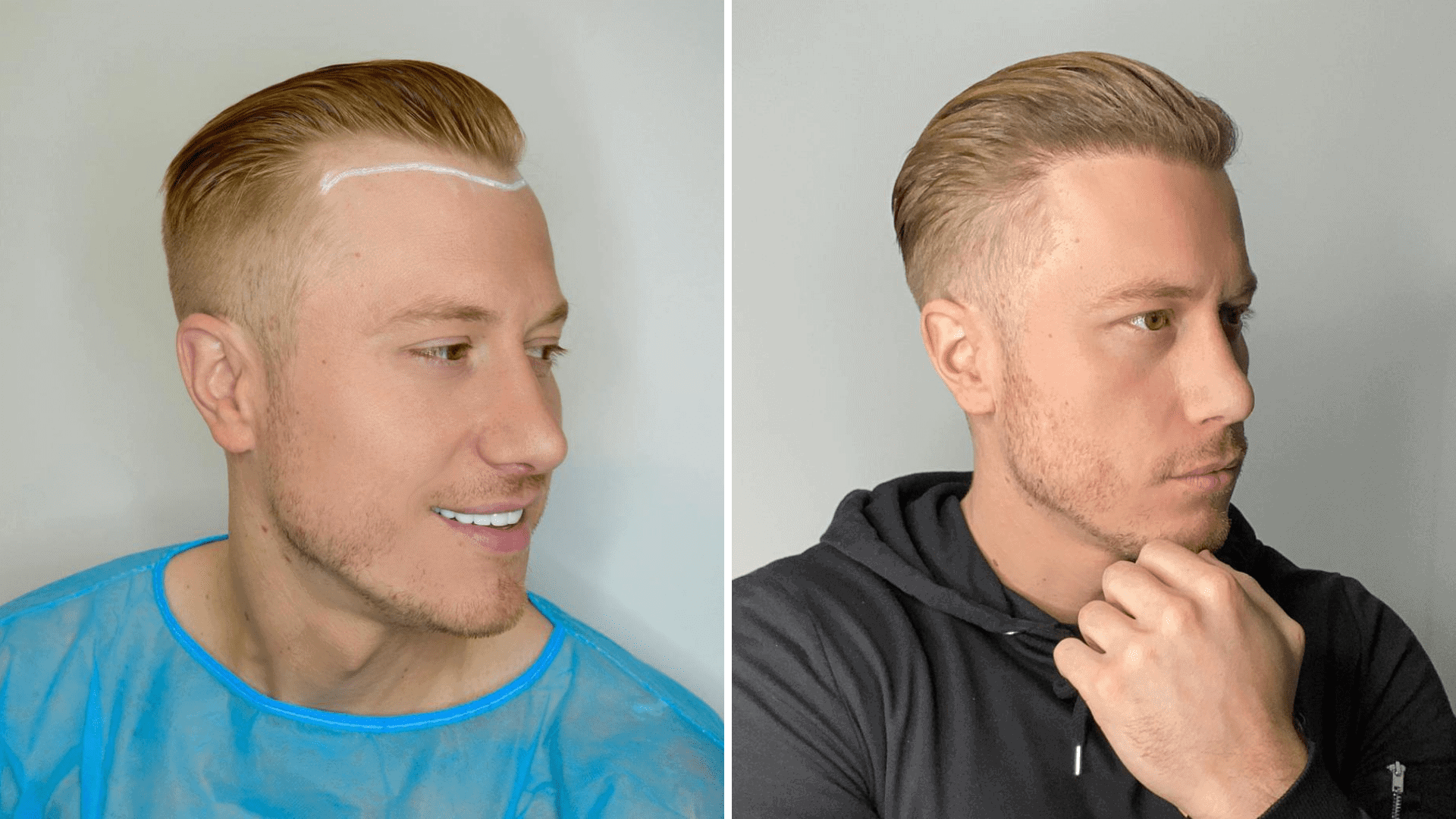
Those follicles are sorted, graded, and reimplanted using the same microscopic procedure at the transplant site, ensuring that there are no stitches and zero visible scars and that your skin and follicles will heal rapidly.
For most patients, after initial shedding—a natural part of the hair growth cycle—fresh, healthy, and youthful hair will begin to grow within the next few weeks and by three to four months after your procedure.
FUT hair transplants are very different and mean the surgeon will remove a graft comprising a strip of skin, also taken from the back of the scalp in most cases, that can be up to several inches long. [2]
The donor site requires stitches where the tissue has been extracted. The tissue is then divided into smaller components using surgical tooling. These are then transplanted at the transplant area in a puzzle formation.
Choosing Between FUE and FUT Hair Transplant Procedures
While both options can produce satisfactory results for patients with hair loss, some clinicians primarily offer FUT hair transplants because they can transplant more follicles faster, using strips of skin with embedded follicles rather than individual grafts. [3]
The downsides are considerable, with inevitable visible scarring, which the FUE method avoids by using tiny incisions at every extraction and transplant site and requiring no stitches whatsoever.
A contrasting positive may be that FUT transplants, given that they are faster, easier to perform, and require less surgical skill, may be cheaper.
We have put together a range of interest-free payment options and longer-term payment plans to ensure that the most precise, bespoke, and safe transplant techniques are accessible to all.
Get a cost for your hair transplant
Looking for a consultation regarding the hair transplant cost? Book a free consultation with us today to see what we can do for you.
Pros and Cons of FUE Hair Transplants
The positives of FUE hair transplants are compelling and often a deciding factor for patients who want a pain-free, comfortable experience and the confidence that their healed transplant will look 100% natural and mimic the exact appearance of their other hair growth:
- Significant reductions in pain, including throughout the recovery period.
- The absence of scarring or stitches, which ensures that the patient can wear their hair short or wear certain styles without the need to conceal a visible linear scar.
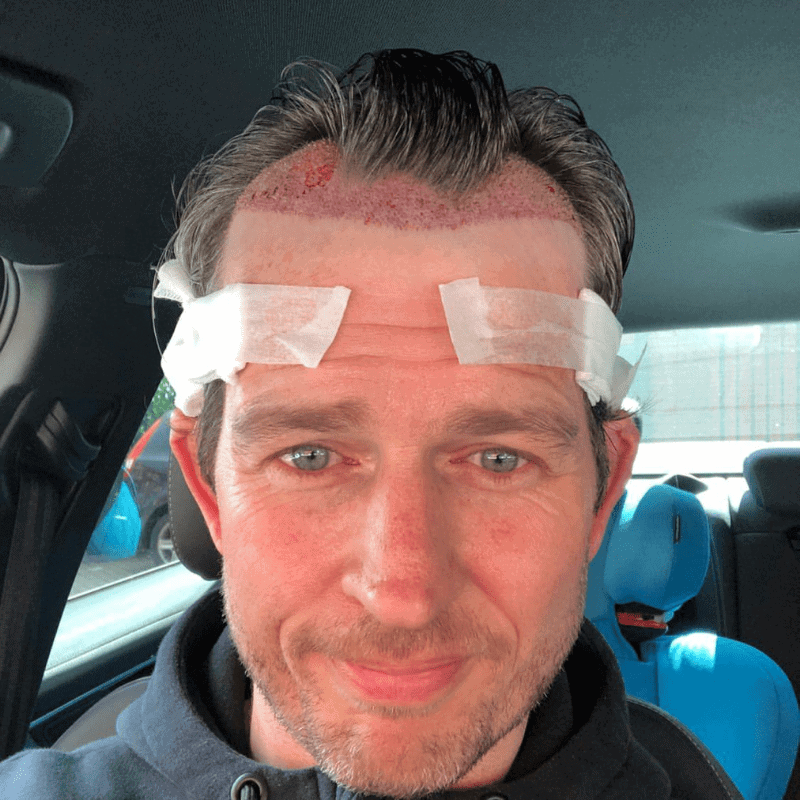
- Accelerated healing, with an initial recovery time of just two weeks.
As we’ve indicated, FUE hair transplants can be more costly and take longer than a simplified FUT transplant. Given the specificity and microscopic nature of the procedure, some clinics will insist on shaving the head prior to the transplant.
 Dr Matee, KSL Clinic’s Director of Surgical Services, comments, “At KSL Clinic, we exclusively offer FUE (Follicular Unit Extraction) hair transplants because it’s the most advanced, minimally invasive technique for natural-looking results. Unlike FUT, FUE doesn’t involve a linear scar, allowing for quicker recovery and greater flexibility in styling.”
The Pros and Cons of FUT Hair Transplantation
We’ve noted the reduced procedure time and cost associated with FUT, but this is primarily because removing large strips of tissue makes it easier to transplant a higher number of grafts in a shorter amount of time—albeit with a compromise on pain, scarring, stitches, and recovery time.
The downsides are significant, and we regularly consult with patients who would not consider a hair transplant that involves substantial scarring, who cannot commit to an extended recovery time, or who simply want to replenish their hairline without any unnecessary pain, swelling, stitches, scarring or discomfort. [4]
As always, you are welcome to book a free, no-obligation consultation with our accomplished hair restoration surgeons at any of the KSL Clinic locations if you have further questions or would like an informal chat with our teams.
Frequently Asked Questions
How Do Recovery Times Compare Between FUT and FUE Hair Transplants?
FUT is known to be more invasive, and recovery times are longer. Most patients need to wait at least three weeks before they can resume their normal activities—although this could change if they have a large incision and depending on how well stitches heal.
In contrast, FUE hair transplant patients need to rest for two weeks, after which their freshly implanted follicles will become stable. They can then return to their usual routines without concern and without residual pain, swelling, redness, or discomfort.
Are the Success Rates Different Depending on the Hair Transplant Technique I Choose?
The success rates between these two options tend to be similar, but in reality, much depends on the skill of your surgeon and the quality of the aftercare guidance and check-ups offered. These have a fundamental effect on how well your scalp recovers and how quickly transplanted follicles begin to grow.
How Do Recovery Times Compare Between FUT and FUE Hair Transplants?
FUT is known to be more invasive, and recovery times are longer. Most patients need to wait at least three weeks before they can resume their normal activities—although this could change if they have a large incision and depending on how well stitches heal.
In contrast, FUE hair transplant patients need to rest for two weeks, after which their freshly implanted follicles will become stable. They can then return to their usual routines without concern and without residual pain, swelling, redness, or discomfort.
Are the Success Rates Different Depending on the Hair Transplant Technique I Choose?
The success rates between these two options tend to be similar, but in reality, much depends on the skill of your surgeon and the quality of the aftercare guidance and check-ups offered. These have a fundamental effect on how well your scalp recovers and how quickly transplanted follicles begin to grow.
References and Sources:
- National Library of Medicine: Follicular Unit Extraction (FUE) Hair Transplant: Curves Ahead
- National Library of Medicine: A Study of Donor Area in Follicular Unit Hair Transplantation
- International Society of Hair Restoration Surgery: FUE vs FUT and Maximising the Hair Graft Harvest
- National Library of Medicine: Strip Harvesting Follicular Unit Transplantation Versus Follicular Unit Excision