
Hair loss is neither rare nor a new problem. We speak with hundreds of patients who have long been frustrated or anxious about progressive hair loss and are unsure how best to tackle this without an obvious set of hair plugs that may not achieve the aesthetic they wish.
The positive news is that modern hair restoration has come a very long way from conventional treatments. The results we can achieve are permanent, impossible to spot, and use your own donor follicles for a completely natural appearance.
Today, we’ve decided to address some common misconceptions, clarify how advanced hair transplants differ from outdated plugs, and share some facts about the hair restoration treatments we offer here at KSL Clinic.
Hair Transplants and Plugs: The Contrasts
- Hair plugs were once used to describe an invasive procedure in which a round piece of scalp was surgically removed and then implanted into the area of the scalp with hair loss, thinning, or balding.
- The reason plugs were perceived as unnatural and obvious is that even though they used donor follicles, the size and spacing between the follicles looked fake, meaning that it may have been very easy to spot a person who had undergone the procedure.
- Modern, minimally invasive Follicular Unit Extraction (FUE) is entirely different. It uses microscopic tooling to extract individual follicles and transplant them to the target area, with no stitches, large incisions, or scarring in sight.
A Brief History of Hair Plugs
As we’ve described, plugs were once the only viable hair transplant option. A plug comprised a round section of the scalp and around 20 follicles. This procedure dates back to the 1950s and was, in comparison with modern hair transplantation, heavily invasive, with extended recovery time and scarring.
Aside from the risks and discomfort, the big issue was that plugs rarely looked natural. Transplanting chunks of hair and tissue cannot have the same appearance as other hairs, given that the plug wouldn’t have the same texture, growth characteristics, or patterns.
Alternative treatments that became more recently available are usually referred to as hair implants. These procedures are no longer commonly practised and involve the use of synthetic or donor hair.
Note that hair implants are banned in multiple countries due to the serious risks of side effects and infection, and are not considered a safe or appropriate way of addressing any manner of hair loss.
How Modern Hair Transplantation Differs
Innovations in hair restoration mean that a hair transplant today bears little correlation with the procedures offered in the past. We’ve utilised the latest technical evolutions to provide a suite of services and therapies that offer transformative results.
As a quick recap:
- FUE hair transplants involve the removal of individual follicular units rather than larger plugs containing up to 20 follicles each.
- Selecting follicles for their texture, colour, thickness and growth pattern and transplanting them one at a time has a seamless, natural outcome, where we pre-configure every bespoke transplant to your hair and desired appearance.
- Microscopic incisions created using a tool called a Micro Punch remove the need for larger incisions or stitches. The small red circles, measuring around one mm across, heal and disappear in roughly one week.
After the initial recovery and aftercare process, which takes approximately ten days to two weeks, there is no visible sign that you have had a hair transplant. Over the coming weeks, new follicles will begin to produce fresh, new, healthy hair that is indistinguishable from other growth.
Variations in Modern Hair Transplantation Techniques
While we only advocate for minimally invasive FUE hair transplants, which are performed under safe local anaesthesia on a walk-in/walk-out basis, there are more invasive procedures available.
As always, we recommend you schedule a consultation with your preferred KSL Clinic location to discuss the pros and cons and ensure you make an informed decision.
The alternative, which is still offered in the hair restoration market, is called Follicular Unit Transplantation (FUT). The results are more natural than with an outdated plug procedure, but the process itself is less exacting and specific and requires a longer recovery time.
Get a cost for your hair transplant
Looking for a consultation regarding the hair transplant cost? Book a free consultation with us today to see what we can do for you.
FUE Vs’ FUT Hair Transplants
We’ve explained that FUE involves the selection and extraction of individual follicles. These are picked both for the appearance of the follicle and based on the areas of growth elsewhere on your scalp, where there is ample growth and where extracting donor hairs won’t have any impact on your appearance.
FUT is different because the hair transplant surgeon will remove a larger strip of tissue, with the follicles still embedded, instead of extracting follicles one at a time.
The strip of tissue is prepared and separated into smaller sections before reimplantation. Still, the donor site is then subject to stitches. This will leave a visible, linear scar—the intention is often for remaining hair growth to cover the scarring, but this is an unavoidable aspect of this hair transplant method.
As professionals in hair restoration, the only significant benefit of FUT transplantation is for the provider, since removing a strip of tissue is much faster and requires less skill and expertise.
Read more here: FUE vs FUT.
However, from a patient standpoint, the scarring, recovery period, and infection risk may often mean that FUE transplants are highly preferable, safer, and more personalised.
Reviewing Real-World Before and After Outcomes Following a Hair Transplant Procedure
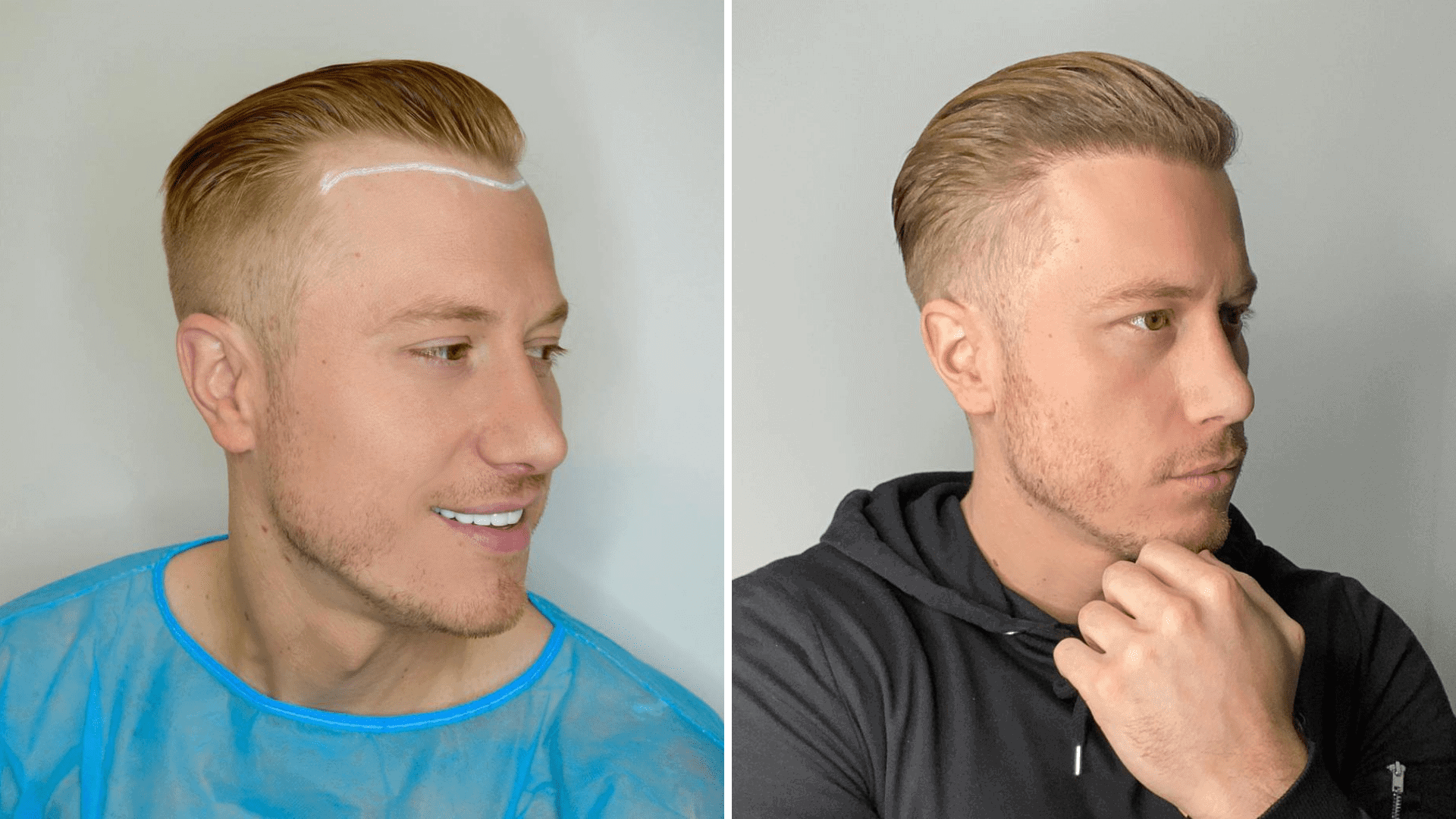
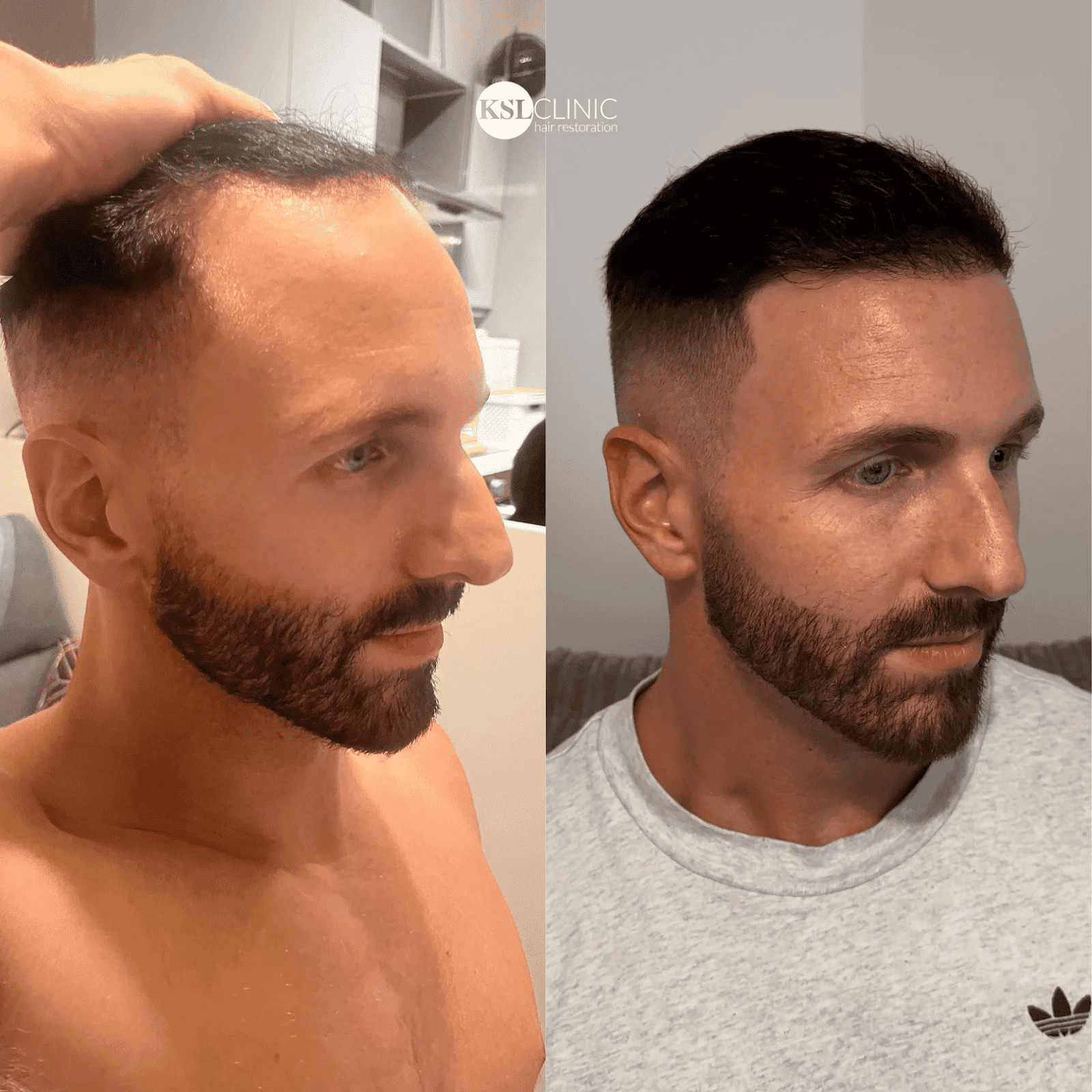
Our advice for any prospective patient worried about a hair transplant delivering outcomes similar to plugs would be to review our extensive library of patient testimonials, celebrity stories, reviews, and case studies, including videos and before-and-after images that show the results we can achieve.
It is natural to have reservations, and we’d urge you to book a free, no-obligation consultation. This appointment is a chance to discuss your hair loss concerns and the outcomes you would like to see, and explore the options, including access to previous patient images so you can visualise how your healed hair transplant will look.
KSL Clinic has a network of regulated, fully equipped practices throughout the UK and Ireland, and our GMC-registered surgical teams will be happy to answer any questions you may have.