
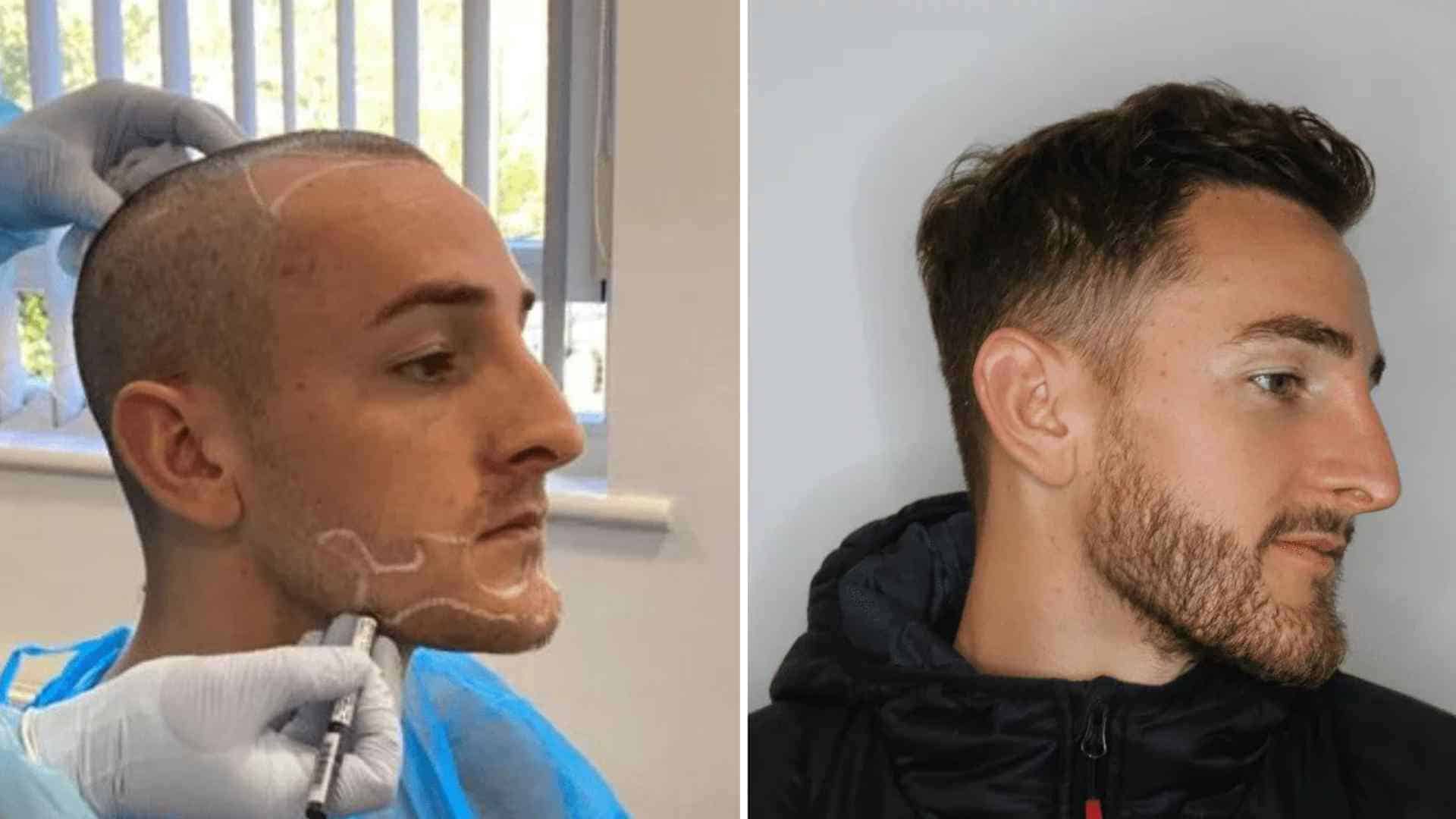
Sideburn restoration is one of the facial hair transplant services we offer here at KSL Clinic. A sideburn transplant can replenish the hair if your sideburns are sparse and thin, uneven on each side, or have been affected by hair loss, typically androgenetic alopecia or pattern hair loss.
Hair loss is often perceived as something that only affects the scalp, but we speak with patients every day who have experienced balding in other areas.
Lack of growth around the sideburns can make a beard ‘float’ without consistency around the face and affect the facial hair styles you can wear.
Hair transplants are an ideal solution to thinning sideburns and can recreate the shape and thickness of facial hair you’d love to have. In this article we’ll share some insights into what the procedure involves and what to expect.
Sideburn Transplants: Key Takeaways
- Hair transplants for sideburns work just as other transplant procedures. We use donor follicles, usually selected from areas of dense growth on the back of the scalp.
- Some patients have sideburn transplants to address hair loss, while others want to correct scarring, balance out uneven sideburns, or restore their facial appearance following thinning.
- Sideburn transplants may also be advisable following cosmetic surgery that has altered the shape, tightness, or positioning of the skin, as this can mean the hairline at the temples and sideburns has shifted or become depleted.
Reasons Behind Hair Loss and Thinning Around the Sideburns
Hair loss in front of the ears and down to the jawline is often called sideburn hair loss. The biggest issue is that this means the beard cannot connect with the scalp hair, making wearing any style of beard difficult.
Most people who undergo sideburn transplants are men. However, we sometimes work with female clients post-cosmetic surgery who need to recreate the natural hairline just above and around the ears.
In many cases, hair loss in men is down to pattern hair loss, but sideburn hair growth can also be affected by:
- Reactions to some medications. Certain drugs can cause considerable hair loss or thinning, including those used to treat arthritis, heart conditions and high blood pressure.
- Traction alopecia refers to tension or pressure tugging and pulling on the follicle roots, which causes permanent damage. Continuously wearing tight masks and face coverings as part of PPE can cause traction alopecia to the sideburns.
- Frontal fibrosing alopecia affects women and causes hair loss around the eyebrows, frontal hairlines, and smaller sideburns in front of the ears.
Understanding the reasons behind sideburn hair loss can be important since this may impact the pre- and post-surgery therapies we suggest, especially if hair loss needs to be established before the transplant procedure.
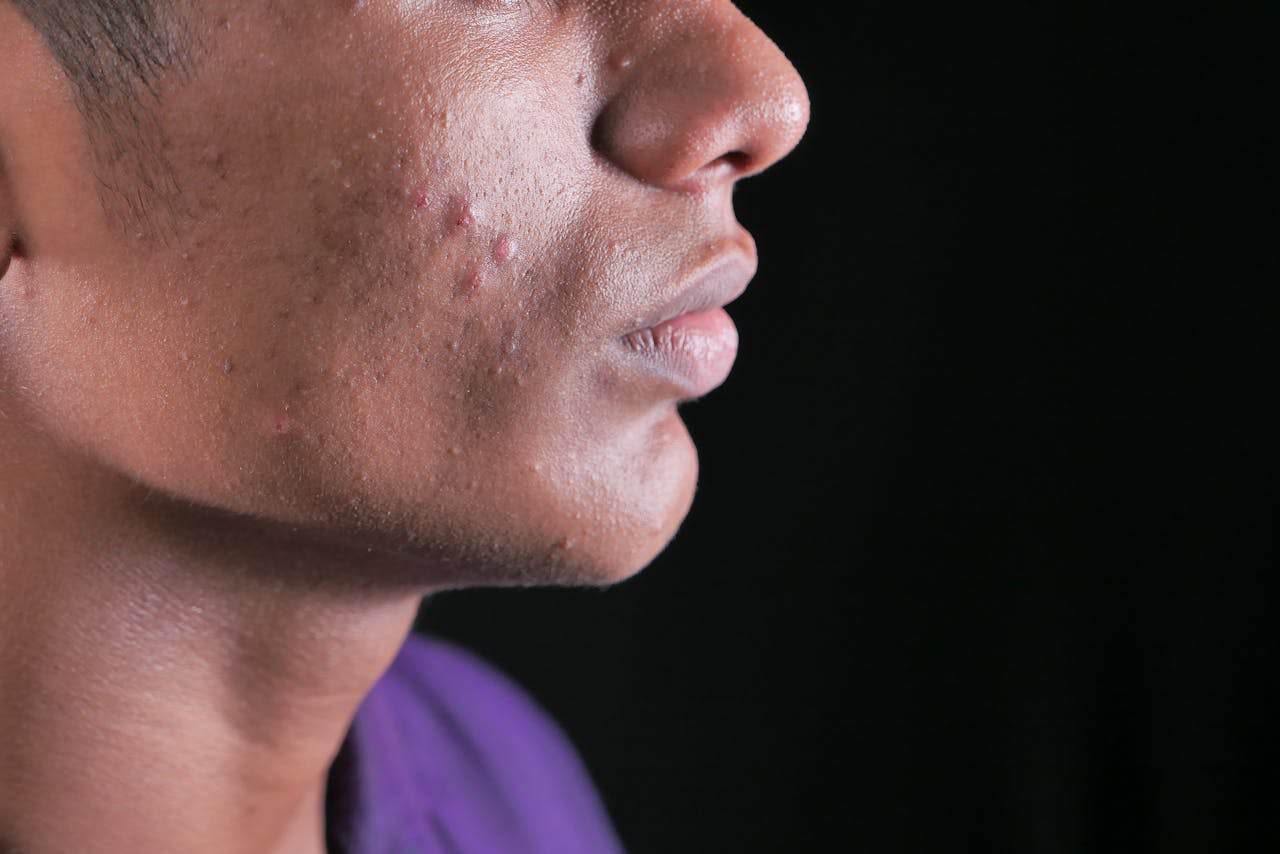
thinning sideburns
What Is Involved in a Sideburn Transplant?
KSL Clinic always advocates for the minimally invasive, low-risk FUE transplant technique. This avoids any large incisions or stitches and instead uses tiny incisions around each donor follicle, measuring just one mm across.
Each donor follicle is transplanted into a pre-configured, bespoke pattern around your sideburns, creating your desired style, hairline and appearance. There are many reasons we recommend FUE transplantation for sideburn transplants, and indeed any facial hair restoration treatment:
- Donor follicles are selected from areas of your scalp with plenty of healthy growth, and where extracting the required donor follicles will have no impact on your appearance.
- Those hairs are selected for their colour, texture, and how well they match the rest of your facial hair, resulting in a seamless and invisible finish.
- The microscopic clinical tools used during an FUE procedure are precise and exacting. That means no visible scarring on your sideburns or the donor site and faster recovery times.
- We perform sideburn transplants in one day under local anaesthesia. A walk-in/walk-out procedure avoids the use of general anaesthetic and ensures you can return home to rest and recover.
Through our before-and-after galleries, you’ll find examples of the results achieved for our clients, including facial hair transplants. These give you a good idea of the results that are achievable and the experience of previous clients.
Free consultation
Looking for a consultation for your hair transplant? Book a free consultation with us today to see what we can do for you.
How Long Does the Recovery Period Take After a Sideburn Transplant?
Recovery and aftercare are essential parts of the hair transplant process, and it’s important to follow all the instructions provided by your surgeon. A few weeks post-transplant, it is very normal to see some shedding, which is called shock loss and means your follicles will soon be entering a new growth phase.
While it takes several weeks to start seeing results, the tiny incisions made will heal in a few days, and within a year, your sideburns will be full, thick and healthy. There is a wealth of information about aftercare via the KSL Clinic site, and you’ll find that you can do lots of things to boost recovery and expedite new hair growth.
Tips on Speeding Up Results and Healing After a Sideburn Transplant
Your surgeon will provide more tailored guidance before and after your procedure, but you can consider all of the following to get the fastest results after your procedure:
- During the first few days, medications can help relieve swelling, prevent infections, and ensure comfort. We can also suggest medicines and topical treatments to promote hair growth after the initial recovery period.
- Eating a balanced diet packed with nutrients is beneficial for all hair transplant patients. Vitamins like C and D are essential for cellular healing and tissue repair, while B vitamins, particularly biotin, are often recommended.
- Looking after the transplant and donor sites will ensure you create an optimal environment for new hair growth. That means avoiding chemicals, abrasions, strenuous exercise, and direct sunlight until the new follicles are embedded and secure.
KSL Clinic also offers a full range of additional non-surgical treatments that are known to reactivate dormant follicles, speed up growth and ensure that existing hair becomes thicker and fuller.
Please contact us for more information, review our treatments and services online, or schedule your free consultation with your nearest KSL Clinic location.