

The UK hair transplant specialists at KSL Clinic are often asked the ideal age for a hair transplant – but this isn’t a simple question to answer! Very generally, most patients are are between 30 and 40 years old, but the only real way to ascertain the right time for a hair transplant is to consult with one of our GMC-registered surgeons.
That is because hair loss and thinning affect everybody differently and at variable speeds. While there are guidelines that indicate when it may be too early or too late for a hair transplant, these aren’t always identical for every patient.
As a private nationwide network of regulated hair restoration clinics, we request that every prospective patient schedule a free, no-obligation consultation at their preferred practice. During this consultation, we can evaluate your scalp and hair and provide tailored recommendations about the point where a hair transplant has the greatest chance of success.
Understanding the Right Age for Hair Transplantation
- There is no exact age at which a hair transplant will be ideal since so much depends on the extent and pace of hair loss, the areas of your scalp or facial hair affected, and the timing where you have sufficient healthy donor follicles, but without reacting too soon when a further procedure might be necessary in the future.
- Generally, hair transplant patients tend to be 30 or above, with the majority of patients aged 41 to 60, but this isn’t a hard and fast rule, and there are cases where younger patients take decisive action to permanently correct irreversible hair loss. [1]
- Typically, very early-stage hair loss is best treated with medications or therapies to slow and control shedding, stabilising hair loss or using hair restoration treatments to activate dormant follicles and cellular activity in the scalp to ensure it is in the best condition before we schedule a hair transplant.

The Factors We Consider When Recommending the Best Age for a Hair Transplant Procedure
Like every aspect of a hair transplant, the right strategies and solutions are personal to you. There isn’t any rule that says a transplant is impossible before a certain age or cannot be performed over a particular threshold.
Instead, we evaluate your scalp and hair and appraise the extent of hair loss you’ve experienced thus far. We also discuss your medical history, lifestyle, and any underlying conditions to get a fully rounded idea about how hair loss is likely to develop.
- Most patients are 40 or above, purely because this is an age at which initial hair loss has developed, and it is clear where transplanted follicles would have the greatest effect while avoiding transplantation too early when further hair loss in new locations is likely.
- Hair loss should always be stabilised before a transplant, which is why it is common to recommend a course of therapies or medications to control hair loss before a transplant stands the best possible chance of being a full success.
- Conversely, leaving a hair transplant too late may mean that the options are limited, there aren’t sufficient donor follicles to replenish the areas of hair loss, or extracting the required number of follicles would negatively impact your appearance in other areas of the scalp.
It is important to highlight that hair transplants aren’t always the ideal solution at a certain point in time and that an accredited, experienced hair restoration team won’t book a procedure without first discussing all of these factors and ensuring you make an informed decision.
Issues Associated With a Hair Transplant Performed Too Early
Younger adults may feel compelled to undergo a hair transplant as soon as possible, especially if they are concerned about early signs of hair loss, have pattern hair loss in their families, or rely on their appearance in their careers or professions.
Hair loss is known to have direct impacts on well-being, self-esteem and mental health, an aspect we never underestimate when discussing the best ways to address your concerns. [2]

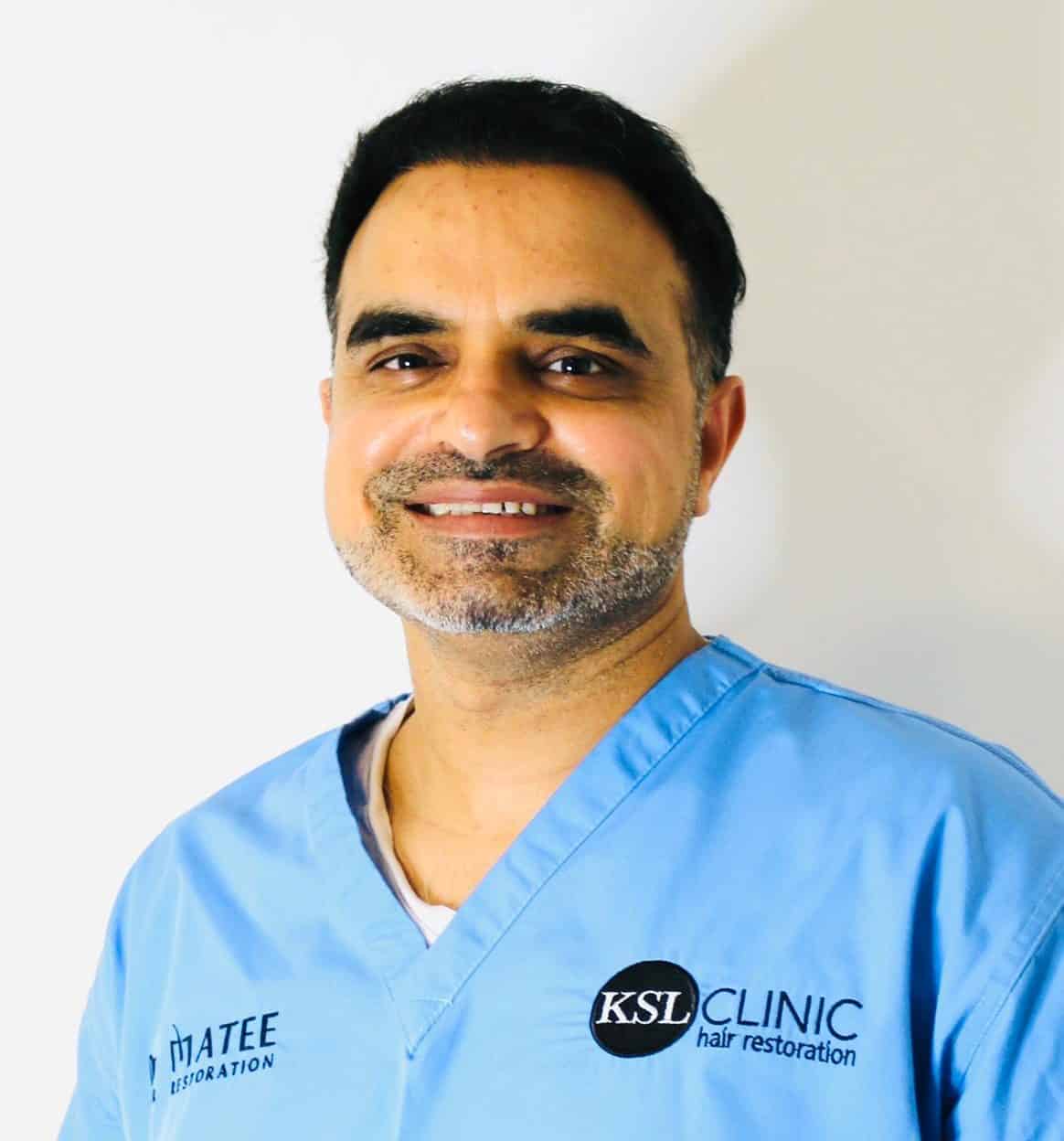
Dr Matee
Dr Matee, KSL Clinic’s Director of Surgical Services, explains, ‘We avoid performing hair transplants too soon because it may be difficult to establish how hair loss will proceed or to see an established pattern of thinning we can correct.
Hair transplants should preferably be performed only once and deliver a permanent solution to hair loss. However, it may not be advisable to proceed with a transplant if there is a good chance that hair loss will continue, making a second procedure necessary.
However, we can usually recommend treatments and therapies to slow and control hair loss or activate dormant follicles to replenish your appearance as an interim measure before a transplant becomes more viable or as an alternative.’
Get a cost for your hair transplant
Looking for a consultation regarding the hair transplant cost? Book a free consultation with us today to see what we can do for you.
Scenarios When Hair Loss Has Progressed Past the Point When a Hair Transplant Would Be Successful
The opposite situation can also apply when hair loss is extensive, and there isn’t an appropriate way to extract the donor hairs required to replenish all of the areas of hair loss.
That doesn’t mean there is a cut-off point or age at which we cannot complete a hair transplant, but that individual timing and monitoring of hair loss are essential.
Notably, the health and density of your remaining hair will impact the results we can achieve, and it makes little difference if you have grey or white hair since we match the colour, density, and growth characteristics of each individually selected donor follicle to slot into your natural growth.
Regardless of your age, you are welcome to contact KSL Clinic at any point. We will happily offer independent guidance about whether or not now is the optimal time for a hair transplant and any alternative or preparatory measures we’d suggest to restore your hair and confidence.
Frequently Asked Questions
Why Can’t a Hair Transplant Use Donated Hair to Correct Total Baldness?
Part of the reason FUE hair transplantation is so successful is that we use exacting surgical skill and your own healthy donor hair. This means there is no visible sign that you have undergone a hair transplant, and the new growth looks 100% natural because it is.
Using synthetic or donated hair isn’t suitable, nor would it be successful, because most people would find their bodies reject foreign hair with unknown DNA, and also because the outcomes would not have an appearance we would consider desirable.
However, in very rare circumstances, using body or beard donor hair is potentially a solution, although one that may require careful consideration. [3]
How Can a Hair Transplant Surgeon Assess Whether Now is the Right Time for a Transplant?
We use varied techniques to appraise your hair loss, from measuring the extent of balding against well-known charts like the Norwood Scale or reviewing the density of existing hair, the size of hair loss against areas of growth, and analysing the current progress and pattern of shedding.
Why Can’t a Hair Transplant Use Donated Hair to Correct Total Baldness?
Part of the reason FUE hair transplantation is so successful is that we use exacting surgical skill and your own healthy donor hair. This means there is no visible sign that you have undergone a hair transplant, and the new growth looks 100% natural because it is.
Using synthetic or donated hair isn’t suitable, nor would it be successful, because most people would find their bodies reject foreign hair with unknown DNA, and also because the outcomes would not have an appearance we would consider desirable.
However, in very rare circumstances, using body or beard donor hair is potentially a solution, although one that may require careful consideration. [3]
How Can a Hair Transplant Surgeon Assess Whether Now is the Right Time for a Transplant?
We use varied techniques to appraise your hair loss, from measuring the extent of balding against well-known charts like the Norwood Scale or reviewing the density of existing hair, the size of hair loss against areas of growth, and analysing the current progress and pattern of shedding.
References and Sources:
- National Library of Medicine: Hair Transplantation in the United States: A Population-Based Survey on Female and Male Pattern Baldness
- Wiley Online Library: Assessment of Quality of Life and Self-Esteem in Male Patients With Androgenetic Alopecia Before and After Hair Transplantation
- National Library of Medicine: Use of Body and Beard Donor Hair in Surgical Treatment of Androgenetic Alopecia