
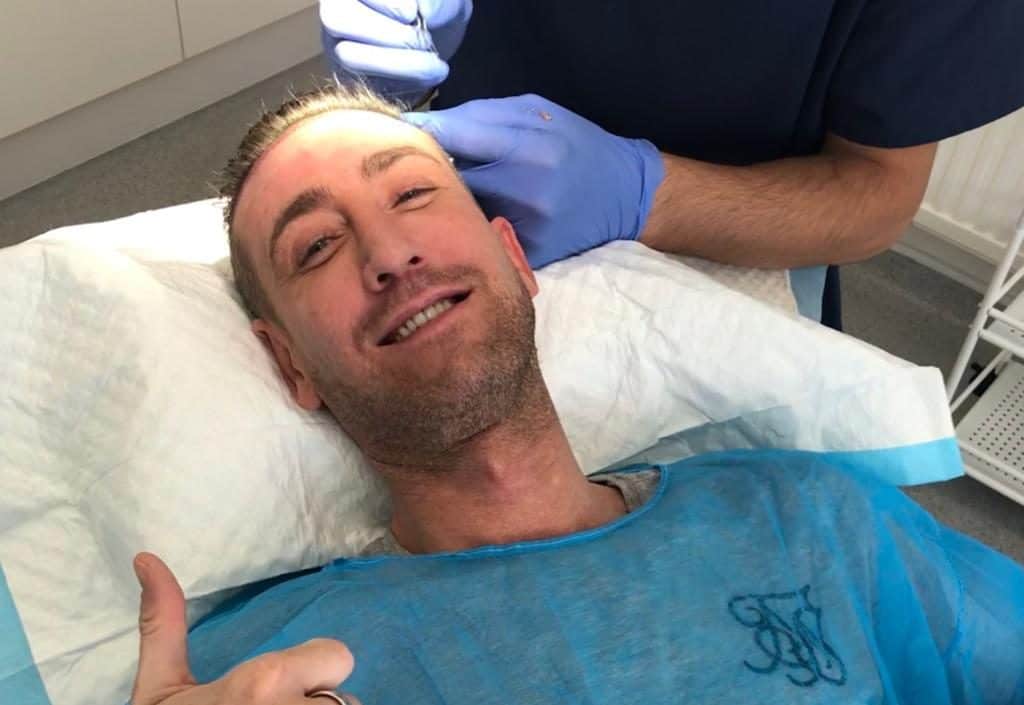
FUE hair transplants and laser therapy are effective hair restoration treatments. For most patients, laser therapy is best used to slow down the speed of hair loss or treat early-stage thinning, whereas an FUE transplant is a permanent solution to correct more extensive balding.
Losing hair can be very stressful for any man. People have discussed the causes – genetics, age, diet and so on – but we are here to offer the solutions. However, due to the wide range of treatments available, you might be asking yourself another question: what will work best for you?
Let’s explore the pros and cons of laser hair treatments vs hair transplants, when they’re most relevant, and some of the factors to consider if you’re unsure which would be the ideal way to restore your hairline.
Key Takeaways: FUE Hair Transplants vs Laser Hair Therapy
- Laser hair therapy and FUE transplants are both effective ways to slow down hair loss, but the best option will depend on the severity of hair loss and which treatments will achieve the outcomes you want.
- Patients with low-level hair loss or thinning can use laser restoration to control hair loss for the time being, until they become candidates for a hair transplant – you don’t necessarily need to choose one treatment or the other.
- While these are two separate interventions, laser hair therapy is often recommended after a FUE transplant, as it helps speed healing and recovery.
What Is Laser Hair Restoration?
Laser hair therapy is a non-surgical procedure that can help with hair loss, thinning hair, and other scalp problems.
Although laser treatments have been used for years to manage injuries, these therapies are relatively new in hair restoration. They have been proven effective, with substantial evidence of positive results without side effects. [1]
How Does Laser Hair Therapy Work?
This procedure is closely linked to the natural hair growth cycle. Every single hair on the head grows for several years before falling out. The root rests for some weeks, and then a new hair starts growing.
Baldness is produced when the root fails to provide a new hair – that is, we don’t get bald because our hair falls out, but because it stops growing!
Laser hair restoration uses the power of photo-biotherapy to stimulate hair growth. Cells absorb light, thus helping them repair themselves. Laser light also promotes blood supply, cell metabolism and protein synthesis.
What Are FUE Hair Transplants?
Follicle unit extraction is a highly successful, superior method that transplants hair grafts from any part of the body to hairless areas of the scalp.
What Is Involved in an FUE Hair Transplant Procedure?
Follicles can be easily transplanted to the scalp using the FUE method in a very safe way. Unlike other common techniques – like FUT – it doesn’t need sutures afterwards, so it won’t leave large scars.
Also, it can all be done in a single session, avoiding the stress of undergoing several surgical procedures over weeks or even months. This is the best solution when hair loss is evident, as it allows it to grow back.
You can see some real-life before and after images and video diaries from FUE hair transplant clients in this Transplants Gallery, which should give you a great idea about what to expect.
What Factors Might Impact Your Choice Between a Hair Transplant and Laser Treatment?
Hair loss can be distressing, but it isn’t rare: up to 80% of men have some balding by age 80, and 40% of women by age 50. [2]
Each person might experience hair loss very differently, and at different ages and rates, which means the treatment a hair restoration expert will recommend depends on several factors we’ve run through below.
-
How Advanced Is Your Hair Loss?
If hair loss has extended to larger areas of your head, this might mean a transplant isn’t possible immediately, if there aren’t enough donor follicles to cover the areas affected by hair loss.
However, if you have only just started seeing hair loss and a hair transplant isn’t yet necessary, you could also use laser therapy to slow down the speed of hair loss until a transplant is more suitable.
-
What Results Do You Want to See?
Laser therapy is known to stimulate growth of inactive follicles and boost your overall scalp health, but the results aren’t usually as dramatic as a full hair transplant.
-
Are There Reasons to Prefer a Surgical or Non-Surgical Procedure?
Some patients opt for an FUE hair transplant because they want to see permanent, transformative results within a few months, and they’re more interested in a surgical solution that will only need to be performed once.
Others dislike the idea of surgery or are uncomfortable with the recovery times, and prefer a non-surgical therapy that is completed over a series of sessions with ongoing top-up treatments.
How Can You Decide Between Laser Hair Therapy and a Hair Transplant?
If you are noticing that your hair is getting thinner and thinner, then laser hair restoration might be good to help slow down hair loss. With just one treatment, your scalp’s blood supply is guaranteed to increase by at least 54%. Also, the laser light is delivered directly to the hair root, so you can be sure you’re receiving the proper dosage.
However, if you need a drastic and effective solution, then nothing is better than an FUE hair transplant. If you see hairless patches in your scalp, that doesn’t mean that the battle is lost!
With the latest FUE technology, you can have your hair back as healthy and bright as it used to be. Another great advantage is that this process will result in minimal injuries that heal in just weeks, leaving only microscopic scars. Besides, around 2,500 grafts can be transplanted in a single session, making it a quick yet durable solution you have been wishing for.
What Advice Do Hair Restoration Specialists Have for Patients Deciding on the Right Treatment Plan?
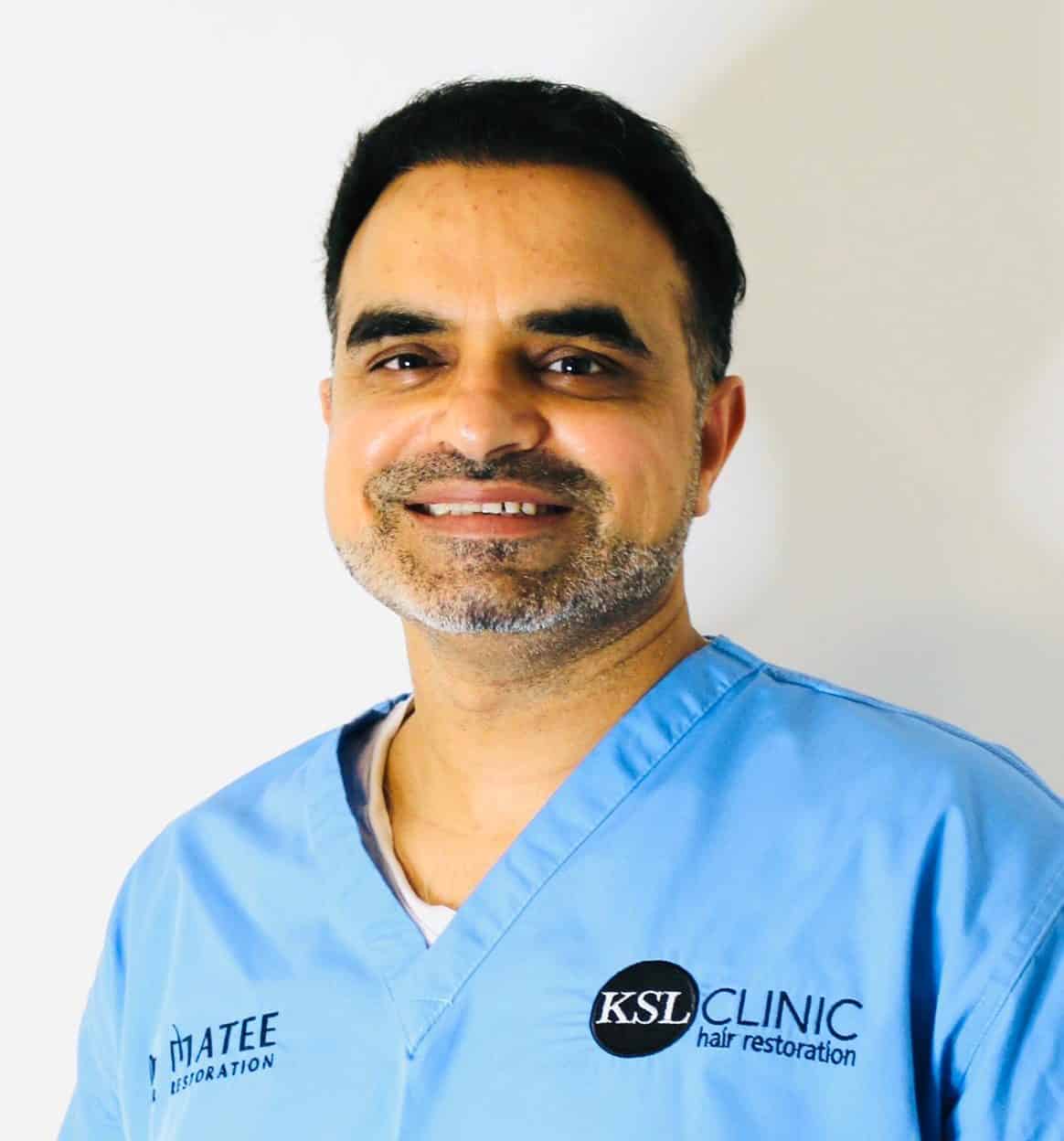
Dr Matee, Director of Surgical Services at KSL Clinic, says, ‘Don’t dismiss your hair concerns; they matter to you, and there are many things to be done! My advice is to speak with a professional sooner rather than later, as this is the only reliable way to be certain about which treatments will be right for you and achieve the results you’d like to see.
Here at KSL, we like to offer cost-effective solutions, and that is why our patients choose us. Don’t hesitate to contact our skilled team today, and we will be delighted to help.’
Interested in FUE hair transplants or FUE beard transplants? You can find us at the following clinics:
Get a cost for your hair transplant
Looking for a consultation regarding the hair transplant cost? Book a free consultation with us today to see what we can do for you.
Frequently Asked Questions
What Are the Pros and Cons of Laser Therapy Instead of a Hair Transplant?
Laser therapy is non-surgical and pain-free and can be completed in a lunch break with minimal downtime or recovery. The downsides, in comparison to a hair transplant, are that:
- Laser treatments need to be completed regularly, and most patients require multiple sessions before they see noticeable results.
- Hair transplants are more reliably effective because people respond differently to laser therapies and other hair growth treatments.
- If a patient stops laser therapy or doesn’t keep up with their ongoing treatments, the hair loss is likely to resume at the same speed as before.
Although both procedures can be beneficial for patients with many types of hair loss, it is always important to consider your scalp and hair health, as well as which treatments are most appropriate for your wishes and lifestyle.
Are There Other Treatments I Can Consider Aside From a Hair Transplant or Laser Therapy?
Yes! Alternatives include medications to slow the progression of pattern hair loss, lifestyle changes to improve nutrition, or therapies like Platelet-Rich Plasma Treatments (PRP), which use bioactive compounds from your own blood sample to promote healthier hair growth.
How Long Does it Take to See the Results After an FUE Hair Transplant?
Hair transplant results aren’t instant, and it takes up to a year for full hair regrowth. However, if the patient has taken great care of their transplant, they can expect the outcomes to be permanent.
What Are the Pros and Cons of Laser Therapy Instead of a Hair Transplant?
Laser therapy is non-surgical and pain-free and can be completed in a lunch break with minimal downtime or recovery. The downsides, in comparison to a hair transplant, are that:
- Laser treatments need to be completed regularly, and most patients require multiple sessions before they see noticeable results.
- Hair transplants are more reliably effective because people respond differently to laser therapies and other hair growth treatments.
- If a patient stops laser therapy or doesn’t keep up with their ongoing treatments, the hair loss is likely to resume at the same speed as before.
Although both procedures can be beneficial for patients with many types of hair loss, it is always important to consider your scalp and hair health, as well as which treatments are most appropriate for your wishes and lifestyle.
How Long Does it Take to See the Results After an FUE Hair Transplant?
Hair transplant results aren’t instant, and it takes up to a year for full hair regrowth. However, if the patient has taken great care of their transplant, they can expect the outcomes to be permanent.
Are There Other Treatments I Can Consider Aside From a Hair Transplant or Laser Therapy?
Yes! Alternatives include medications to slow the progression of pattern hair loss, lifestyle changes to improve nutrition, or therapies like Platelet-Rich Plasma Treatments (PRP), which use bioactive compounds from your own blood sample to promote healthier hair growth.