

Scheduling a hair transplant during the festive holidays, or just before, is often hugely convenient!
During this time of year, most people can book a week or two off work and prefer to recover in the winter when a bobble hat doesn’t look out of place.
This aside, many will also want to spend time with friends and family, celebrate with a Christmas dinner, and mark the New Year, which means putting some thought and planning into how to do so without impeding the recovery process.
Our latest guide offers professional advice to help to achieve a full recovery without missing out on the festivities of Christmas.
Driving After a Hair Transplant: Quick Facts
- Although it’s tempting to think you’ll be able to wear a woolly hat throughout recovery, this isn’t possible for the first couple of weeks when your donor areas and transplant site are still healing – so pick your surgery dates with this in mind!
- It’s usually best to schedule a hair transplant a good 2 weeks before any gatherings or parties, as within this period, residual redness and inflammation will have largely subsided. There is a 14 day recovery period and you’ll will still have scabs and dry skin until at least this point.
- You’ll be fully recovered in two weeks, so in the meantime, you may be advisable to inform your close friends and relatives to be careful around the transplanted hair.
Scheduling a hair transplant during the festive holidays, or just before, is often hugely convenient!
During this time of year, most people can book a week or two off work and prefer to recover in the winter when a bobble hat doesn’t look out of place.
This aside, many will also want to spend time with friends and family, celebrate with a Christmas dinner, and mark the New Year, which means putting some thought and planning into how to do so without impeding the recovery process.
Our latest guide offers professional advice to help to achieve a full recovery without missing out on the festivities of Christmas.
Hair Transplant Recovery Over Christmas and New Year: 3 Takaways
- Although it’s tempting to think you’ll be able to wear a woolly hat throughout recovery, this isn’t possible for the first couple of weeks when your donor areas and transplant site are still healing – so pick your surgery dates with this in mind!
- It’s usually best to schedule a hair transplant a good 2 weeks before any gatherings or parties, as within this period, residual redness and inflammation will have largely subsided. There is a 14 day recovery period and you’ll will still have scabs and dry skin until at least this point.
- You’ll be fully recovered in two weeks, so in the meantime, you may be advisable to inform your close friends and relatives to be careful around the transplanted hair.
Looking After Your Scalp Over Christmas Post-Hair Transplant
The most important aspect is to ensure you continue to follow all the aftercare guidance provided.
Bring medications, pain relief, and sensitive shampoos with you rather than borrowing a harsh hair product, and be mindful of overly strenuous activities like going working out to ensure you can join in while taking care of your scalp.
Here are some of the guidelines I’d share with a patient who’s planning to recover over the Christmas break and wants to be able to socialise:
- Staying hydrated, eating well, and avoiding excessive alcohol consumption is essential – it’s never great to have a cold or stomach bug while also recovering from surgery.
- Transplant and donor areas may look ‘back to normal’ or close to it in just a couple of weeks, but you’re still recovering and shouldn’t ignore medications and prescribed hair treatments we’ve recommended.
- Stick to the basics – avoid swimming, high-heat environments, heavy sweating, and direct sun exposure.
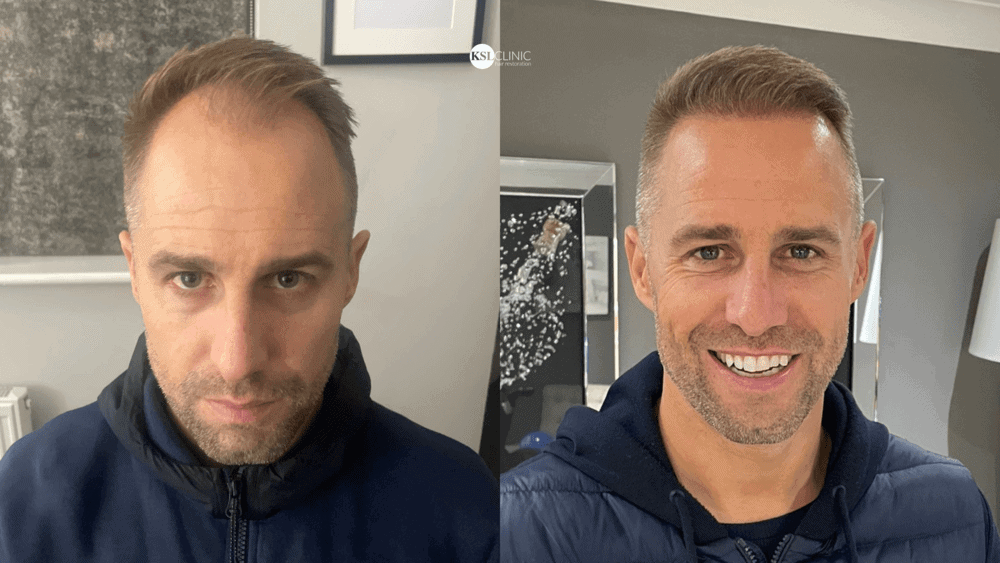
Get a hair transplant for next Christmas…
Restore your hair line and confidence before Christmas 2026 with KSL. Get a Free consultation today.
Recovery Timelines for a Hair Transplant During the Festive Season
During the first two or three days, you’ll need to rest as much as you can – ideally for a little longer – but I’d advise against parties or crowded spaces.
Anything like a bump in a queue could impact the delicate new follicle transplants, and busy pubs or bars can be hot and full of potential dust and viruses that you need to avoid.
From week one to two, it’s best to avoid alcohol as it’s not conducive to healthy circulation, and you can take steps like bringing an extra pillow for overnight stays to keep your head elevated to keep swelling to a minimum.
Some moderate and low-impact activity is usually ok, but that should be limited to light walking rather than tough gym workouts (or New Year’s Eve dance parties!). After ten days to two weeks, you can generally resume your usual routines, while ensuring you:
- Stay hydrated
- Avoid smoking
- Keep your scalp out of direct sunlight
- Steer clear of haircare products with chemicals or dyes
- Use any prescribed medications or topical treatments
If you’re travelling, you might also benefit from thinking about how you’ll gently wash your scalp, as high-pressure showers can cause irritation or damage even after two weeks, so packing the right items will ensure you’re not caught unprepared.
What can I Eat and Drink During Christmas and New Year Post-Hair Transplant?
As we’ve mentioned, alcohol can slow down the pace of recovery or even impede results, as can consuming large amounts of very fatty or greasy foods, however tempting they might be!
The best advice is to socialise and enjoy the season without overindulging, concentrating on general health and well-being during the important early days of recovery.
For many people, this doesn’t have to be obvious and can mean sipping drinks slowly, always having a glass of water, and choosing larger portions of healthy veggies and smaller portions of less nutrient-dense foods.
You can also think about protecting your health and boosting your immune system to reduce the chances of catching a winter bug by supplementing your diet with vitamins, or upping your intake of fruits.
Can I fly for family Occasions After a Christmas Hair Transplant?
Finally, I’d share a note of caution about cross-country or long-distance travel if it can be avoided, while appreciating that Christmas is very special to many families and might be the only time of year everyone can meet up.
Whilst you can plan a flight home, be conscious that this shouldn’t be within two weeks, where possible. Tiredness, abrasion on headrests, exposure to germs, and air conditioning can all affect your recovery, so it’s best to leave this for as long as you can after your surgery.
Managing Christmas Stress and Sleep During Recovery
Sleep and stress are massive recovery factors, especially over Christmas when routines become chaotic. This section gives the guide more depth.
Sleep matters just as much as avoiding physical strain. During the festive period, late nights, travel and socialising can all affect your rest – and quality sleep is essential for optimal healing after a hair transplant.
To support recovery, aim to:
- Maintain a regular sleep schedule where possible.
- Avoid sleeping on sofas or guest beds that make it harder to keep your head elevated.
- Bring a travel pillow or neck cushion to prevent rubbing your grafts while you sleep.
Chronic stress can also slow the healing process, so try to give yourself downtime between gatherings, even if it’s just a short walk or quiet moment at home.
How to Handle Questions and Comments about your hair transplant From Family
Christmas means people. And people stare, ask questions, and sometimes don’t understand what healing looks like.
Even though your scalp may look slightly red or scabby in the first week or so, most close friends and relatives will simply be curious. It can be helpful to prepare a simple explanation if you’d rather not discuss the details at length.
Patients often say this reduces anxiety around Christmas gatherings, helping them feel more relaxed and in control.
Other tips:
Cold Weather Considerations
Cold air doesn’t harm grafts, but:
- Central heating can dry the scalp.
- Sudden temperature changes (going indoors/outdoors) can cause itchiness.
- We recommend a gentle moisturising spray (if approved by your surgeon) or humidifier in hotel rooms.
Christmas Decorations & Physical Risks
- Avoid bending under Christmas trees or garlands, which can knock the scalp.
- Be mindful of excitable children or pets who may jump up unexpectedly.
- Watch out for potentially crowded living rooms filled with guests, gifts, and low lighting.
If you’d like any further advice or have a transplant booked and want to ensure you’re properly prepared for the holidays, you’re welcome to get in touch with me or any of the clinical teams at the KSL Clinic practices.