

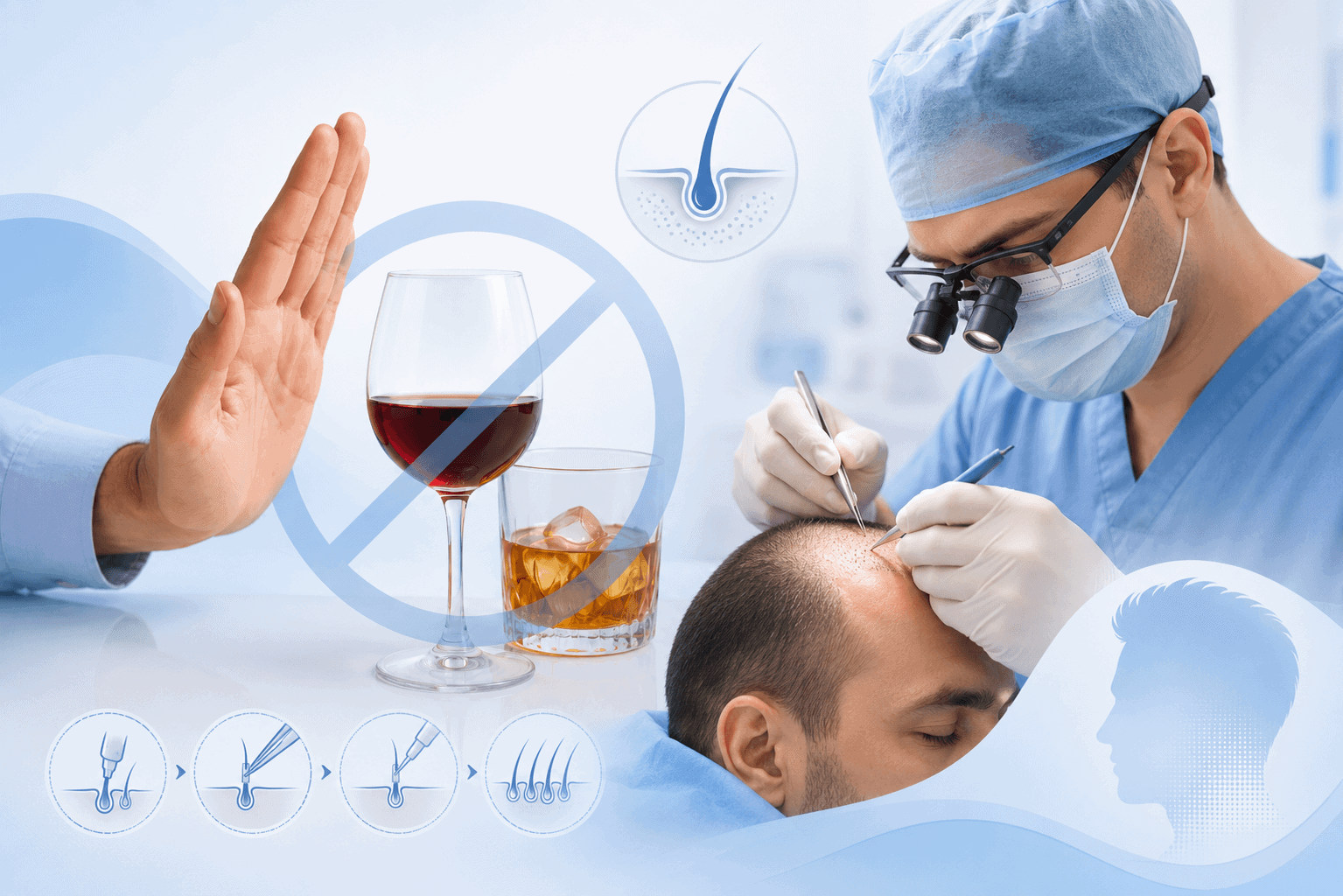
The advice for hair transplant patients is to avoid alcohol for the recovery period of 14 days after their procedure, and ideally also beforehand, to ensure newly implanted grafts can stabilise with a reduced risk of complications like swelling during the important recovery phase.
Drinking alcohol too soon after surgery can interfere with essential functions like blood circulation, hydration and even the effectiveness of any medications a patient is taking, which has the potential to impact the long-term results of the hair transplant.
Following the clinician’s aftercare guidance is hugely important [1], and the best way to maximise the proportion of grafts that survive, ensuring a transplant is a success and delivers the outcomes patients anticipate.
Drinking After a Hair Transplant: Key Takeaways
- Alcohol is best avoided for up to 14 days following a hair transplant, as drinking can increase the risks of swelling, bleeding and dehydration, which negatively affect the speed of healing.
- Drinking alcohol while taking medications such as antibiotics, anti-inflammatories and painkillers is also inadvisable, as there is a higher likelihood of side effects, a slower recovery, or medications not working as they should.
- Staying hydrated, following aftercare instructions, and avoiding alcohol consumption can all help support optimal graft survival and ongoing growth.
Why Are Patients Advised to Avoid Alcohol After a Hair Transplant?
Even if patients are undergoing a minimally invasive FUE hair transplant, this is still a surgical procedure. For the first days after a transplant, the grafts will remain extremely delicate and need to be protected while they establish a healthy blood supply.
Alcohol can interfere with that process in several ways:
- Thinning the blood: Alcohol is a blood thinner, which raises the risk of issues like bleeding, prolonged scabbing, greater swelling and bruising, or disruption to newly impacted grafts.
- Dehydration: Staying hydrated is essential, as it promotes skin healing, healthy circulation to the scalp, and follicular recovery, which is why it’s best to drink plenty of water.
- Medication interactions: Alcohol can counteract the effects of antibiotics, pain relief and anti-inflammatories, and may have side effects such as drowsiness or dizziness, nausea and problems with coordination.
Patients taking any form of sedative – whether related to their hair transplant or not – are also strongly advised to avoid alcohol, as this can be dangerous.
How Long After a Hair Transplant Can Patients Drink Alcohol?
Waiting for the full 14 days is preferable, even though some surgeons recommend avoiding alcohol for 1 week. This can depend on the surgeon and the extent and location of the hair transplant.
That timeline can vary slightly depending on the prescribed medications you’re taking, your general health, and how many grafts have been transplanted. The better way to gauge the point at which it’s safe to consume alcohol is to wait until:
- The scalp is visibly healing
- Swelling and redness have subsided
- Any courses of medication have been completed
Once you’re able to drink alcohol again, it’s still important to moderate this as the full healing and recovery process takes time.
Comparing Alcohol Advice for FUE vs FUT Hair Transplants
KSL Clinic only offers advanced, bespoke FUE hair transplants, and patients considering an alternative procedure (FUT Hair transplants) should be aware that healing times and alcohol abstinence may be longer, given the linear scar where the donor tissue is removed.
| Alcohol Advice | Healing Considerations | |
| FUE Hair Transplant | Avoid alcohol for 14 days | Microscopic extraction sites require time to heal |
| FUT Hair Transplant | Don’t drink for 10-14 days | Linear incisions with stitches often mean a longer recovery |
| Cosmetic Micropigmentation | Try not to drink for several days before and after | Alcohol might increase sensitivity and irritation |
Free consultation
Looking to fix a consultation? Book a free consultation with us today to see what we can do for you.
What Happens if You Drink Alcohol Too Soon After a Hair Transplant Procedure?
While a small amount of alcohol isn’t likely to completely ruin the results, drinking heavily or very soon after surgery can increase the risk of complications, including those mentioned above, but also higher risks of infection.
KSL Clinic says, ‘The first week after a hair transplant is when the grafts are most vulnerable, and although patients often feel fine very quickly, alcohol can interfere with healing behind the scenes. Waiting a few days before drinking is a simple way to protect the final results – and the investments patients make in hair restoration.’
Can Patients Drink Alcohol Before Hair Transplant Surgery?
Just as it’s best to avoid drinking after a procedure, it’s advisable to avoid alcohol beforehand too, and the typical guidance is to stop drinking between 5 and 7 days before the surgery is scheduled.
That’s because drinking alcohol, especially in larger quantities, can mean:
- Increased bleeding during the procedure
- Higher blood pressure
- More sensitivity around the scalp
Blood alcohol content can also impact sedation and anaesthesia, and patients are advised to avoid other lifestyle behaviours like smoking, excess caffeine, intense exercise and some types of supplements before and after their surgery.
Following these instructions and keeping activities light for the first 14 days will ensure transplanted follicles have the best chance of survival. Patients can resume their usual routines and habits once swelling and scabbing have improved.
Frequently Asked Questions
Am I Allowed to Drink Alcohol Three Days After a Hair Transplant?
No. Although the decision is ultimately yours, a hair transplant surgeon will always advise against drinking for at least a week when grafts are sensitive. Remember that you’ll be on antibiotics for first 7 days post hair transplant.
What Should I Drink Instead of Alcohol After a Hair Transplant?
Hydration remains key, and the best options are the simplest – water, herbal teas, diluted fruit juices, and electrolytes, all of which contribute to hydration and support circulation to the scalp and natural tissue repair processes.
Many professionals advise patients to limit caffeine [2] for the first few days, which is why herbal teas or decaf coffee or tea are preferable.
Am I Allowed to Drink Alcohol Three Days After a Hair Transplant?
No. Although the decision is ultimately yours, a hair transplant surgeon will always advise against drinking for at least a week when grafts are sensitive. Remember that you’ll be on antibiotics for first 7 days post hair transplant.
What Should I Drink Instead of Alcohol After a Hair Transplant?
Hydration remains key, and the best options are the simplest – water, herbal teas, diluted fruit juices, and electrolytes, all of which contribute to hydration and support circulation to the scalp and natural tissue repair processes.
Many professionals advise patients to limit caffeine [2] for the first few days, which is why herbal teas or decaf coffee or tea are preferable.