Immediate Post-Transplant Care (Days 1-14)
The Critical First 48 Hours after a hair transplant
In the initial recovery phase, it’s crucial to keep the area around your scalp as clean as possible. We’ll provide the correct medication to help the healing process. Take as instructed in the post-op recovery leaflet we have given you.
A few hours after the procedure, you’ll begin to feel soreness around your head. To help ease the swelling from bruising, sleep in a semi-upright position for a week, as instructed in your aftercare programme.
Pain relief and paracetamol can help ease your discomfort during this period.
Understanding Normal Healing Signs post hair transplant
Your scalp may feel itchy and look pink, but don’t worry—this is part of the natural healing process. You must not scratch or touch your head until Day 14. If you do, there’s a chance you’ll damage the new hair follicles before they have a chance to establish themselves.
You may notice that parts of your head will start to scab over; again, this is completely normal. These scabs usually form where the hair has been implanted, so it’s essential to let them heal naturally. Learn more about what to expect 10 days after your hair transplant.
Critical Don’ts in the First Two Weeks after a hair transplant
- No touching or scratching: Touching grafts after hair transplant can be detrimental to your results
- No direct sunlight exposure: UV rays can damage healing tissue
- No excessive sweating: This increases infection risk
Hair Washing and Hygiene
Your First Hair Wash After your hair transplant
You’ll receive detailed advice on how to wash and shampoo your scalp using the treatment products during your recovery period. On Day 5, you’re able to wash your hair following the specific instructions in your aftercare programme.
Repeat this gentle washing process every other day until Day 14, when you’ll be able to return to your normal hair washing routine. Always use the specialised shampoo we provide during the initial recovery period.
Timeline and What to Expect
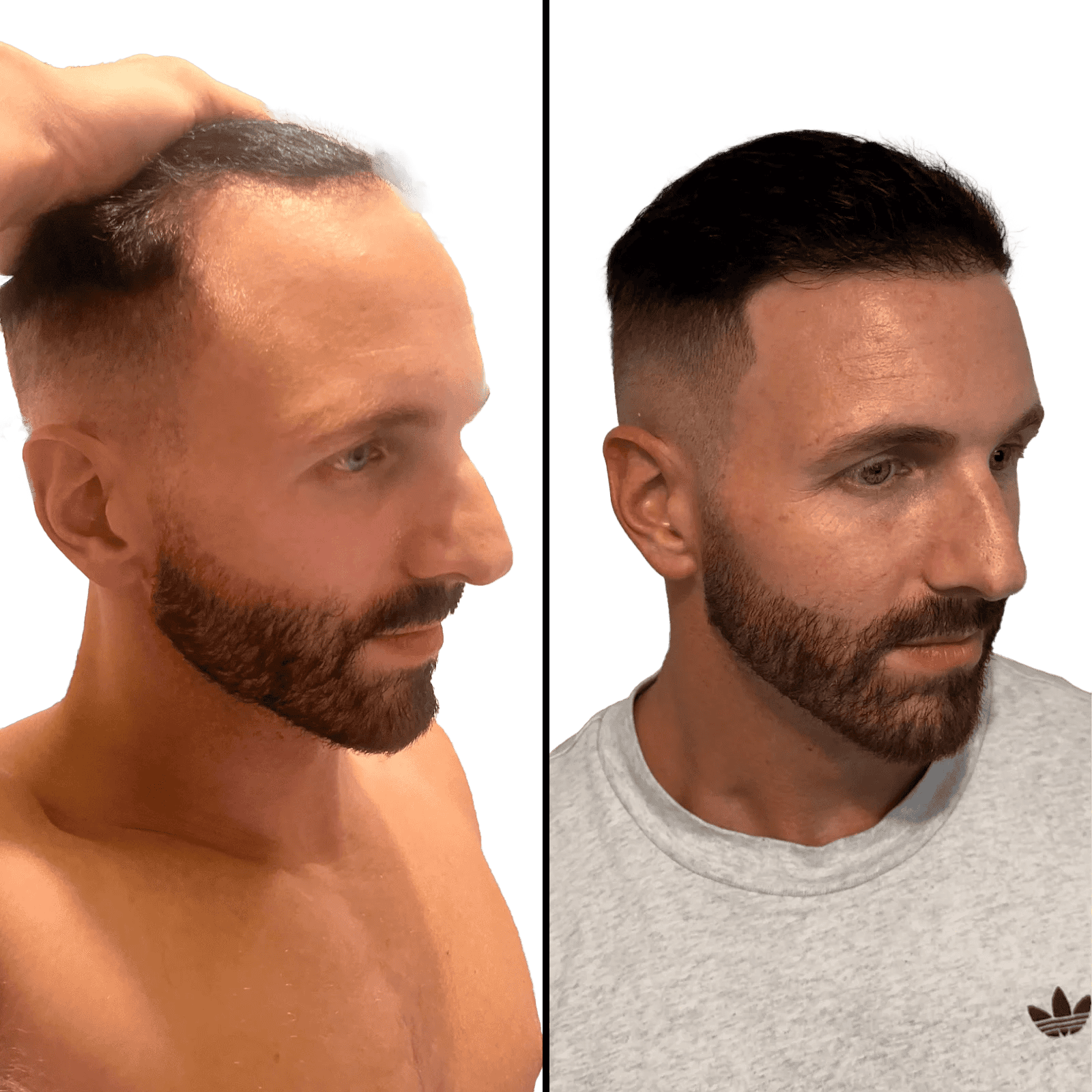
Week-by-Week Recovery Timeline post hair transplant
Understanding what to expect at each stage helps you track your progress and identify any concerns early:
Understanding Your Results
Your new hair will start growing properly anywhere from three to six months after the procedure. It’s normal for hair to grow and shed before the three-month mark—this is part of the natural hair growth cycle. Learn more about hair regrowth after a transplant and how you’ll look after your hair transplant.
Physical Activities and Lifestyle
Exercise Restrictions after a hair transplant
Doing anything that may cause excessive sweating is strictly prohibited during the initial recovery period. Sweating significantly increases the chances of infection in your healing sites, so we advise staying off the treadmill for at least two weeks.
For detailed guidance on when and how to return to physical activity, read our comprehensive guide on exercise after a hair transplant.
Driving and Daily Activities
Many patients wonder about returning to normal activities like driving. Find out more about driving after a hair transplant and other daily considerations.
Wearing hats and headwear post transplant
Learn about wearing hats after a hair transplant and proper scalp protection during recovery.
Alcohol and Smoking after a hair transplant
It’s strongly advised that you don’t consume any alcohol for the first 2 weeks following surgery—the longer you can avoid it, the better. As for smoking, you should avoid it both before and after your procedure, as it can impair healing.
Learn more about smoking after a hair transplant.
Post hair transplant Medications and Supplements

Prescribed Medications
Following your surgeon’s instructions regarding antibiotics and other prescribed medications during the first week is absolutely crucial for proper healing.
Post-Transplant Medications
Many patients have questions about ongoing treatments. You can read more about our
Nutritional Support
Proper nutrition plays a vital role in recovery and hair growth:
Common Post Hair Transplant Concerns and Side Effects
Normal Post-Transplant Effects
Several side effects are completely normal and expected:
Swelling: Some facial and scalp swelling is normal. Learn more about swelling after hair transplant surgery and why it’s nothing to worry about.
Itching: Your scalp will likely feel itchy as it heals. Read our guide on itching after hair transplant for management tips.
Shedding: This temporary shedding is completely normal. Understand more about shock loss after hair transplant.
Long-Term Hair Growth and Recovery
Managing Expectations
It’s important to stay patient when waiting for your hair to grow properly. The hair transplant process is lengthy, but with proper care, it will transform your appearance and confidence.
Ongoing Hair Care
Questions about long-term maintenance include:
Special Considerations
Recovering from a Beard Transplant
Professional Support and Follow-Up
When to Contact Your Surgeon
If you experience severe pain at any point during your recovery period, contact your surgeon immediately to have it assessed by a professional. Your wellbeing is our priority, and we’re here to support you throughout your recovery journey.
Getting Additional Support
If you’re interested in finding out more about our hair transplant services, FUE eyebrow transplants, or FUE beard transplants, don’t hesitate to get in touch with us today on 01622 686101 or 0161 503 0537. One of our expert team members will be on hand to help you with any queries.
Remember: Always follow your surgeons instructions
Following proper aftercare is essential for achieving the best possible results from your hair transplant. This guide provides a foundation, but remember that each patient’s journey is unique. Always follow the specific instructions provided by your surgical team and don’t hesitate to reach out if you have any concerns during your recovery.
Your patience and commitment to proper aftercare will be rewarded with natural-looking, permanent hair restoration that will enhance your confidence for years to come.