
Prospective hair transplant patients who’ve already conducted a little research will know that the results aren’t instant, and that it takes around a year to see a good level of regrowth. That doesn’t, though, mean you won’t see initial new hairs sooner.
Here we’ll look at what you can expect in terms of regrowth after a hair transplant. At this stage, it’s perfectly natural to experience some anxiety or worry that something is awry.
This guide will give you the peace of mind you need and assure you that all is going to plan.
Hair Growth after a hair transplant: Key Takeaways
- Hair regrowth after a transplant takes time, and although the final results aren’t visible until after around 12 months, the interim period is essential to enabling new follicles to become established.
- Growth usually becomes noticeable from about six months post-transplant, and these delicate, finer hairs will become thicker and richer in colour as they mature.
- The exact timeframes for hair regrowth may depend on the method used by your surgeon, with minimally invasive, precise FUE hair transplants known to offer the fastest healing times due to the lack of large incisions or tissue damage.
Why Should Hair Transplant Patients Understand Recovery and Regrowth Timings?
When it comes to Male Pattern Baldness, you have several choices: you can either pull out the clippers and embrace it, you can live in denial and wait for nature to decide for you, or you can be proactive and take steps to restore your hair.
A hair transplant is a safe and effective way to do just that. Yet, while this procedure often yields great results, aftercare is absolutely integral in getting the most from your hair transplant.
It’s essential to care for your healing scalp and keep your expectations realistic as your newly transplanted follicles take root and begin producing natural, healthy hair in those previously sparse areas.
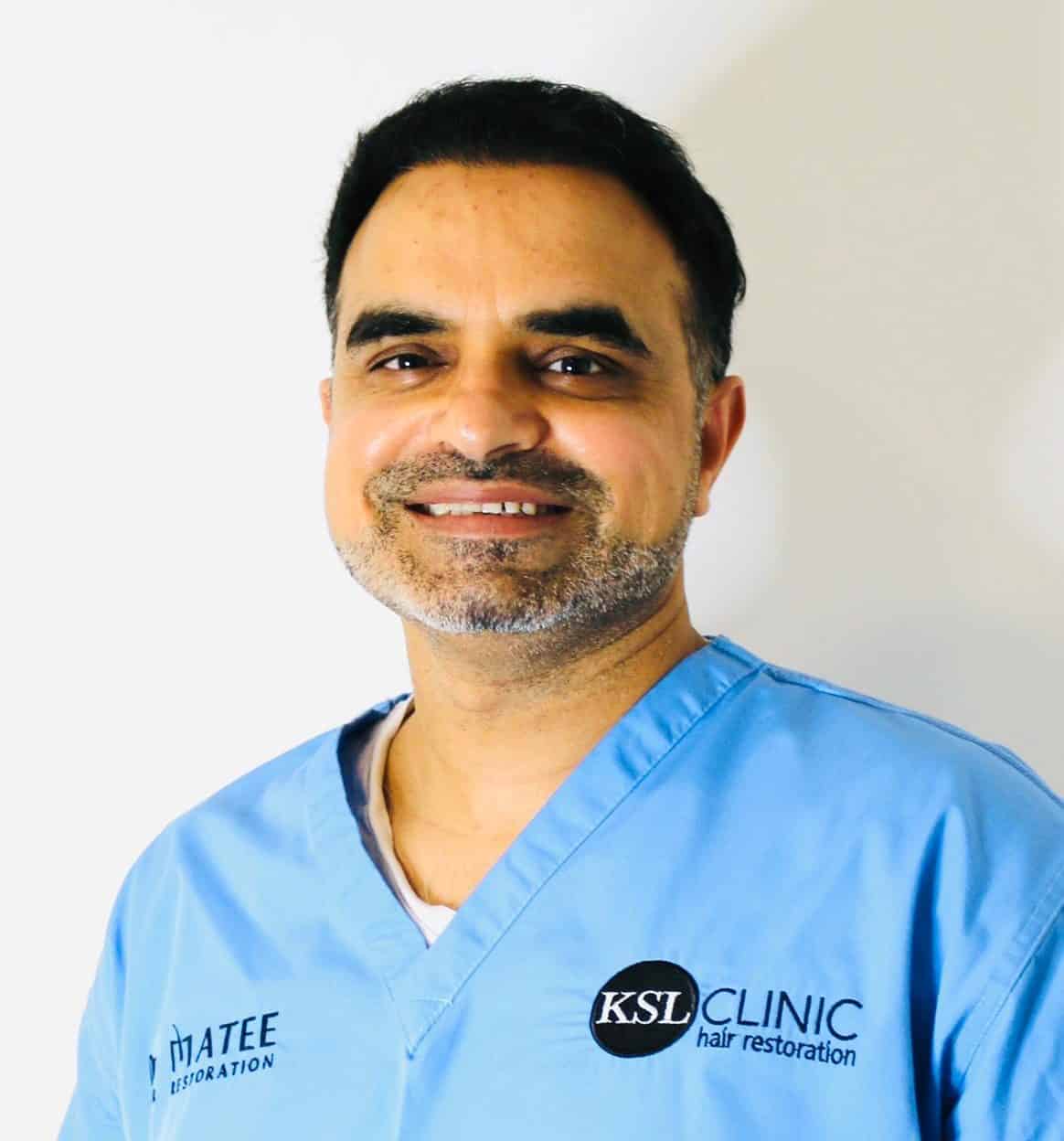
‘Recovery and aftercare are just as important as the skill of your hair transplant surgeon, and we ask all patients to follow our guidance carefully to protect their delicate new follicles. While it can take a few months to see the outcomes, they are permanent and transformative, so a little patience is key.’
Dr Matee, Surgical Director at KSL Clinic
What Happens in the First Few Weeks After a Hair Transplant?
If you notice early shedding, don’t worry, it’s actually a good sign and is to be expected, whether you’ve had a conventional scalp transplant or an alternative like a beard transplant.
Assuming you have followed the aftercare measures recommended by your surgeon, your scalp will reach a healed state within two weeks.
During months one to three, you may notice that the hairs that have been transplanted start to shed at a faster-than-average rate. While this is understandably alarming, don’t panic.
This is actually another positive indication. It means that the follicle has embedded and shed the existing hair to produce new, thicker, healthier hair.
At around 3 months, you will start to notice your regrowth, and it’s all uphill from here!
How Much Regrowth Should I Expect Up to Six Months After Hair Transplant Surgery?
By now, you should start to see some results. You will notice hair in previously bald spots and/or filling in your hairline. This may be a slightly different colour or texture to your existing hair.
Don’t be alarmed, this is also perfectly natural. These baby hairs will grow fuller and thicker in due time.
At this point, your surgeon may recommend a supplementary therapy to accelerate regrowth and cellular healing. They might include laser therapy and PRP treatments, which have been shown to have notable effects on post-transplant and hair restoration outcomes. [1]
Get a cost for your hair transplant
Looking for a consultation regarding the hair transplant cost? Book a free consultation with us today to see what we can do for you.
6-12 months after your procedure
As the months go by, you’ll start to notice that the new hair is growing thicker and stronger as well as being more abundant on the scalp. You’ll start to notice the results that will stay with you, but the best is still yet to come.
12-18 months after your procedure
By now, you will start to see the final results. It is recommended that you book a review with your consultant or transplant surgeon at or around the 12-month mark. This will help to ensure that all has gone to plan.
Typically, you can expect full regrowth of the hairline after 12-15 months. Regrowth on the crown may take longer to complete – typically around 18-20 months.
Hair Regrowth Timeline Recap
| Post-Transplant Timing | Hair Regrowth Expectations |
| Months 1 – 2 | Initial shedding as follicles enter a new growth phase |
| Month 3-4 | First new hairs become visible |
| Months 6 – 12 | Increased rate of growth and hair density |
| Months 12 – 18 | Final results become noticeable |
How Can I Support Post-Transplant Healthy Hair Growth?
It’s important to remember that while your transplant will last you for decades to come, the hormone issues that lead to hair loss are still present in your body.
Your consultant or surgeon may recommend a course of finasteride tablets or topical minoxidil (or both) to ensure that your existing hair matches the quality of your transplanted hair or suggest a non-surgical treatment like PRP to support healthy growth.
There are cases where grafts have failed, especially where patients use clinics that offer more invasive FUT transplantation. This is why a trusted, credible practitioner will always ensure you have clear expectations and understand the differences between hair transplant techniques. [2]
Want to know more about hair transplant in the UK? Visit us at one of our locations or contact us online.
Frequently Asked Questions
How long does it take to see hair regrowth after a transplant?
Early growth usually begins around 3 to 4 months after the procedure. Noticeable improvement is typically seen between 6 and 9 months, with full results developing at around 12 months.
When will my transplanted hair look natural?
Hair usually starts to blend naturally with existing hair from around 6 months onwards. By 12 months, the transplanted area should look fully established, with natural direction, density, and texture.
Can hair regrowth vary from person to person?
Yes. Results can vary based on factors such as age, hair type, extent of hair loss, healing response, and how closely aftercare advice is followed.
What can I do to support healthy regrowth after a transplant?
Following post-operative care instructions, avoiding smoking, managing stress, and maintaining good scalp health can all support optimal regrowth. In some cases, ongoing medical treatments may also be recommended.
Will the Hair Around the Donor Area Regrow After a Hair Transplant?
Extracted follicles used to replenish your hair around the site of hair loss are carefully selected to ensure their removal makes no impact on the appearance of your hair. After the first couple of weeks of recovery, the donor area should look as it did pre-procedure.
Is it normal for transplanted hair to fall out at first?
Yes. Many patients experience shedding of the transplanted hairs within the first few weeks. This is known as shock loss and is a normal part of the process. The follicles remain intact and new hair growth follows.
Does transplanted hair grow permanently?
Yes. Transplanted hair is taken from areas that are genetically resistant to hair loss, meaning it is typically permanent. However, existing non-transplanted hair may continue to thin over time.
Will I need more than one hair transplant?
Some patients choose to have additional procedures in the future, particularly if hair loss progresses in untreated areas. A consultation can help determine whether this may be necessary.
How Can I Find Out if a Hair Transplant Will be Right for Me?
Regulated clinicians will always expect to assess patients before agreeing to perform any therapy or surgical intervention, ensuring that patients are good candidates for hair transplants and that the results they anticipate are achievable.
How long does it take to see hair regrowth after a transplant?
Early growth usually begins around 3 to 4 months after the procedure. Noticeable improvement is typically seen between 6 and 9 months, with full results developing at around 12 months.
Is it normal for transplanted hair to fall out at first?
Yes. Many patients experience shedding of the transplanted hairs within the first few weeks. This is known as shock loss and is a normal part of the process. The follicles remain intact and new hair growth follows.
When will my transplanted hair look natural?
Hair usually starts to blend naturally with existing hair from around 6 months onwards. By 12 months, the transplanted area should look fully established, with natural direction, density, and texture.
Does transplanted hair grow permanently?
Yes. Transplanted hair is taken from areas that are genetically resistant to hair loss, meaning it is typically permanent. However, existing non-transplanted hair may continue to thin over time.
Can hair regrowth vary from person to person?
Yes. Results can vary based on factors such as age, hair type, extent of hair loss, healing response, and how closely aftercare advice is followed.
Will I need more than one hair transplant?
Some patients choose to have additional procedures in the future, particularly if hair loss progresses in untreated areas. A consultation can help determine whether this may be necessary.
What can I do to support healthy regrowth after a transplant?
Following post-operative care instructions, avoiding smoking, managing stress, and maintaining good scalp health can all support optimal regrowth. In some cases, ongoing medical treatments may also be recommended.
How Can I Find Out if a Hair Transplant Will be Right for Me?
Regulated clinicians will always expect to assess patients before agreeing to perform any therapy or surgical intervention, ensuring that patients are good candidates for hair transplants and that the results they anticipate are achievable.
Will the Hair Around the Donor Area Regrow After a Hair Transplant?
Extracted follicles used to replenish your hair around the site of hair loss are carefully selected to ensure their removal makes no impact on the appearance of your hair. After the first couple of weeks of recovery, the donor area should look as it did pre-procedure.