
Hair transplant technology has advanced rapidly over the last two decades, transforming from a basic surgical procedure into a sophisticated, minimally invasive treatment for hair loss.
In this article, we recap on some of the leading technology we use for Follicular Unit Extraction (FUE) since this is the only procedure we recommend, and the best possible option in terms of patient safety, success rates and accuracy.
Key Technologies Involved in FUE Hair Transplants
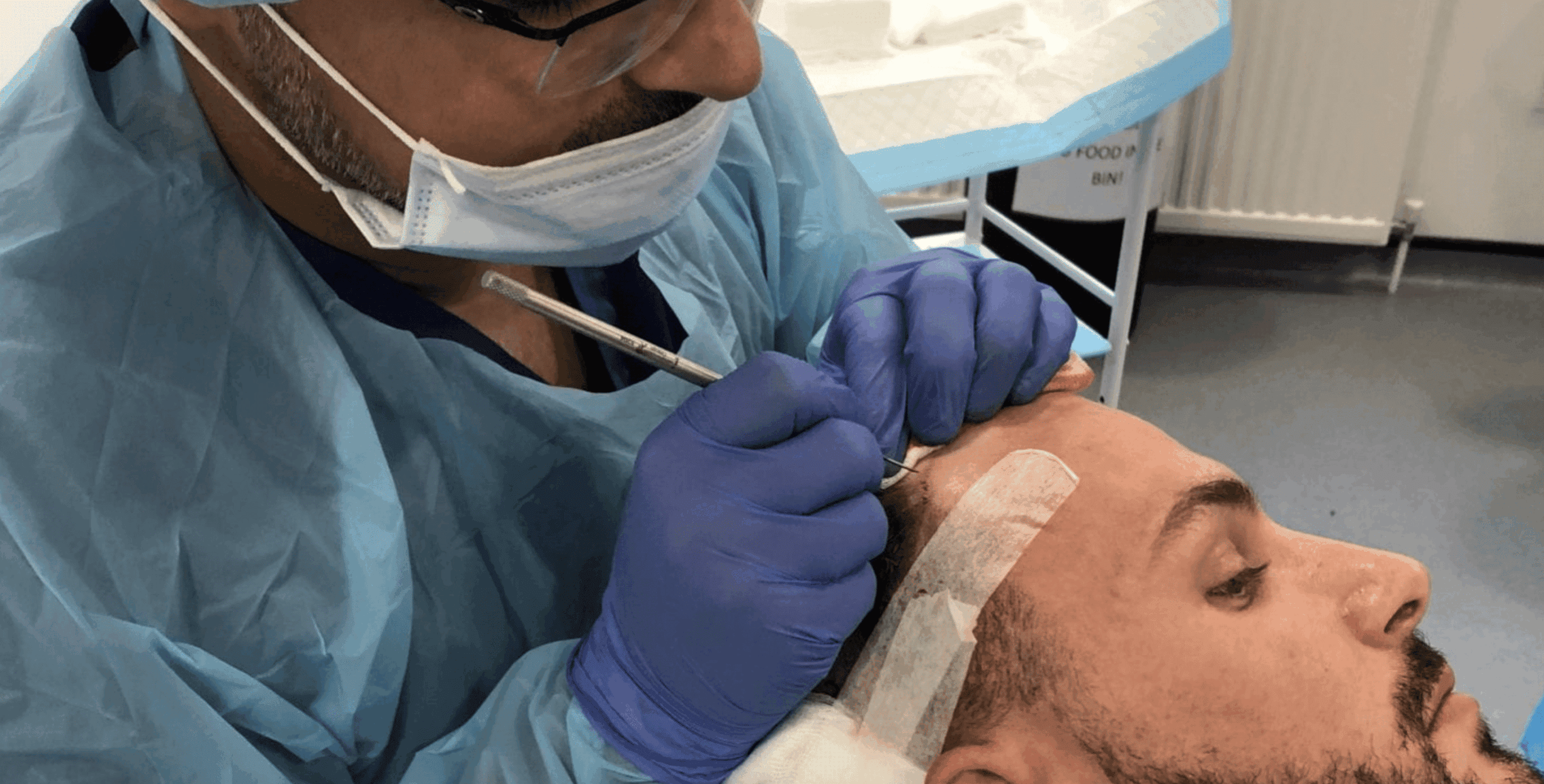
- Hair transplant technology includes a Micro Punch – a tool used to create tiny, microscopic incisions. A micro punch is used at the sites where we donor follicles are extracted and where they are reimplanted in the area impacted by hair loss.
- Magnification tools and trichometers are non-invasive technologies that help us get a close-up view of your scalp and hair, allowing us to evaluate your hair loss quickly and precisely.
- Devices like a Magni-Focuser or Avram Stand can be used during the grading and preparation of donor follicl es. They are deployed to analyse the follicle density and cut the graft ready for implantation.
- Other aspects of hair transplantation, like laser therapies or PRP treatments, also utilise cutting-edge tech – we’ll explain more about how these work shortly..
The Benefit of Using Micro Punch Tech in an FUE Hair Transplant
A Micro Punch is the tool we mentioned earlier, a specialist piece of equipment that creates tiny circular punches that range from about 0.7mm to 1.2mm across. These are so small that there is no need for stitches; the incisions heal in days, leaving a microscopic scar.
Traditionally, hair transplants were quite easy to spot, because:
- Transplanted follicles might have had a different colour or texture from other hairs
- The donor site would be left with a large linear scar
- New hair growth might be uneven or thicker and thinner in places
Using a Micro Punch avoids any of these issues, minimising scarring to the extent that it is invisible. This also leads to those better recovery times we’ve talked about, significant reductions in scarring, less trauma and damage to the scalp, and less swelling and soreness in the early recovery days.
Reasons Why FUE Hair Transplantation Is the Most Advanced, Patient-Safe Option
FUE outperforms conventional hair transplant techniques because it involves the individual extraction of donor follicles, which are carefully assessed and sorted for implantation. This method of hair restoration is more complex because:
- We do not cut strips of tissue with follicles embedded – this is called FUT transplantation and is faster but less precise, and leaves patients with visible scarring.
- It takes more time and skill to extract up to hundreds or thousands of donor follicles. The benefit is that the finished result is invisible, with microscopic scarring that can’t be seen with the naked eye.
- Extracting and implanting follicles with a Micro Punch means our surgical teams and technicians spend more time planning and completing each transplant, with the assurance that this means a speedier recovery time for the patient.
As with any surgical or medical procedure, the anaesthetic used is also subject to evolving technologies. FUE transplants are completed under local anaesthetic, which makes the procedure comfortable and avoids any of the risks or potential complications involved in general anaesthesia.
In some cases, FUE transplants can be performed with additional devices such as motorised tools that rotate during the hair follicle extraction process, and image-guided robotic tools that can speed up the implantation phase
Get a cost for your hair transplant
Looking for a consultation regarding the hair transplant cost? Book a free consultation with us today to see what we can do for you.
Other Hair Restoration Technology
Low-Level Laser Therapy Tech in Hair Transplant Procedures
Another tech we use frequently at KSL Clinic is called Low-Level Laser Therapy or LLLT, normally referred to simply as laser therapy. It requires the use of a state-of-the-art set of laser diodes, which emit red light within a specific frequency, usually 630 to 670 nanometres.
This light is absorbed by our cells, activating cellular activity and healing. It prompts a number of biochemical reactions that stimulate inactive follicles, improve hair growth thickness, and aid in prompt healing and tissue recovery.
Clinical-grade laser therapies performed by accredited surgical teams are more precise and powerful than at-home devices, and act to enhance blood circulation, reduce thinning and speed up the time needed before hair transplant results become noticeable.
Platelet-Rich Plasma Therapies in Hair Transplant Recovery
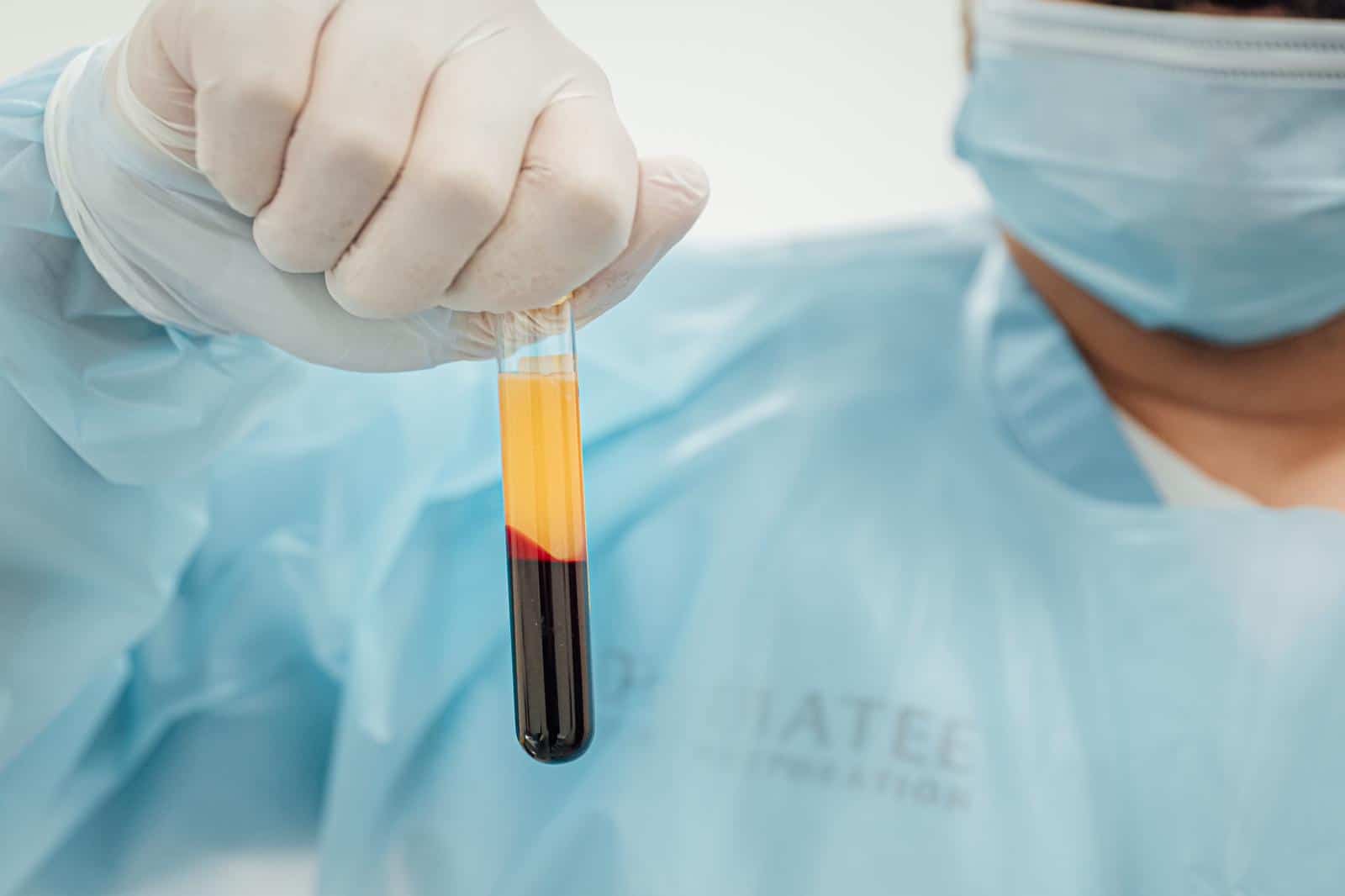
Finally, Platelet-Rich Plasma or PRP treatment is an effective hair restoration treatment in some cases. Like LLLP, it can be used on its own to improve the appearance of thinning hair, or as a supplementary therapy following a hair transplant to help with recovery.
PRP involves the use of several technological devices, such as:
- A centrifuge, which we use to separate a blood sample drawn from the patient. The device extracts the bioactive platelet-rich plasma for reinjection, discarding other components with a different density that aren’t beneficial.
- Isolating the PRP layer in the blood, with the highest concentration of platelets, means we can inject that potent compound into the target area. It is rich in growth factors that assist with healing, regeneration and follicle activation.
- Fine-grade needles, typically a 30-gauge needle, are used in the final stages of PRP therapy, avoiding a need for topical anaesthetics. This ensures the benefits of PRP are available without unnecessary discomfort.
Where required, and where we believe the outcomes will best meet the patient’s needs, we can combine PRP and LLLT therapies as an optimal way to stimulate hair growth as quickly as possible, encourage better blood circulation around the transplant site, and activate dormant follicles.
Learn More About the Technologies Used in Modern Hair Transplants
This guide covers some of the primary devices, technologies and treatments offered at KSL Clinic, and we’d encourage any prospective patient who has remaining questions to book a cost-free consultation at any of our practices.
Each of our centres is fully equipped, and we’ll be happy to show you around our facilities, explain more about the technology used during the hair transplant procedure, and discuss the ideal ways to achieve your hair restoration goals.