

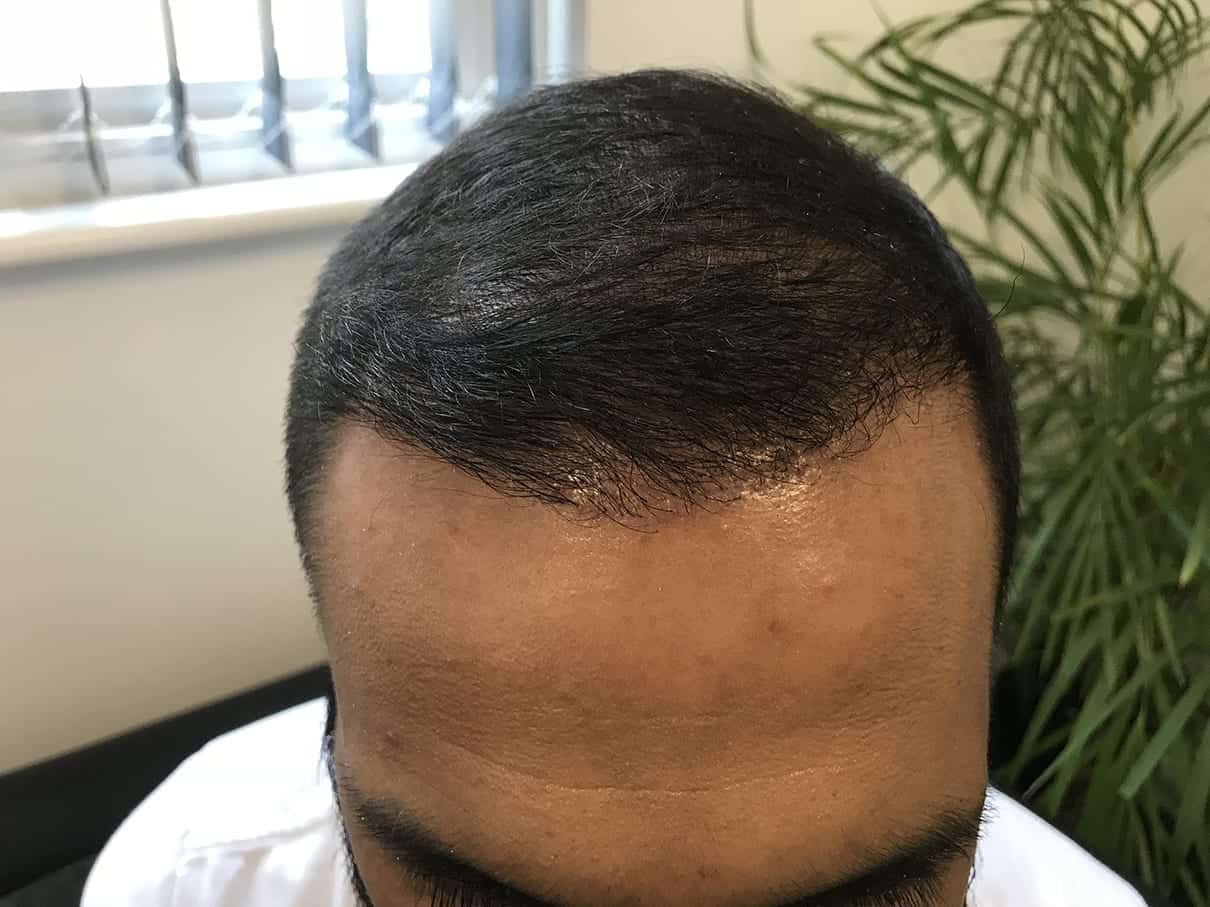
Four months post–hair transplant is characterised by visible new hair growth following the shedding phase. Transplanted follicles will start to transition into a new phase of growth – and this is just the beginning.
Gone are the days when scalp hair loss had no remedy. Today, anyone can benefit from a hair transplant to address their hair concerns.
Any patient undergoing a hair transplant will need to know what the results will be like in the months following the procedure. This article will give you a breakdown of what to expect four months after your surgery.
Expectations Four Months Post Hair Transplant: Key Takeaways
- Four months after a hair transplant, patients will begin to see signs of new hair growth, though it may be temporarily thinner or softer than mature hair.
- Temporary shock loss, which is part of the natural healing process, should have finished by four months, and patients will have been able to return to all their usual routines.
- Patience matters, and it’s important for patients to understand that early results only represent about 20% of the total regrowth they’ll see over the coming months.
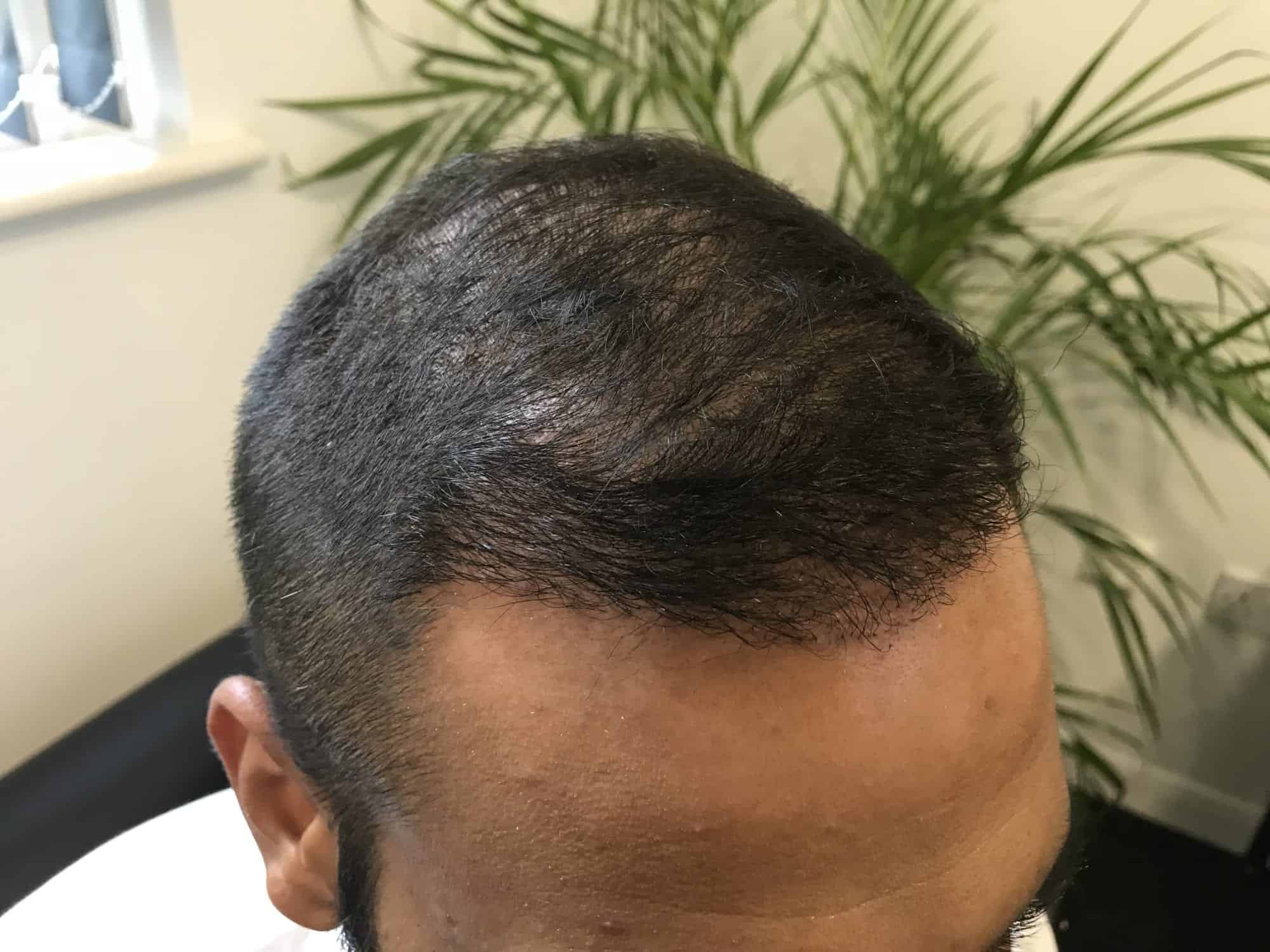
What Can I Expect 4 Months After a Hair Transplant?
You should see some growth in your hair at this stage – although it may be thin and wispy, it will thicken over time. Expect the hair to start to grow gradually over the next several months.
However, between the fifth and twelfth months after the procedure, you should see significant growth in your hair. This is the period during which most of the hair growth process occurs.
What’s Happening To My Hair in the Months After a Hair Transplant?
Your newly grafted hair will need about four months for growth activity to start taking place following your hair transplant. However, this period may be prolonged in some cases.
As indicated earlier, the first couple of months after a successful hair transplant operation are a period of dormancy or rest.
So, what’s happening to your ‘new hair’ during this period? Most of your transplanted hair will have shed during the first month, up to about six weeks after the procedure.
Although you are not likely to see much hair growth during this period, you can expect new hair to begin to grow in the treated areas – usually four months after the surgery.
This new growth signals the start of a more rapid hair growth period and an exciting time for you.
Why Is Hair Growth After a Transplant Thin?
At the four-month mark, the hair begins a new cycle of growth after being dormant, which means your new hair may appear fine or a little thinner than your other follicles.
Over the coming months, you will notice your new hair begin to thicken. At the same time, you should see that your hair growth will become more prominent. Plus, the rate at which your hair grows will also begin to accelerate.
Dr Matee, Director of Surgical Services at KSL Clinic advises that, ‘It’s perfectly normal for the initial hair that starts growing about four months after a hair transplant to have a different texture, and that’s all down to the patterns and growth phases follicles move between.
While any patient can and should consult their surgical team if they have concerns, the most essential aspect is to be patient and wait to see the outcomes mature and improve.’
What Can You Do to Expedite Post-Hair Transplant Growth?
You can now have PRP treatment, which will assist with the growth and use topical solutions such as minoxidil. However, the most important thing to do now is to have patience and watch your hair grow.
You can also start thinking about styling your hair.
The hair restoration process takes time, and you cannot expect to see results immediately. But are there any steps you can take to aid the process? Can you make your hair grow faster?
Some of the options you may be interested in are summarised below:
| Post-Hair Transplant Treatment | Benefits |
|---|---|
| Laser hair therapy | Treats thinning and patchy areas of hair growth, stimulates faster growth and helps hair become healthier and stronger. |
| Platelet-rich plasma therapy (PRP) | Speeds up recovery after a hair transplant and improves the thickness and strength of new hair. |
| Minoxidil [1] | Promotes hair growth and slows down the speed of pattern hair loss. |
| Finasteride [2] | Improves natural hair growth and rebalances male hormones that contribute to balding and thinning. |
Do I still need to follow the aftercare advice after 4 months?
It is vital to follow all the instructions and advice KSL provides after the transplant, as this will help your scalp heal and follicles begin to grow as quickly as possible.
You can aid hair growth by following the instructions you receive, from taking care of your scalp and hair to using the recommended products and medications.
However, certain factors may determine how early or late you will see the results you want. Such factors include the extent of hair loss, the type and characteristics of your hair, and the size of the transplant.
How Can I Schedule a Post-Hair Transplant Review?
You can book checkups and review appointments at any stage of your procedure by emailing or calling. The contact information for each KSL Clinic practice is available below:
Get a cost for your hair transplant
Looking for a consultation regarding the hair transplant cost? Book a free consultation with us today to see what we can do for you.
3 months after hair transplant – what to expect
Hair re-growth after a hair transplant – what to expect
Hair transplant aftercare guide
Touching grafts after hair transplant: why you should avoid rubbing your head for 14 days!
Swelling After Hair Transplant Surgery (And Why It’s Nothing to Worry About!)
Frequently Asked Questions
Where Can I Find More Information About Hair Transplant Recovery?
The articles linked below provide more details about what to expect at one week, two weeks and three months after a hair transplant, along with guidance on growth stages and the timescales for the transplant procedure itself.
Why Aren’t the Results of an FUE Hair Transplant Immediate?
FUE hair transplants involve the extraction of individual donor follicles, which are then implanted in the target area. Those follicles need time to embed and enter into a new growth phase, which is why it takes time for the permanent results to be visible.
Where Can I Find More Information About Hair Transplant Recovery?
The articles linked below provide more details about what to expect at one week, two weeks and three months after a hair transplant, along with guidance on growth stages and the timescales for the transplant procedure itself.
Why Aren’t the Results of an FUE Hair Transplant Immediate?
FUE hair transplants involve the extraction of individual donor follicles, which are then implanted in the target area. Those follicles need time to embed and enter into a new growth phase, which is why it takes time for the permanent results to be visible.