


Love or hate New Year’s resolutions, they can be a great way to set your intentions for the year ahead, choose goals and objectives you’d like to achieve, and build a plan of attack against hair loss to ensure that, this time next year, you’re where you want to be.
If you’re one of the thousands of people who have long been dissatisfied with the health and thickness of your hair, or who have been struggling with thinning and hair loss, this could be an opportunity to take decisive action.
Whether your goal is healthier hair, slowing down hair loss or finally restoring a fuller hairline, small changes can make a big difference. And if your hair loss is already significant, this may also be the right time to weigh up a hair transplant rather than waiting until it becomes harder to achieve the results you want.
Key Takeaways
- Use the New Year as a Reset Point – January offers a psychological clean slate. Rather than repeating vague resolutions, use this moment to make a clear, proactive decision about your hair, whether that means booking a consultation, committing to treatment, or finally addressing long-standing concerns instead of postponing them for “another year”.
- Turn Intentions Into a Timeline – A New Year’s resolution only works if it becomes a plan. Set a realistic budget, map out key milestones, and decide when you want visible progress by. If you start now, this time next year you could already be seeing full results rather than wishing you had begun sooner.
- Make This the Year You Take Control – Instead of reacting to hair loss emotionally or searching endlessly online, choose 2026 as the year you act with clarity. Professional guidance, consistent routines, and decisive steps can transform how you feel about your hair by next December.
New Year’s resolution 1: Weigh Up a Hair Transplant if Your Hair Loss Is Significant – Don’t Wait Until It’s Too Late
If your hair loss has progressed beyond mild thinning, it may be time to seriously consider whether a hair transplant is the most effective long-term option. Many patients delay taking action because they hope their hair will stabilise on its own, but early intervention often leads to better density, more natural-looking results, and a more predictable treatment plan.
Consulting sooner rather than later ensures you preserve as much native hair as possible and avoid waiting until loss becomes too advanced for optimal restoration.
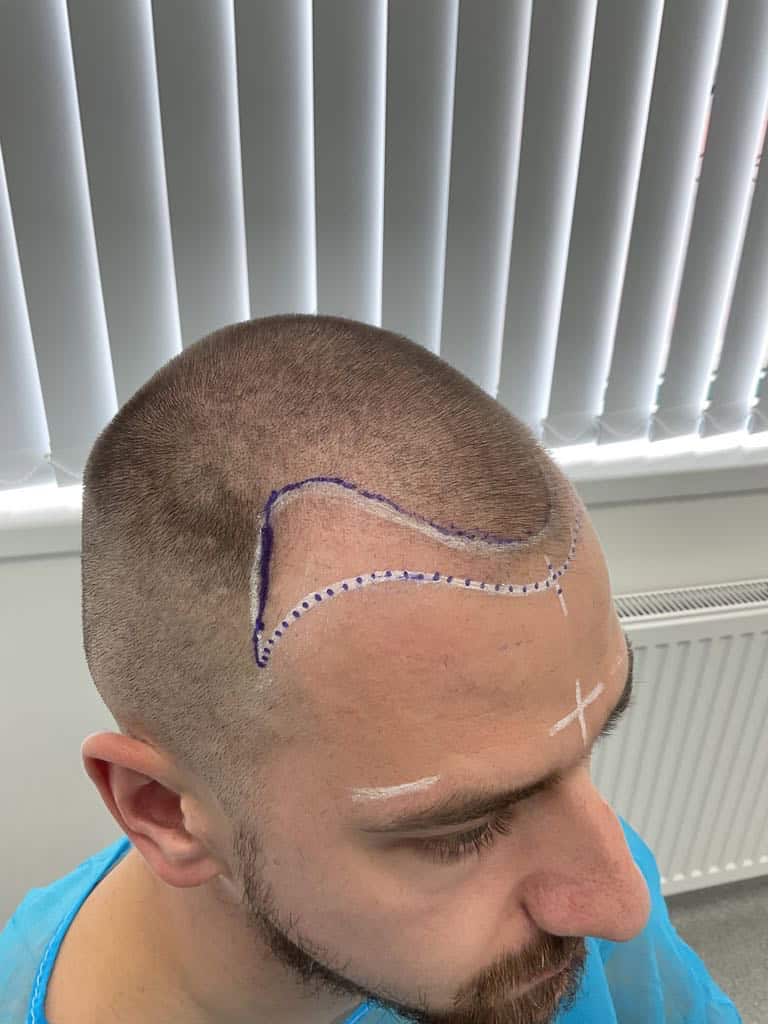
New Year’s Resolution 2: Set a Budget and Timeline for Hair Restoration
If you’ve been thinking about restoring your hair for a while, set a realistic budget and timeline. Many patients prefer to plan their transplant around holidays, career breaks or quieter times of the year. Having this mapped out now means that by summer or next Christmas, you could already be well into your growth cycle.
Related reading: How much does a hair transplant cost?
New Year’s Resolution 3: Prioritise Your Mental Health and Self-Confidence
Hair thinning can take a toll on confidence, social life and emotional wellbeing. Alongside physical treatments, prioritising your mental health is just as important. Whether that means reducing stress, practising self-care or talking to someone about the impact hair loss has had on you, addressing the emotional side often helps patients feel more in control of their journey.
Related reading: Depression due to hair loss explained
New Year’s Resolution 4: Stop Self-Diagnosing Your Hair Loss Online
The internet is full of conflicting advice about hair loss. Googling symptoms can often lead to unnecessary worry or the wrong assumptions about what’s causing thinning.
One of the best resolutions you can make is to stop self-diagnosing and rely instead on professional assessment, whether your concerns are mild or advanced.
New Year’s Resolution 5: Commit to a Consistent Haircare Routine
If you’re not yet considering a hair transplant, then commit to better hair care this year. Ensure you’re not letting split ends and dryness affect the appearance of your hair – a common issue that can make sparser growth even more pronounced, as the strands you do have are brittle and prone to breakage.
We’d suggest you incorporate:
- Regular trims or micro trims every few weeks to prevent breakage from travelling up the hair
- Cutting down on heat-based styling, which weakens your hair and increases the likelihood of split ends
- Picking high-quality moisturising and nourishing shampoos and conditioners created for your hair type and that are suited to sensitive scalps, where applicable
- Creating a hair care routine you can stick to, without switching products every few weeks or using occasional masks and then forgetting for several months
Deep cleaning treatments are also a good way to remove product buildup from your scalp, which can cause itching and irritation, and many people are moving to ‘clean’ hair products that don’t contain any harsh or synthetic ingredients.
Get a cost for your hair transplant
Looking for a consultation regarding the hair transplant cost? Book a free consultation with us today to see what we can do for you.
New Year’s resolution 6: Pay Attention to How You Style and Brush Your Hair
Another frequent issue we see is that patients might have bought the most expensive and luxurious haircare products, but are causing progressive damage by brushing their hair too vigorously, wearing tight, restrictive hairstyles, or using the wrong type of brush.
Rigid bristles and rapid combing can tug at the follicle and pull hair out at the root, as can wearing heavy extensions, dreadlocks, or scraping your hair into a tight ponytail every day – all things that contribute to traction alopecia.
Treat your hair gently, choose a quality brush to carefully remove tangles, and alternate styles if you have to wear your hair tightly back for work on weekends and evenings to allow the follicles to recover.
New Year’s resolution 7: Think About Overnight Hair Protection
Lots of people toss and turn during the night, which can leave you with tangles and knots and make you need to brush your hair far more than you would otherwise.
Options for overnight hair protection include:
- Leave in masks and serums that replenish vitamins and add moisture
- Sleeping caps, usually made from satin or silk
- Tying your hair loosely back in a plait
If you can, try changing your pillowcase to a soft silk or satin, which can also help limit abrasion and irritation on your scalp if you are a light sleeper.
New Year’s resolution 8: Eat a Balanced Diet and Stay Hydrated to Support Healthy Hair Growth
We often assume that the products we put on our hair are the main factor in how healthy our hair growth is, but it’s just as important that you’re giving your follicles and scalp tissue the nutrients they need to produce new follicles.
Hydration is vital to prevent dryness and brittle hair, while eating plenty of vegetables, proteins, and other nutrient-rich foods will help nourish your hair from the inside out.
Related Reading: 4 of the best supplements for healthy hair
New Year’s resolution 9: Consider Laser Therapies or Massage Into Your Haircare Routine
Massaging your scalp is a great way to boost circulation, especially if you’ve noticed early-stage pattern hair loss or want to increase the thickness and density of your hair. It’s also a wonderful way to relax after a long and busy day!
If you’re unsure how to massage your scalp effectively, or want a proven way to improve circulation, we’d also recommend looking into laser therapies, which use clinical-grade lasers to achieve a similar effect, albeit in a more targeted way and with more pronounced improvements.
Read more about laser therapy hair treatment
New Year’s resolution 10: Consult a Hair Restoration Professional to Develop a Customised Plan
Patients who are already taking great care of their hair and general health but are still unhappy with their hair, or who have a family history of hair loss and want to prevent it from progressing, are best advised to schedule a free consultation with KSL Clinic.
Our practitioners can offer a wealth of advice, with zero obligation, including:
- Whether non-surgical therapies would be suitable for you, using advanced treatments like platelet-rich plasma therapy to activate dormant follicles and improve the quality of your hair growth
- Assessing your scalp and hair to provide insights into any reasons that could be contributing to hair loss or thinning
- Discussing medication and topical treatments that can slow down pattern hair loss or stop it from progressing further
- Lifestyle and dietary changes that may prove beneficial in supporting the health of your scalp
We can, of course, also discuss the feasibility of a hair transplant as a permanent solution to hair loss!
A Hair transplant will transform your hairline this time next year
If you want to take action and don’t want to be worried about your hair or appearance by the time next December rolls around, you can decide whether a hair transplant may be the ideal way to achieve your aspirations – and in 12 months’ time, your results will be fully visible.